Bug Squad

A daily (M-F) blog launched Aug. 6, 2008 and about the wonderful world of insects and those who study them. (Photo by Kathy Keatley Garvey)
Primary Image
This is a dead caterpillar killed by an infectious virus disease (Polyhedrosis), as identified by UC Davis butterfly expert Art Shapiro. (Photo by Kathy Keatley Garvey)

Highly Infectious Viral Disease, 'Kind of Like Ebola'

October 7, 2014
By Kathy Keatley Garvey
It's something you don't see every day. I'm used to seeing Gulf Fritillary chrysalids hanging from our passionflower vine (Passiflora) but this thing hanging from our African blue basil was not a chrysalid.
View Article
Primary Image
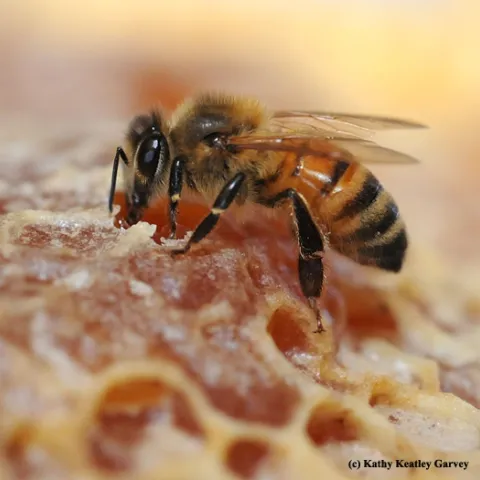
Honey is not bee vomit. (Photo by Kathy Keatley Garvey)
Bug Squad: Article

Honey Is Not Bee Vomit

October 6, 2014
By Kathy Keatley Garvey
For years, uninformed folks have declared that honey is "bee vomit." It's not. These things are inequitably false. 1. The world is flat. 2. Einstein said that "if the bee disappeared off the surface of the globe, then man would only have four years of life left." 3. Honey is bee vomit.
View Article
Primary Image
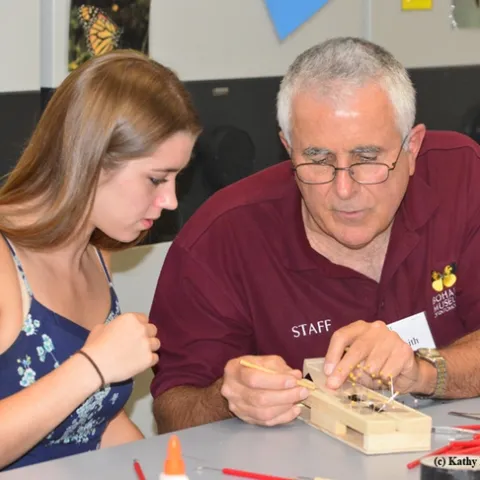
Entomologist Jeff Smith shows Cassidy Hansen fof Rio Vista how to pin a butterly. (Photo by Kathy Keatley Garvey)
Bug Squad: Article

How to Pin a Butterfly

October 3, 2014
By Kathy Keatley Garvey
How do you pin and spread a butterfly? Entomologist Jeff Smith, an associate at the Bohart Museum of Entomology, University of California, Davis, showed everyone from pre-schoolers to adults how to do just that at the Bohart's recent open house. It was all hands-on.
View Article
Primary Image
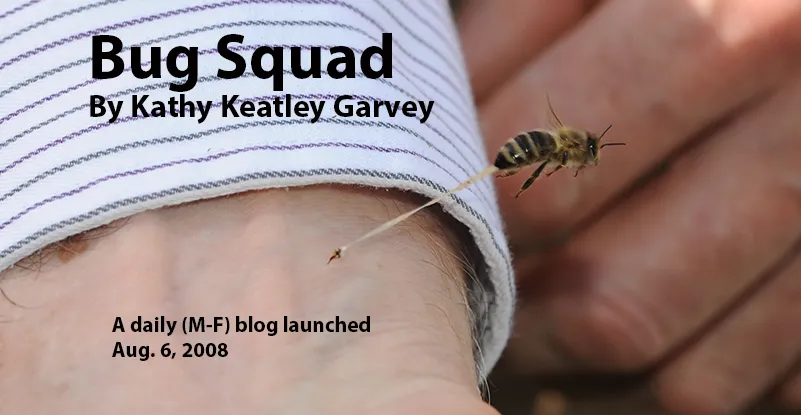
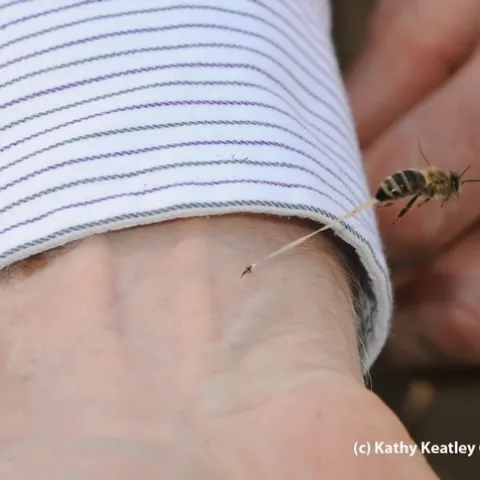
A honey bee embeds its stinger in the wrist of Eric Mussen and then tries to pull away. Note the abdominal tissue trailing. (This is an actual photo of a bee sting; it was not posed.) (Photo by Kathy Keatley Garvey)
Bug Squad: Article

Why Do Honey Bees Die When They Sting

October 2, 2014
By Kathy Keatley Garvey
"Why do honey bees die when they sting?" That's the question PBS Newshour asked Extension apiculturist (retired) Eric Mussen of the UC Davis Department of Entomology and Nematology for its "Just Ask" feature.
View Article
Primary Image
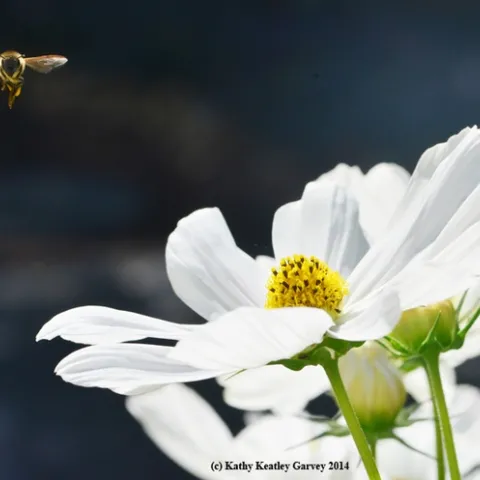
Honey bee heading for a Cosmos. (Photo by Kathy Keatley Garvey)
Bug Squad: Article

A, B, and C: What They Really Stand for...

October 1, 2014
By Kathy Keatley Garvey
Give me an "A" (for excellence). Give me a "B" (for bee). Give me a "C" (for Cosmos). Watching honey bees collect nectar and pollen on the showy Cosmos (Cosmos bipannatus) is not to be missed.
View Article