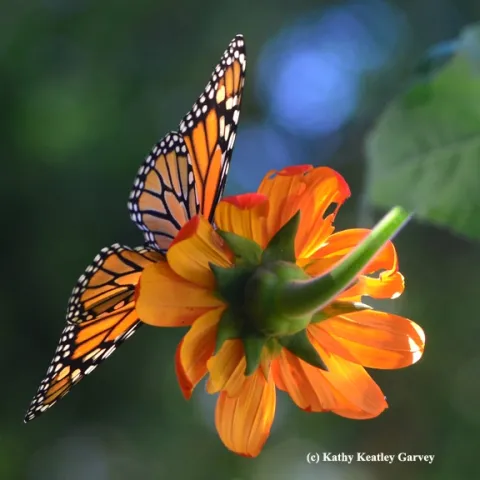
When a monarch butterfly comes fluttering through your yard, grab your camera. Marvel at it beauty, celebrate its presence, and keep it in your memory. It may be become an endangered species the way things are going.
Butterfly expert Art Shapiro, distinguished professor of evolution and ecology at UC Davis, isn't feeling so well--to put it mildly--but he still went out on one of his butterfly monitoring expeditions today at his study site in North Sacramento.
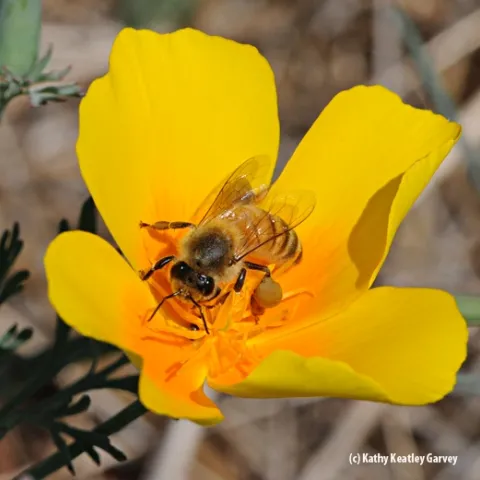
Do you have a little land to spare, such as a quarter of an acre or up to three acres? For honey bee habitat? The Pollinator Partnership, as part of its U.S.
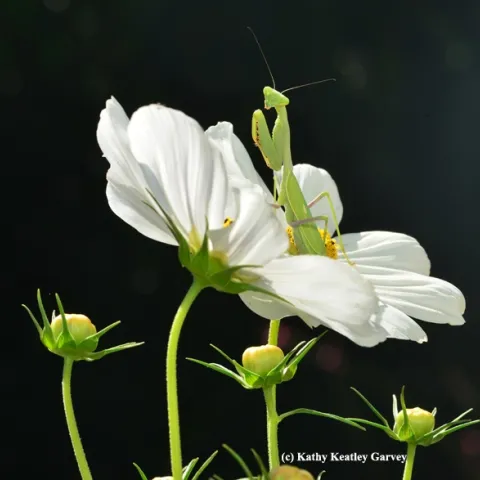
Praying mantids are, oh, so patient. They perch on a flower, their spiked forelegs seemingly locked in a praying position, and wait to ambush unsuspecting prey. A green praying mantis recently did just that on our cosmos.
Two categories of evolutionary challenges result from escalating human impacts on the planet. The first arises from cancers, pathogens and pests that evolve too quickly, and the second from the inability of many valued species to adapt quickly enough.