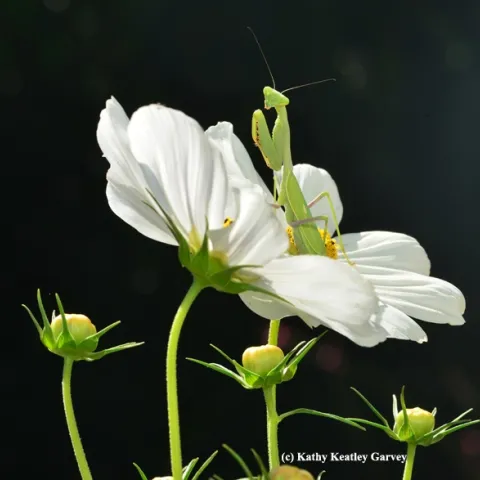
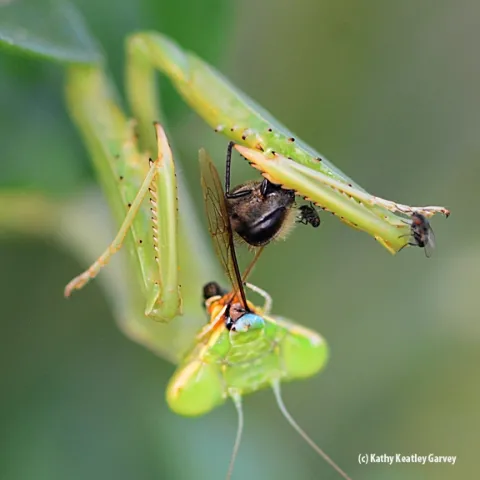
Praying mantids are, oh, so patient. They perch on a flower, their spiked forelegs seemingly locked in a praying position, and wait to ambush unsuspecting prey. A green praying mantis recently did just that on our cosmos.
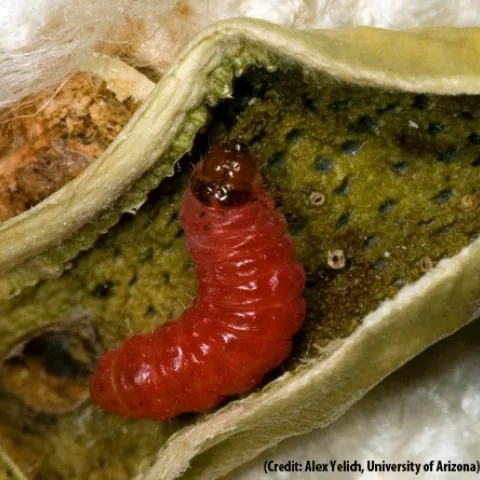
Two categories of evolutionary challenges result from escalating human impacts on the planet. The first arises from cancers, pathogens and pests that evolve too quickly, and the second from the inability of many valued species to adapt quickly enough.
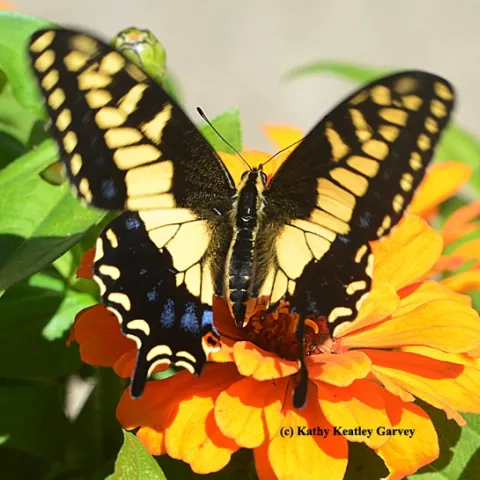
Something was wrong. The Anise Swallowtail (Papillo zelicaon) that fluttered into our bee garden last weekend and began nectaring on zinnia wasn't quite herself. Her yellow and black coloring and the striking blue spot on the rear left wing looked fine.
A freeloader. A moocher. A sponger. That's the freeloader fly. A praying mantis is polishing off the remains of a honey bee. Suddenly a black dot with wings edges closer and closer and grabs a bit of the prey. So tiny. So persistent. So relentless. That's the freeloader fly.
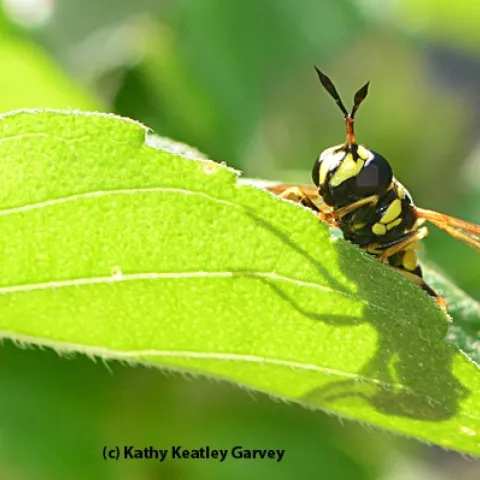
Last weekend a little critter made its first-ever appearance in our family bee garden. It was neither a grand entrance nor a grand insect. "A fly!" I thought, as I looked at its knoblike bristle or arista on the end of each antenna.