Bug Squad

A daily (M-F) blog launched Aug. 6, 2008 and about the wonderful world of insects and those who study them. (Photo by Kathy Keatley Garvey)
Primary Image
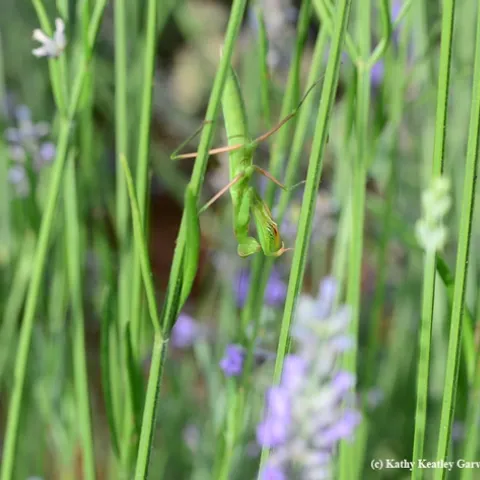
Camouflaged praying mantis. (Photo by Kathy Keatley Garvey)

Perfect Camouflage

July 21, 2014
By Kathy Keatley Garvey
What a perfect camouflage! Have you ever seen a green praying mantis hiding among the green growth in your garden? Concealed. Disguised. Camouflaged. The praying mantis is a patient insect.
View Article
Primary Image
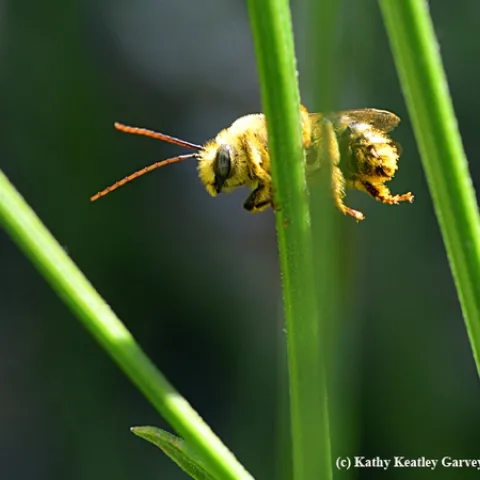
A longhorned bee, Melissodes agilis, awakens on a lavender stem. (Photo by Kathy Keatley Garvey)

Stems

July 18, 2014
By Kathy Keatley Garvey
Just one word--stems. Bees forage on the lavender in our bee yard, but sometimes you'll see them on the stems.
View Article
Primary Image
A newly emerged Gulf Fritillary. (Photo by Kathy Keatley Garvey)

Passion for a Passion Butterfly

July 17, 2014
By Kathy Keatley Garvey
"Wow! Oh, wow!" That's what people usually say when they encounter dozens of reddish-orange butterflies at a home on the 1500 block of Claremont Drive in Davis, Calif.
View Article
Primary Image
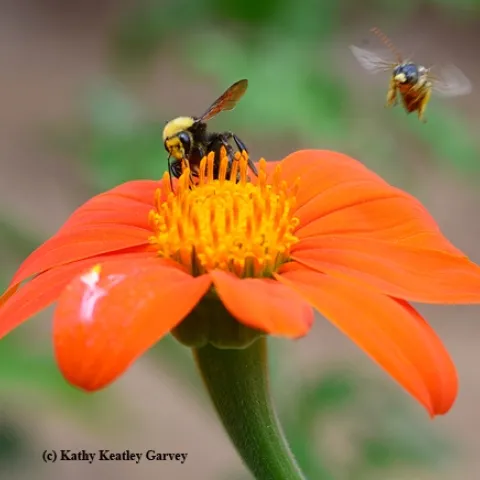
A longhorned bee, Melissodes agilis, dive-bombs a bumble bee, Bombus fervides. (Photo by Kathy Keatley Garvey)

Tithonia: What a Draw!

July 16, 2014
By Kathy Keatley Garvey
If you have Mexican sunflowers (genus Tithonia) in your garden, you can expect a diversity of insects--and not just honey bees. Lately we've been photographing all the insects that visit the Tithonia in our bee garden.
View Article
Primary Image
A praying mantis won’t eat a few days before it will shed its skin (molt). This is normal. After molting it will start to eat again. When a praying mantis will not eat even though it does not need to molt, it can help to offer it a Praying mantis soaking up some sun rays. (Photo by Kathy Keatley Garvey)

Who Doesn't Love a Praying Mantis?

July 15, 2014
By Kathy Keatley Garvey
Who doesn't love a praying mantis? Certainly not a butterfly or a bee. We humans, though, are fascinated by them. First, there's the problem of finding them. Often they're so camouflaged that we don't see them until they rustle the leaves and snatch a moving prey.
View Article