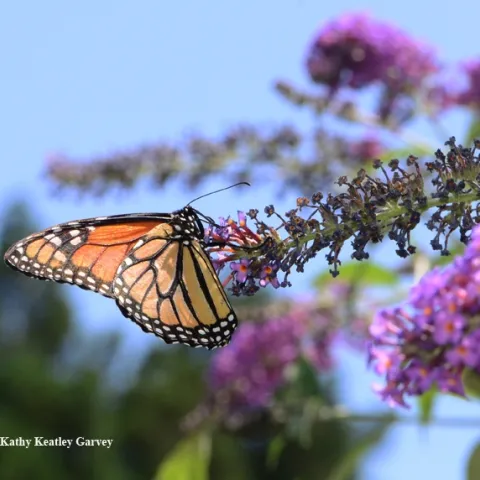
It's good to see so many scientists and citizen scientists taking an avid interest in monarchs. The monarch butterfly (Danaus plexippus), probably the most recognizable of all the butterflies, is known for its long migratory route from Canada to Mexico.
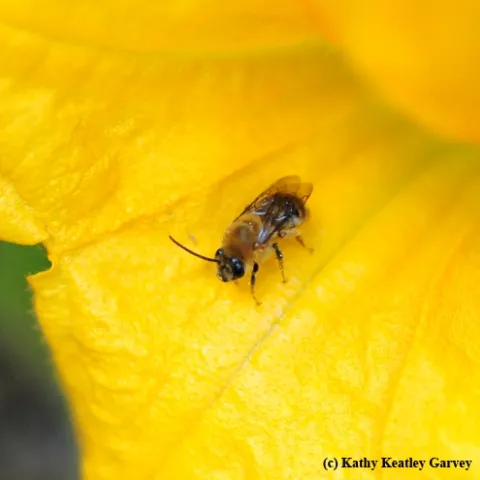
Peponapis pruinosa isn't your common household word. But among the people who study pollinators, it is. Also known as a squash bee, it is an important pollinator of cultivated crops of squash, pumpkins, and others members of the genus Cucurbita.
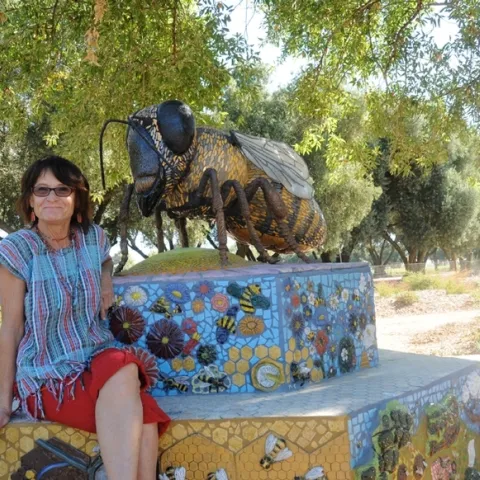
The UC Davis Art/Science Fusion Program is incredible. It's a program that, as the name indicates, fuses art and science. Science with art. On that note, two noteworthy events sponsored by the program will take place next week.
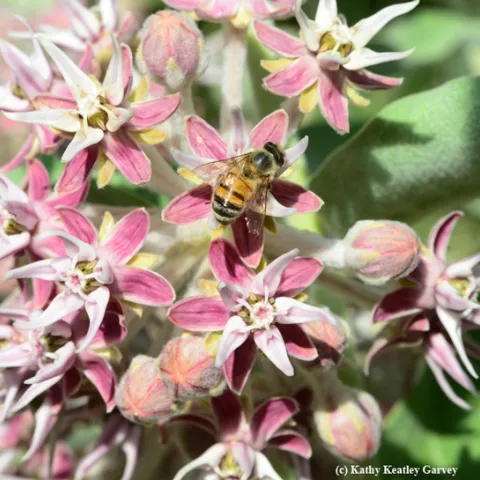
Folks are planting milkweed for the monarchs. The milkweed (genus Asclepias) is the host plant (larval food) for the monarch butterfly (Danaus plexippus). No wonder the monarch is sometimes called "the milkweed butterfly.
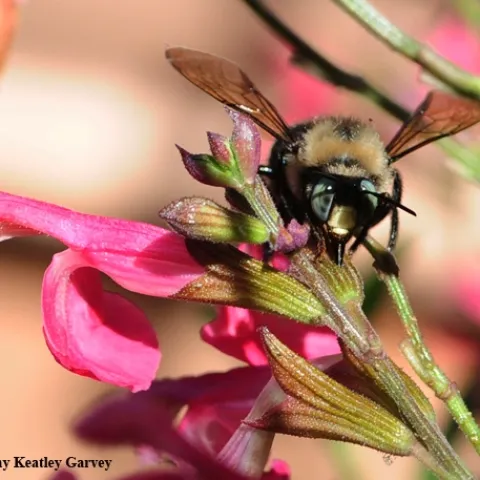
If you have a patch of salvia (sage) growing in your yard, watch for the nectar robbers. Carpenter bees are among the insects that engage in nectar robbing. They drill a hole in the corolla of the flower, circumventing the usual plant-pollinator relationship.