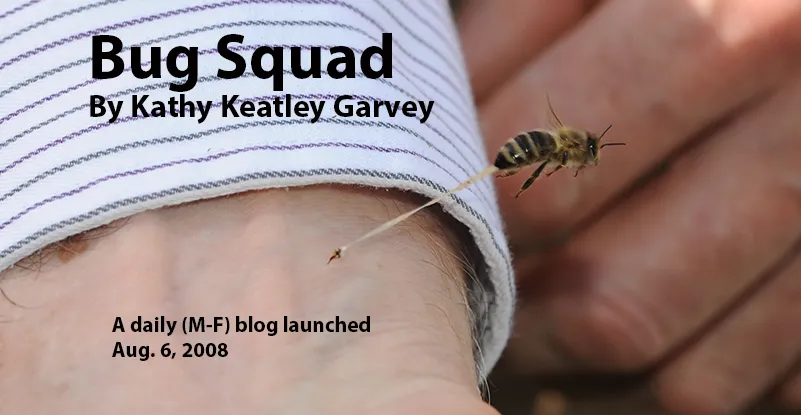
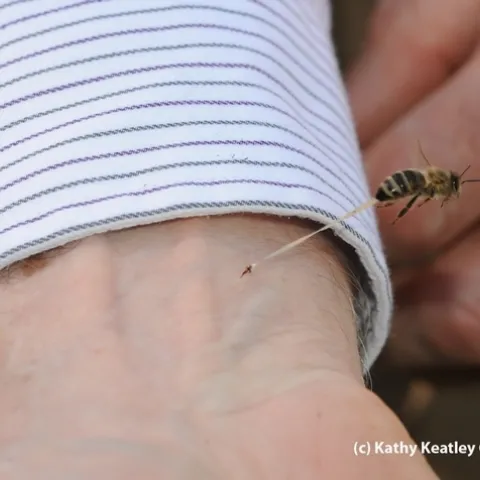
When a honey bee stings you, she makes the supreme sacrifice and dies. She's usually defending her colony. In the process, she leaves behind part of her abdomen. A beekeeper simply scrapes the sting with a fingernail or a hive tool to stop the pulsating venom and continues working.
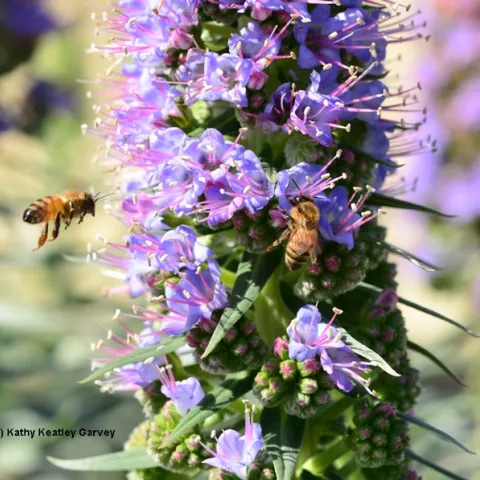
The Pride of Maderia (Echium candicans) is blooming in the tiny Sonoma coastal community of Bodega. The purplish-blue spiked flowers attract honey bees, bumble bees and syrphid flies. And visitors. And photographers. The honey bees were buzzing all over the Echium last Sunday, Feb.
Just call them "The Survivors." They made it through the winter: the bitter cold with subfreezing temperatures; the 54-day drought (will it ever rain again?) and the heavy rain that caught us thinking about ark-building.
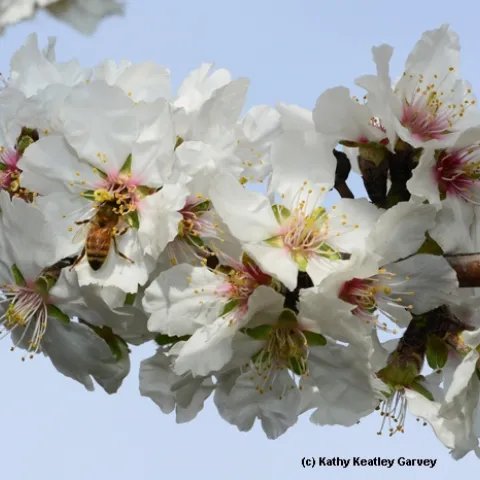
Everyone has a favorite almond tree, right? Mine--well, it's not exactly mine!--is on the grounds of the Harry H. Laidlaw Jr. Honey Bee Research Facility on Bee Biology Road, University of California, Davis. It's spectacular in bloom.
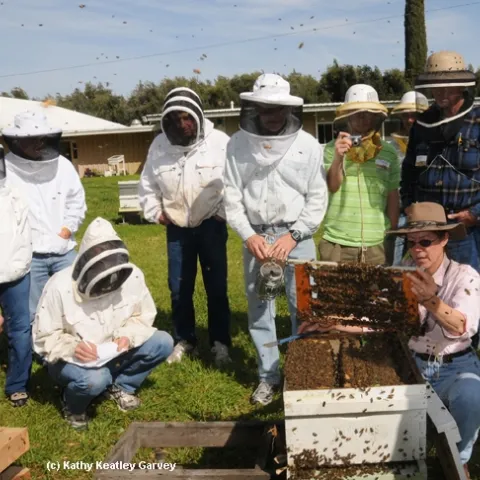
We know when spring approaches by the number of information requests we receive for bee breeder-geneticist Susan Cobey's popular queen bee-rearing and instrumental insemination classes. Cobey, former manager of the Harry H. Laidlaw Jr.