It all began at UC Davis. The highly acclaimed research published in Current Biology that cracked the 200-year secret of complementary sex determination in honey bees is rooted right here, right here at UC Davis. Arizona State University Provost Robert E. Page, Jr.
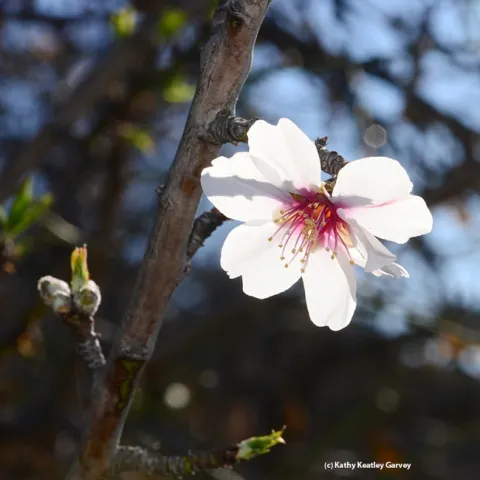
You've heard of late bloomers. How about early bloomers? A trip to the Benica (Calif.) State Recreational Park on Sunday yielded quite a surprise: a solo blossom on a bare almond tree. Almonds don't usually start blooming until around Valentine's Day. Almonds are big business in California.
It's not just the taste of honey. It's the taste of honey AND mead--coupled with a gourmet dinner on the UC Davis campus. The UC Davis Honey and Pollination Center is sponsoring the Mid-Winter Beekeepers Feast: A Taste of Mead and Honey on Saturday, Feb. 8 from 6:30 to 9:30 p.m.
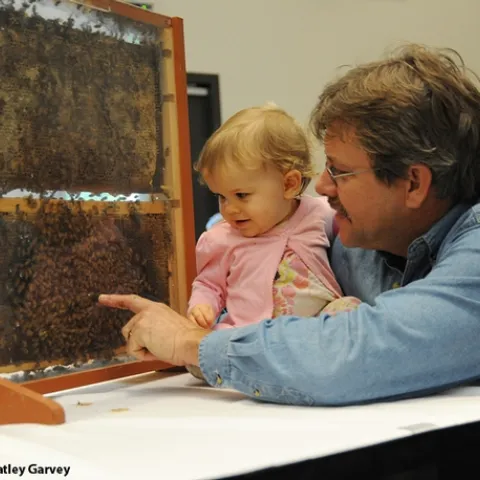
Why become a beekeeper? Why keep bees? Beekeeper Brian Fishback of Wilton is quick to answer that. Bees, he says, teach us core family values. Bees have to take care of each other and work together for the success of the colony, just as people do for the success of their families.
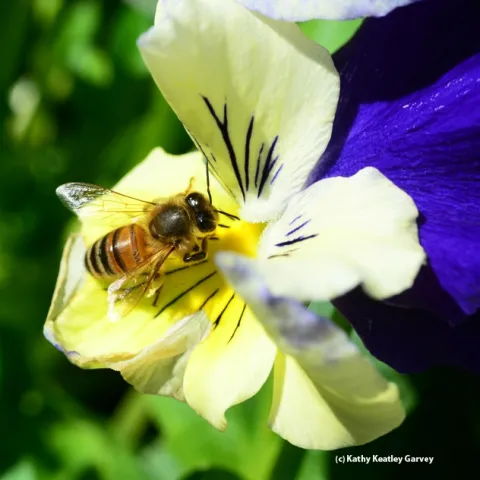
Pansies aren't bee plants. But don't tell that to the bees. True, bees are partial to the lavenders, the mints, the salvias, thyme, basil, borage, oregano, sunflowers and the like, but it's winter and their food sources are scarce.