Bug Squad

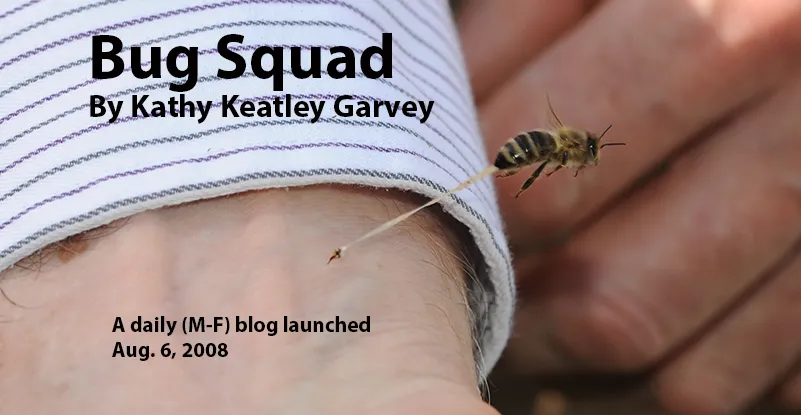
A daily (M-F) blog launched Aug. 6, 2008 and about the wonderful world of insects and those who study them. (Photo by Kathy Keatley Garvey)
Primary Image
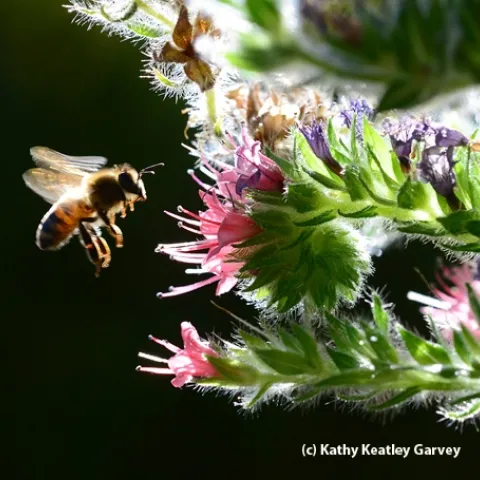
Backlit honey bee heading toward tower of jewels in the early morning. (Photo by Kathy Keatley Garvey)

To Bee or Not to Bee--a Photographer

September 9, 2013
By Kathy Keatley Garvey
To bee or not to bee--a photographer. Capturing images of honey bees is a delightful leisure activity. You don't have to sign up for a safari on another continent, or invest in thousands of dollars worth of camera gear.
View Article
Primary Image
A female Valley carpenter bee is covered with yellow pollen. (Photo by Kathy Keatley Garvey)

Passionate About the Passionflower Vines

September 6, 2013
By Kathy Keatley Garvey
Valley carpenter bees are passionate about passionflower vines (Passiflora). You see these black bees foraging on the blossoms. Tiny grains of golden pollen, looking like gold dust, dot the thorax. Their loud buzz frightens many a person, but wait, they're pollinators.
View Article
Primary Image
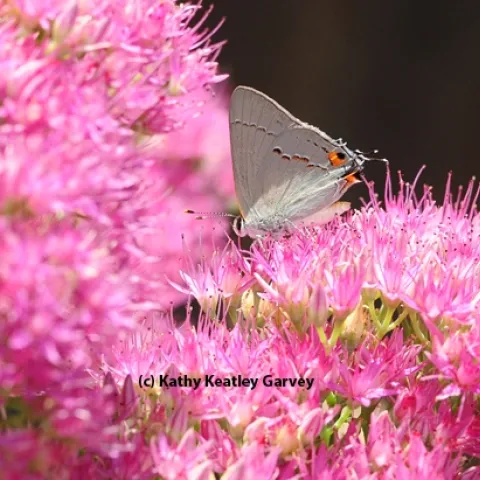
A gray hairstreak foraging in sedum. (Photo by Kathy Keatley Garvey)

A Streak of Gray

September 5, 2013
By Kathy Keatley Garvey
if it's a streak of gray, you don't wash it away. You welcome it. The gray hairstreak butterfly (Strymon melinus) is common on our sedum, a good fall plant for pollinators, including butterflies, honey bees, sweat bees and syrphid flies, aka hover flies or flower flies.
View Article
Primary Image
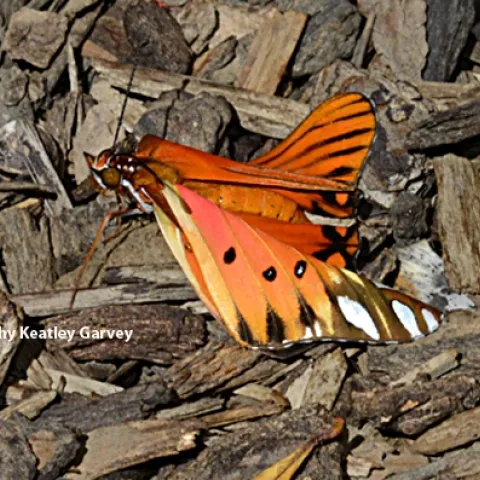
Newly emerged Gulf Fritillary butterfly, fresh from its chrysalis, lands on a bed of wood chips. (Photo by Kathy Keatley Garvey)

Just Emerged: Gulf Fritillary Butterfly

September 4, 2013
By Kathy Keatley Garvey
Call it serendipity. Call it a prize from the sky. Frankly, it's not every day that a newly emerged Gulf Fritillary butterfly, Agraulis vanillae, lands at your feet.
View Article
Primary Image
A honey bee foraging on a blanket flower, Gaillardia. (Photo by Kathy Keatley Garvey)

Color Them Hungry

September 3, 2013
By Kathy Keatley Garvey
As summer nears its end, the honey bees are hungry. That's why Extension apiculturist Eric Mussen of the UC Davis Department of Entomology and Nematology advocates that we plant flowers for late summer and fall to help the bees.
View Article