Bug Squad

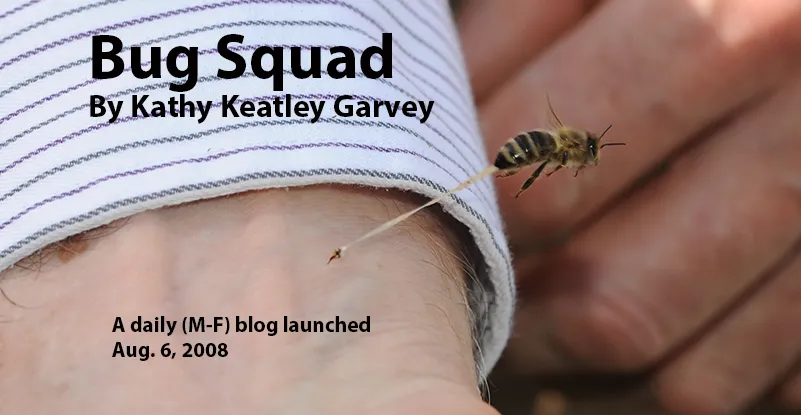
A daily (M-F) blog launched Aug. 6, 2008 and about the wonderful world of insects and those who study them. (Photo by Kathy Keatley Garvey)
Primary Image
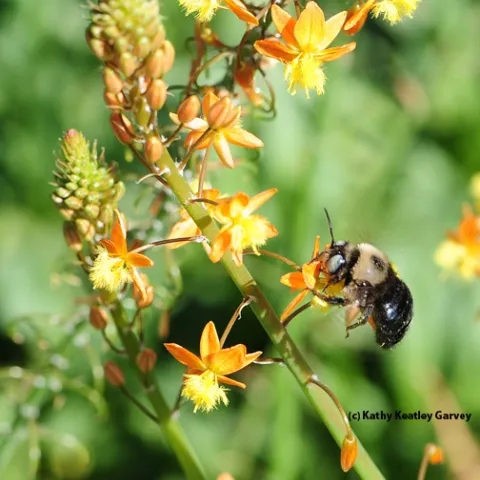
A male mountain carpenter bee, Xylocopa tabaniformis orpifex, nectaring on bulbine. (Photo by Kathy Keatley Garvey)

Big on the Bulbine

July 19, 2013
By Kathy Keatley Garvey
Look at the Xylocopa on the Xanthorrhoeaceae. If that sounds like a mouthful, think of the mountain or foothill carpenter bees, Xylocopa tabaniformis orpifex, on bulbine from the genus Bulbine in the family Xanthorrhoeaceae.
View Article
Primary Image
The Miss Bee Haven Project starts with a lump of clay. (Photo by Kathy Keatley Garvey)

The Making of a Bee

July 18, 2013
By Kathy Keatley Garvey
Take one nationally celebrated artist and one nationally renowned entomologist. Blend together. Add their deep concern for the declining honey bee population. Then just add bees. Ceramic bees.
View Article
Primary Image
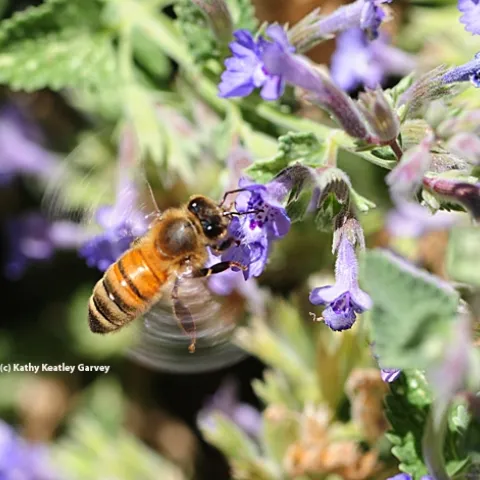
A honey bee can beat its wings 230 times every second. (Photo by Kathy Keatley Garvey)

How Fast Can a Honey Bee Fly?

July 17, 2013
By Kathy Keatley Garvey
How fast can a honey bee fly? We captured these photos today of a honey bee nectaring on catmint (genus Nepeta). The bee was moving fast. To blur the wings, we set the shutter speed at 1/640 of a second with an f-stop of 13 and IS0 of 800.
View Article
Primary Image
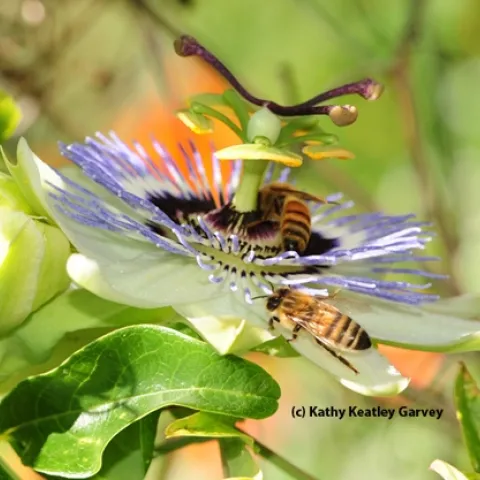
Honey bees foraging on a passion flower blossom. (Photo by Kathy Keatley Garvey)

A Passion for Passion Flowers

July 16, 2013
By Kathy Keatley Garvey
Honey bees are passionate about passion flowers (Passiflora). The intricate tropical flower is their private merry-go-round, their favorite hide 'n seek place, their gathering spot.
View Article
Primary Image
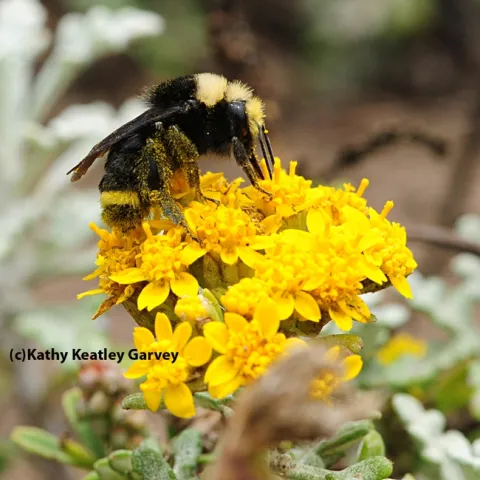
Bumble bee, Bombus vosnesenski, on woolly sunflower. (Photo by Kathy Keatley Garvey)

Bumble Bees at Bodega

July 15, 2013
By Kathy Keatley Garvey
If you're on your way to Bodega Bay in Sonoma County, stop at Bodega Head and see all the yellow-faced bumble bees on a yellow coastal plant, Eriophyllum, commonly known as the woolly sunflower. The bumble bees, Bombus vosnesenskii, are back and they particularly like the Eriophyllum.
View Article