Bug Squad

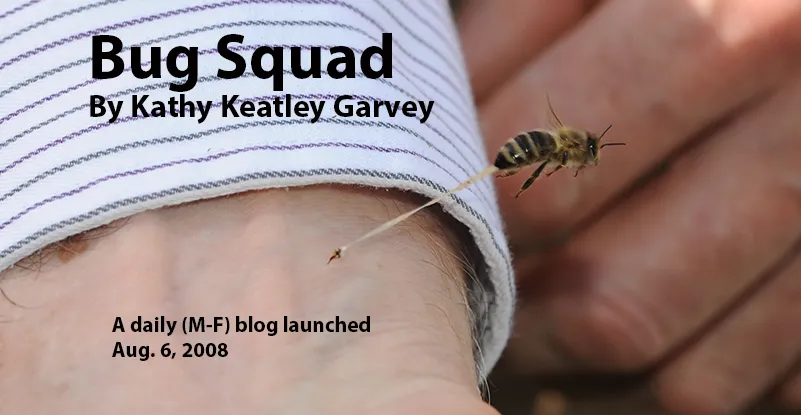
A daily (M-F) blog launched Aug. 6, 2008 and about the wonderful world of insects and those who study them. (Photo by Kathy Keatley Garvey)
Primary Image
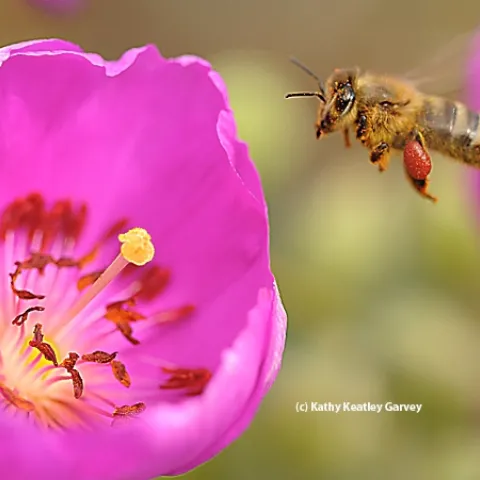
Honey bee packing red pollen from a rock purslane. (Photo by Kathy Keatley Garvey)

Hurrah for the Red, White and Blue!

July 4, 2013
By Kathy Keatley Garvey
It's the Fourth of July--a time to celebrate our nation's Independence Day. Hurrah for the red, white and blue! That also covers red, white and blue pollen collected by our honey bees. If you look closely, you'll see their "patriotic" colors.
View Article
Primary Image
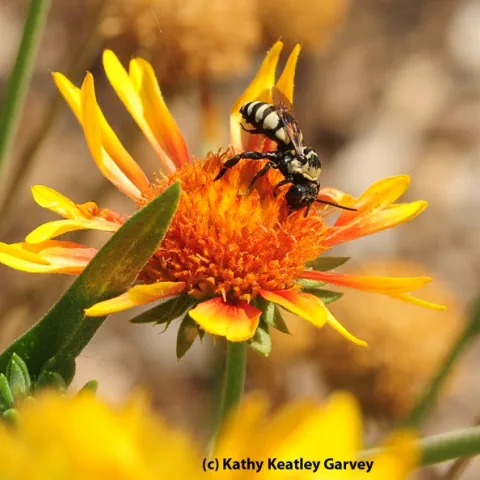
A male cuckoo bee, Triepeolus concavus, on a blanket flower (Gaillardia). (Photo by Kathy Keatley Garvey)

Why This Is Bee Is Cuckoo

July 3, 2013
By Kathy Keatley Garvey
When you visit the half-acre Hagen-Dazs Honey Bee Haven, a bee friendly garden on Bee Biology Road at the University of California, Davis, you might just see a cuckoo bee.
View Article
Primary Image
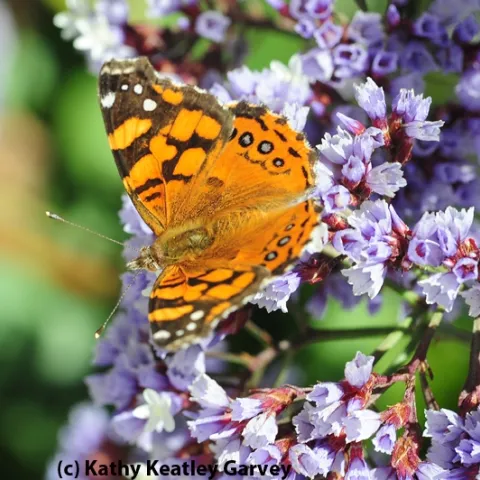
A West Coast Lady at the Berkeley Marina. (Photo by Kathy Keatley Garvey)

An Admiral at the Marina

July 2, 2013
By Kathy Keatley Garvey
There's nothing like seeing an admiral at a marina. That would be the Red Admiral butterfly, Vanessa atalanta, at the Berkeley marina. It's often very common in the urban Bay Area, says butterfly expert Art Shapiro, professor of evolution and ecology at the University of California, Davis.
View Article
Primary Image
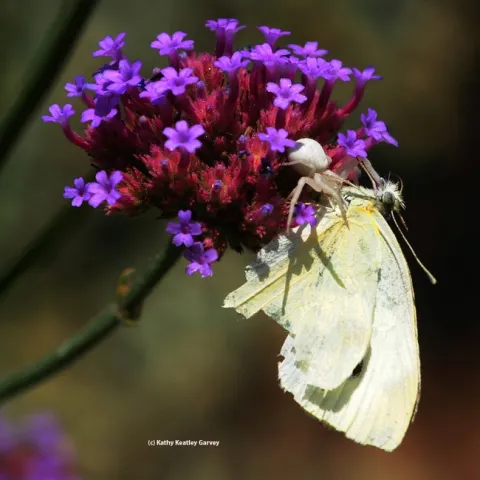
Crab spider with its kill, a cabbage white butterly. (Photo by Kathy Keatley Garvey)

A Bad Day for a Butterfly

July 1, 2013
By Kathy Keatley Garvey
It was a bad day for a butterfly. We stopped by the Ruth Risdon Storer Garden, part of the UC Davis Arboretum, at noon today as triple-digit temperatures climbed to a scorching 103.
View Article
Primary Image
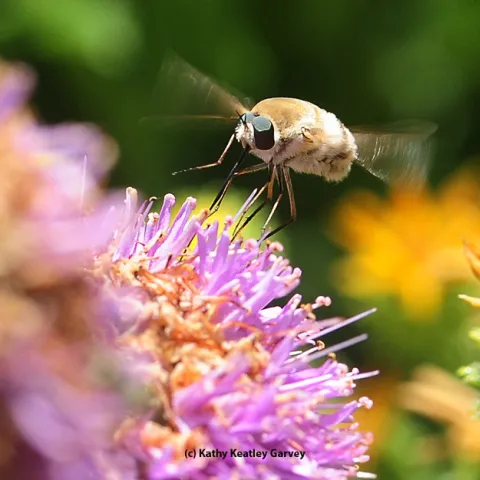
Bee fly, a bombyliid, hovers like a helicopter. Note the long tongue. (Photo by Kathy Keatley Garvey)

A Bee Fly!

June 28, 2013
By Kathy Keatley Garvey
Have you ever seen a bee fly, a member of the family Bombylidae? It's about the size of some bees. It buzzes like a bee. But you can quickly tell it's not a bee by its behavior.
View Article