Bug Squad

A daily (M-F) blog launched Aug. 6, 2008 and about the wonderful world of insects and those who study them. (Photo by Kathy Keatley Garvey)
Primary Image
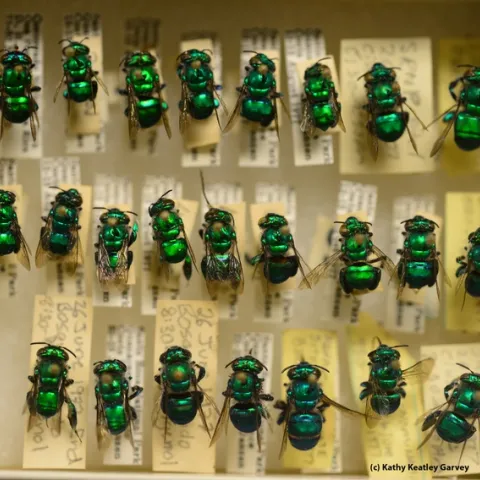
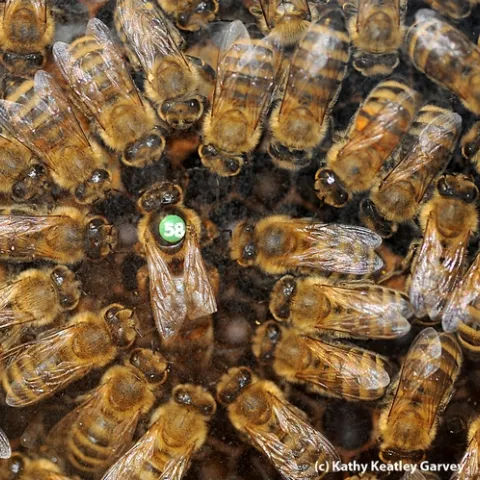
New World orchid bees at the Bohart Museum of Entomology. (Photo by Kathy Keatley Garvey)

Green Bees

October 9, 2012
The folks at the Bohart Museum of Entomology, UC Davis,call them "jungle gems." And "gems" they are. They're New World orchid bees (Euglossine bees), which museum director Lynn Kimsey, professor of entomology at UC Davis, describes as "the most beautiful bees in the world.
View Article
Primary Image
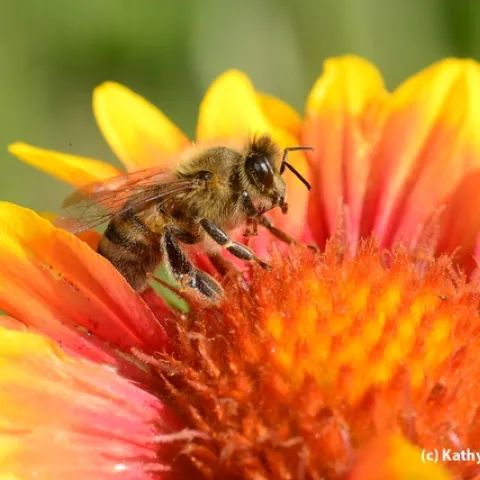
Honey bee on a blanket flower, Gaillardia. (Photo by Kathy Keatley Garvey)

So Bee It

October 8, 2012
Honey bees on blanket flowers (Gaillardia). Honey bees on Mexican sunflowers (Tithonia). The Girls of Autumn....not unlike The Boys of Summer...
View Article
Primary Image
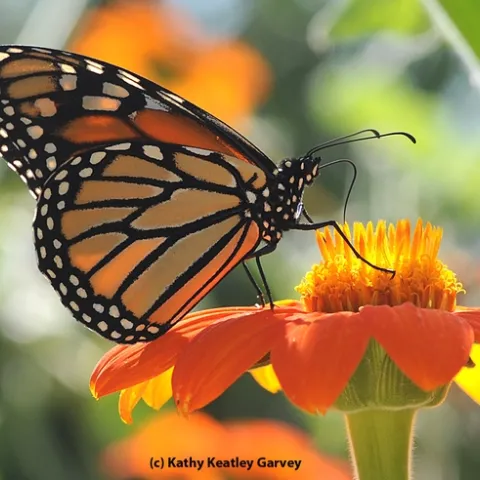
Monarch butterfly nectaring a Mexican sunflower (Tithonia). (Photo by Kathy Keatley Garvey)

The Mighty Monarch

October 5, 2012
We're accustomed to seeing a solitary monarch butterfly (Danaus plexippus) flitting around a garden. But millions of them? It was interesting to read the National Public Radio piece (Oct. 4) on Flight: A Few Million Little Creatures That Could.
View Article
Primary Image
Honey bees are considered a superorganism. Here worker bees form a retinue around the queen. (Photo by Kathy Keatley Garvey)

Superorganisms, Mimicry and Aphids

October 4, 2012
Superorganisms, mimicry and aphids... Those are some of the topics to be covered at the UC Davis Department of Entomology's fall noonhour seminars, to begin Wednesday, Oct. 17 and continue through Wednesday, Nov. 28 in Room 1022 of the Life Sciences Building.
View Article
Primary Image
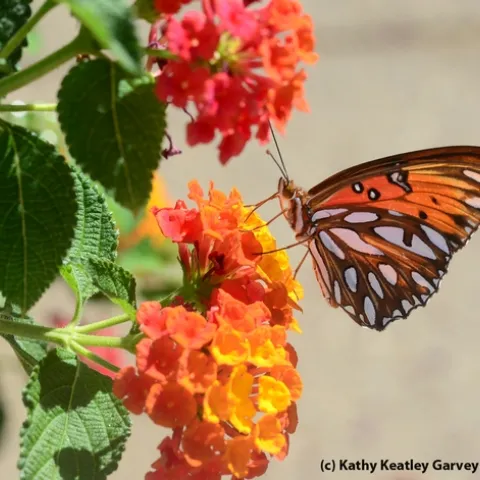
The silver-spangled underside of the Gulf Fritillary, shown here nectaring lantana. (Photo by Kathy Keatley Garvey)

The Amazing Gulf Fritillary

October 3, 2012
The Gulf Fritillary is as fascinating as it is amazing. The showy reddish-orange butterfly (Agraulis vanillae) is making a comeback in the Sacramento-Davis area. In the early 1970s, it was considered extinct in that area.
View Article