UC ANR is committed to providing an accessible and inclusive web experience for all users. If you encounter an accessibility barrier or need content in an alternative or remediated accessible format, please contact anraccessibility@ucanr.edu.
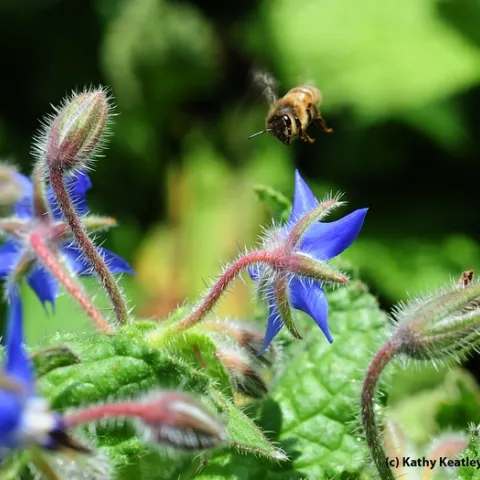
It's "Orange October" for the San Francisco Giants, who just defeated the Detroit Tigers in the opening game of the World Series. But over at the Luther Burbank's Gold Ridge Experiment Farm at 7781 Bodega Ave., Sebastopol, it's Blue October.
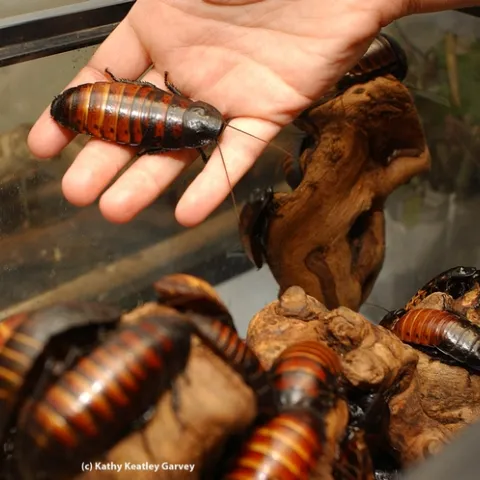
When you combine a "boo" with a "hiss," what do you get? The Bohart Museum of Entomology's annual pre-Halloween open house. The "boo"--in the way of costumes and decorations--is traditional. The hiss? That's the sound emanating from the Madagascar hissing cockroaches, aka "hissers.
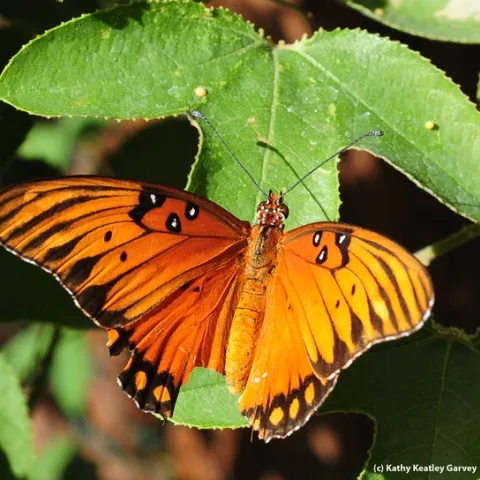
Whew! That was close! When you see a butterfly with a gaping hole in its wingspan, you wonder what predator tried to grab it. A praying mantis? A bird? A crab spider or jumping spider? A playful cat or dog? Whatever tried to grab it, it missed.
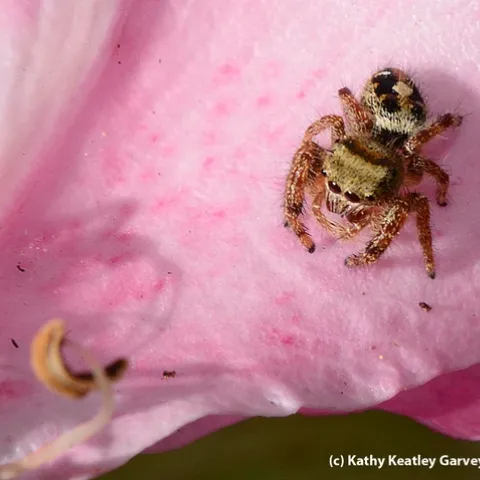
It's almost time for Halloween, when all self-respecting little ghosts, goblins and ghouls take a special interest in spiders. We saw this little jumping spider (below) on a pink rose. It doesn't look like it could scare anything--except for maybe a sweat bee or hover fly.
If you want to know more about honey and pollination, then mark your calendar for Saturday, Oct. 27. That's the date of the debut event of the newly established Honey and Pollination Center of the Robert Mondavi Institute for Wine and Food Science (RMI).