Bug Squad

A daily (M-F) blog launched Aug. 6, 2008 and about the wonderful world of insects and those who study them. (Photo by Kathy Keatley Garvey)
Primary Image
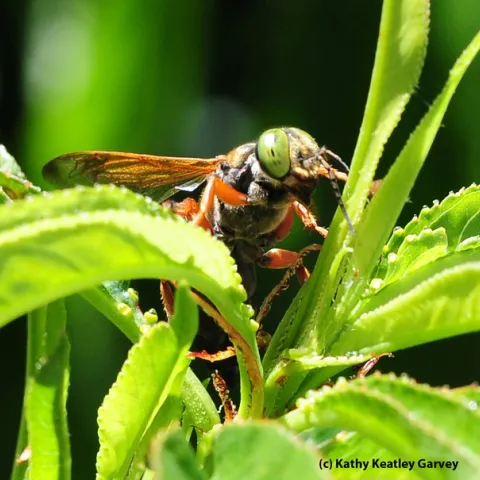
Green-eyed wasp, genus Tachytes, in a nectarine tree. This one is a female, as identified by Lynn Kimsey, director of the Bohart Museum of Entomology. (Photo by Kathy Keatley Garvey)

Green-Eyed Gal

July 2, 2012
We saw her touch down in our nectarine tree last weekend. Big green compound eyes glowed at us. She moved up and down a branch, foraging for food, and then took off. A wasp. The carnivore cousin of the vegetarian honey bee. They belong to the same order, Hymenoptera.
View Article
Primary Image
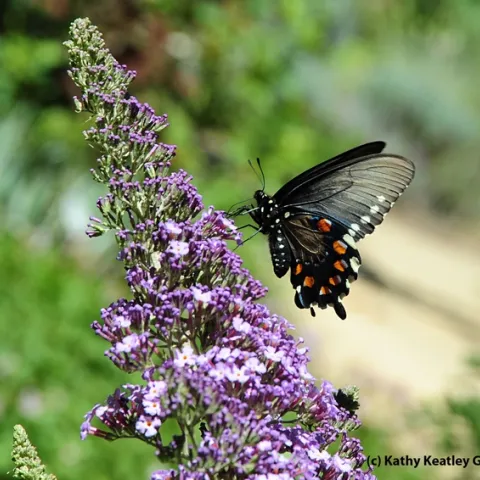
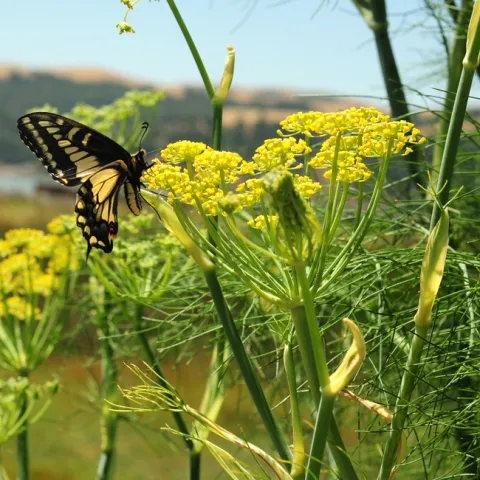
Pipevine swallowtail visiting the Storer Garden, UC Davis. (Photo by Kathy Keatley Garvey)

Pray Thee Well

June 29, 2012
When I last met up with a pipevine swallowtail, it wasn't faring well. In fact, I didn't recognize it as a pipevine swallowtail (Battus philenor), no thanks to it being in the clutches of a hungry praying mantis.
View Article
Primary Image
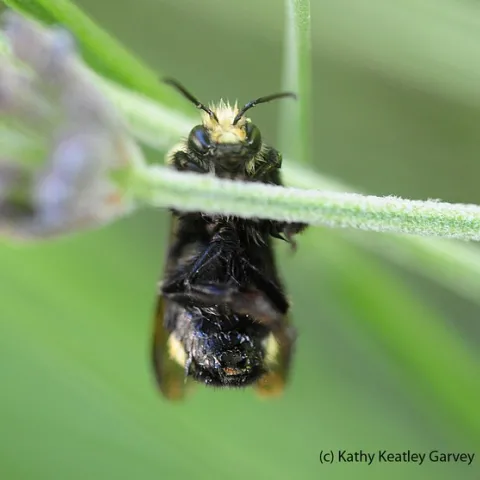
Male yellow-faced bumble bee, Bombus vosnesenskii, appears to be doing a chin up. (Photo by Kathy Keatley Garvey)

Training for the Olympics?

June 28, 2012
Training for the Olympics? If you step into your garden in the early morning, you might see a male bumble bee sleeping on one of your plants. The females return to their nests at night, but the males don't. They stage slumber parties, aka sleepovers, on your plants.
View Article
Primary Image
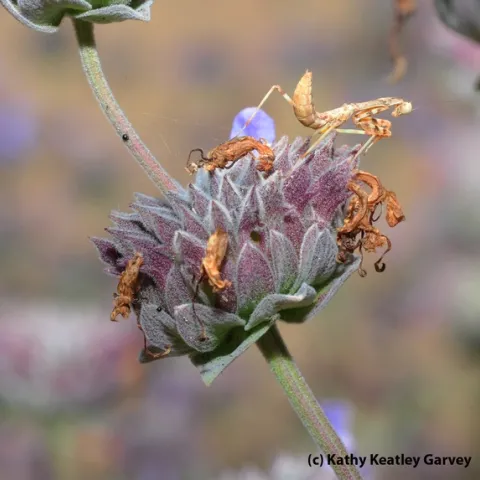
Praying mantis on Cleveland sage (Salvia clevelandii). (Photo by Kathy Keatley Garvey

The Waiting Game

June 26, 2012
When you visit the Hagen-Dazs Honey Bee Haven, the half-acre bee friendly garden planted next to the Harry H. Laidlaw Jr. Honey Bee Research Facility on Bee Biology Road, UC Davis, don't expect to see just pollinators. There are predators there, too.
View Article