Bug Squad

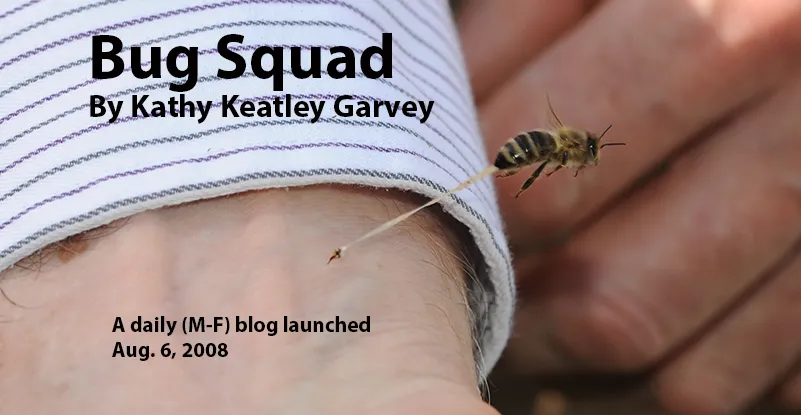
A daily (M-F) blog launched Aug. 6, 2008 and about the wonderful world of insects and those who study them. (Photo by Kathy Keatley Garvey)
Primary Image
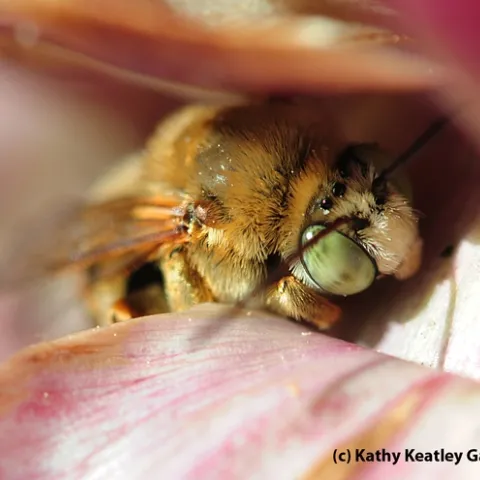
Long-horned sunflower bee tucked in a flowering artichoke. (Photo by Kathy Keatley Garvey)

Green-Eyed Bee

June 25, 2012
So you're poking around in your garden and you see a bee on a flowering artichoke that you've never seen foraging there before. On sunflowers, yes. On artichokes, no. A closer look--and huge green eyes stare back at you. Definitely not a honey bee (Apis mellifera), although its size is comparable.
View Article
Primary Image
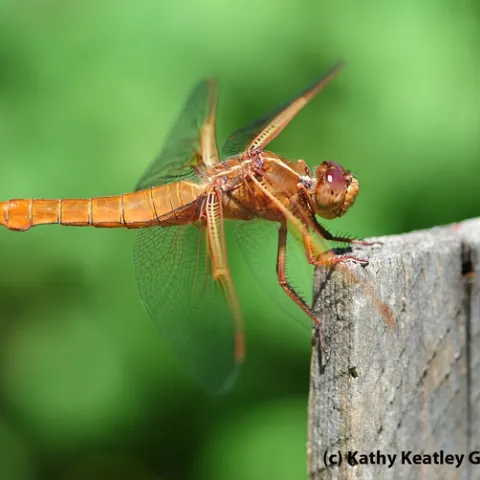
Flame skimmer perched on a tomato plant-stake. (Photo by Kathy Keatley Garvey)

An Old Flame (Skimmer)

June 22, 2012
Gotta love those flame skimmers. It's a joy to watch these firecracker-red dragonflies (Libellula saturata) make their presence known. They dart over our fish pond, snatch an insect, and then perch on a tomato-plant stake to eat it. Last year another generation did the same thing.
View Article
Primary Image
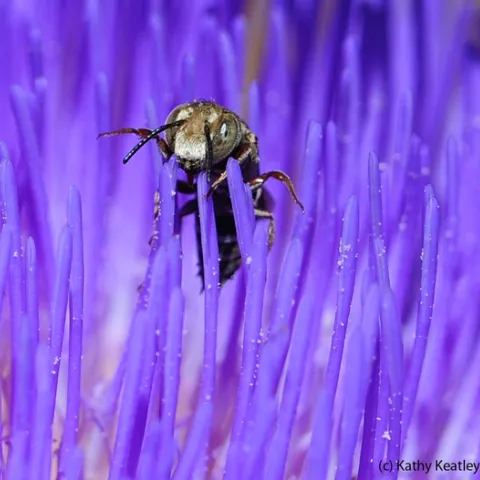
Male cuckoo leafcutting bee (genus Coelioxys) emerges from the purple strands of an artichoke blossom. (Photo by Kathy Keatley Garvey)

Purple Paradise

June 21, 2012
If you want to attract insects to your garden, plant an artichoke and let it flower. You'll get honey bees, syrphid flies, butterflies, carpenter bees and leafcutter bees. (And well, a few predators, such as spiders and wasps.) Today we saw leafcutter bees (Megachile spp.
View Article
Primary Image
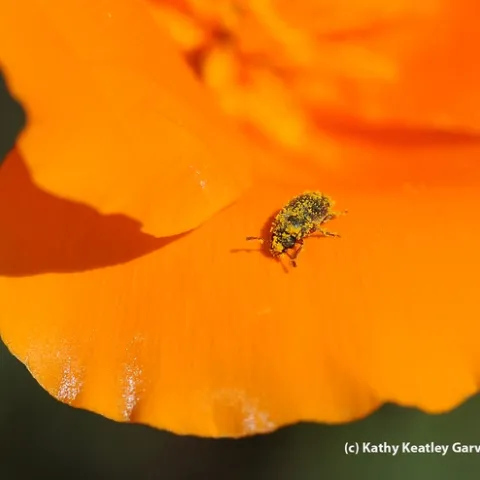
Melyrid beetle (Endeodes insularis) on a poppy petal. (Photo y Kathy Keatley Garvey)

Not Your Usual Pollinator

June 20, 2012
Since this is National Pollinator Week, you're probably out celebrating the bees--maybe doing hand stands, cartwheels and pirouettes. But have you ever thought about beetles as pollinators? They are. We spotted this little critter on a California golden poppy at the Sonoma Mission in Sonoma, Calif.
View Article
Primary Image
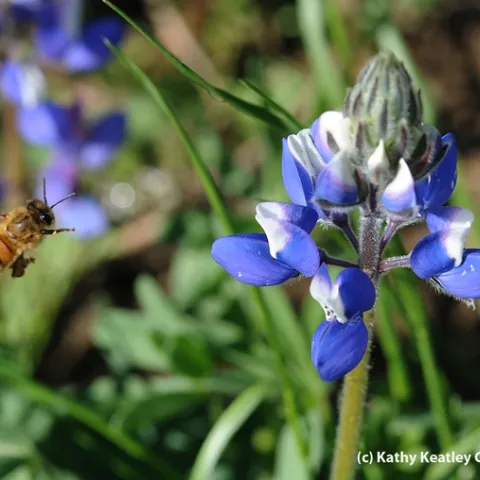
Honey bee heading for blue lupine. (Photo by Kathy Keatley Garvey)

Wild Blue Yonder

June 19, 2012
Sometimes you see honey bees "making a beeline." Such was the case when this honey bee (below) encountered a native wildflower, blue lupine (Lupinus). Lupines are known more as pollen plants than nectar plants, according to Frank Pellett's book, American Honey Plants, a Dadant publication.
View Article