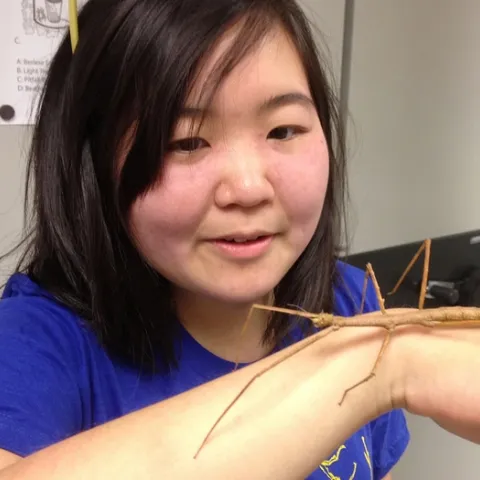
Ivana Li's fascinations with insects began in early childhood. She delighted in the insects on her parents' rose buses--the aphids, the ladybugs, grasshoppers and the caterpillars.
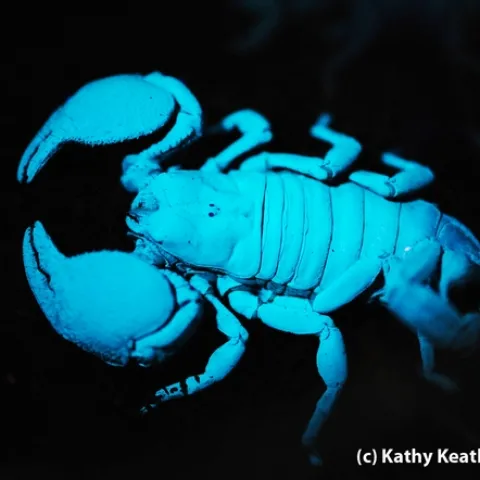
Scorpions--to fear or to revere? The Bohart Museum of Entomology's open house last Sunday drew visitors of all ages who marveled at the scorpions glowing under ultraviolet light. UC Davis entomology major Alexander Nguyen flashed a UV light on the critters as his audience watched in amazement.
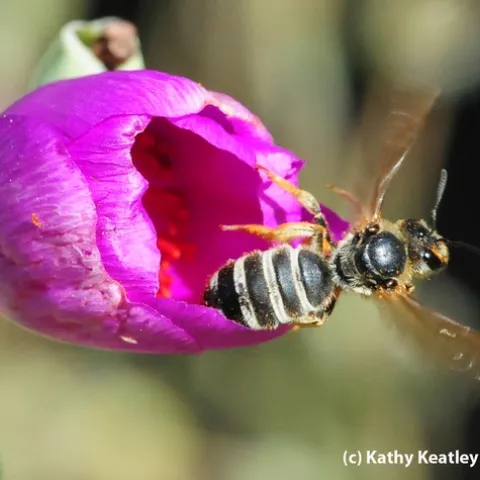
In the blink of an eye, they visit the rockpurslane (Calandrinia grandiflora). Now you see them, now you don't. They're a sweat bee, a little larger than most sweat bees, but a little smaller than a honey bee.
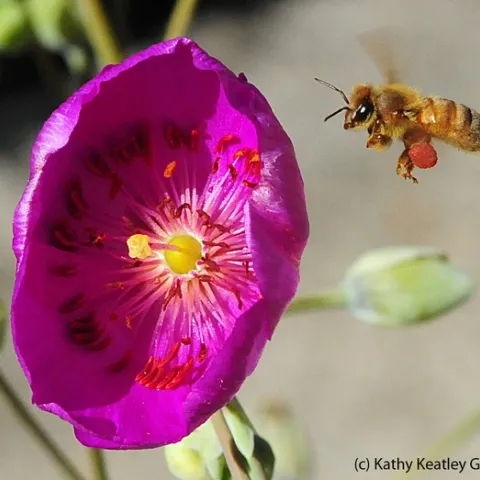
"Where do bees get red pollen?" we were asked. "We've seen bees packing blood-red pollen at the entrance to a hive." Well, one flower that yields red pollen is rock purslane (Calandrinia grandiflora). It's a drought-tolerant perennial, a succulent.
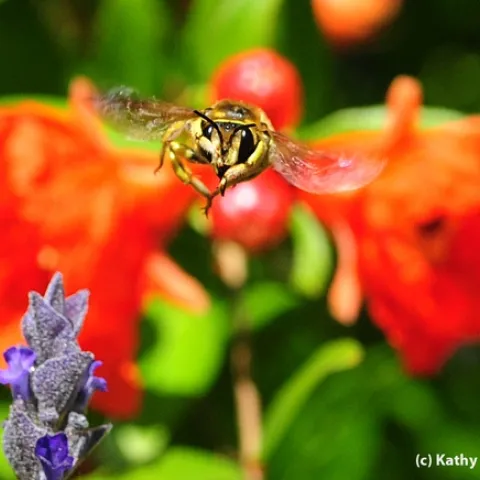
Whether it's coming or going, you notice this pollinator's presence. The European wool carder bee (Anthidium manicatum), so named because the female collects or cards "plant hairs" or "plant fuzz" to line her nest, is strikingly beautiful. The bee is mostly black and yellow.