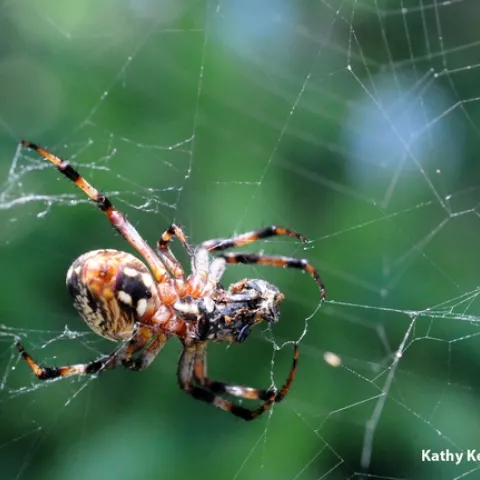
If you've ever watched spiders trap their prey in their sticky webs, you've probably wondered: "Why don't spiders stick to their own webs?" We've watched countless spiders trap honey bees, syrphid flies and other hapless critters in their webs.
Okay, what's the heaviest insect in the world? The longest? The fastest runner? The fastest flying insect? The loudest? The smallest? The insect with the greatest wingspan?
The news headlines screamed "immoral" and "promiscuous." The story was not about a red light district or "Ladies of the Night" or even linked to humans. It was about honey bee queens. "Ladies of the Day," if you will.
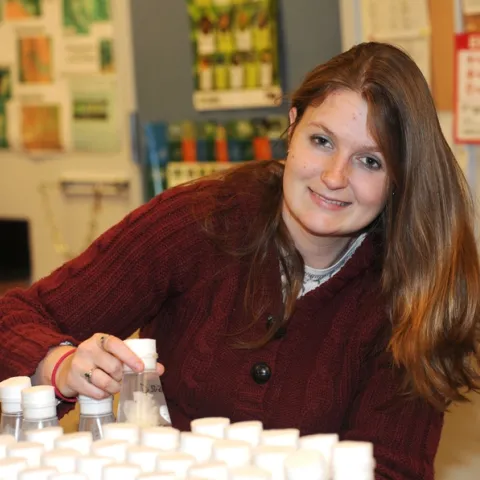
It promises to be both exciting and informative. Some 200 freshmen at the University of California, Davis will present their research posters on career explorations from 3:10 to 4:30 p.m. on Tuesday, March 13 in Freeborn Hall.
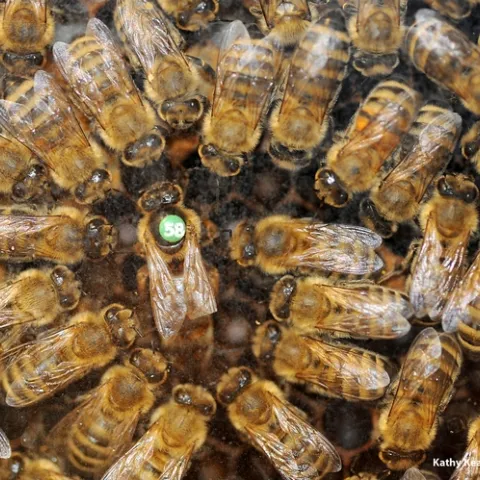
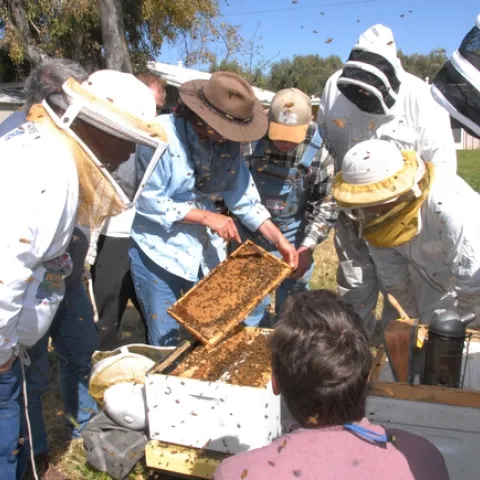
Bee breeder-geneticist Susan Cobey fervently believes that increasing the overall genetic diversity of honey bees will lead to healthier, hardier bees that can better fight off parasites, pathogens and pests.