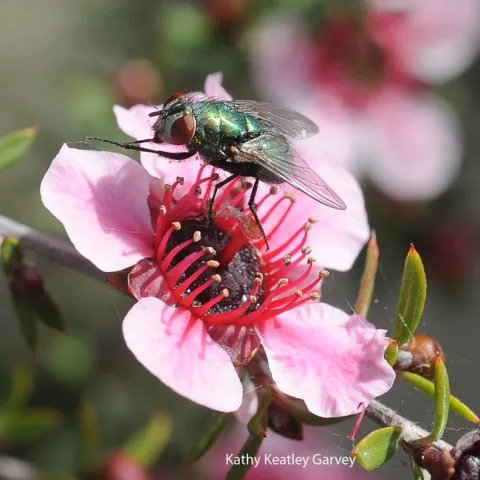
When you see the blow fly (below), what do you think? Well, that depends on who you are and what you do--or maybe your earliest negative/positive insect recollections.
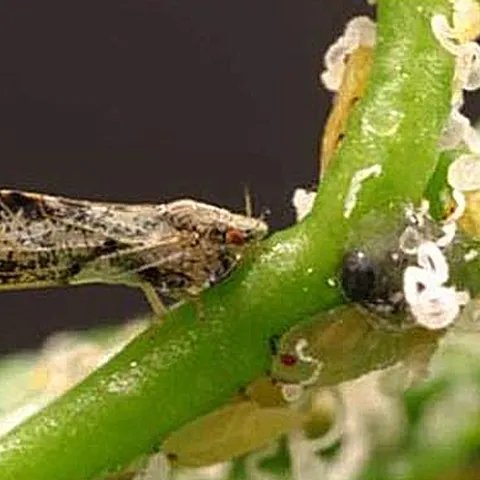
The public, says entomologist Kris Godfrey, needs to become more aware of the threat of invasive species. And, she adds, we need to educate people and organizations about the incoming pests and pests that are already here.
Honey bee guru Eric Mussen talks a lot about the declining honey bee population. After all, he's served as the Extension apiculturist with the UC Davis Department of Entomology since 1976.
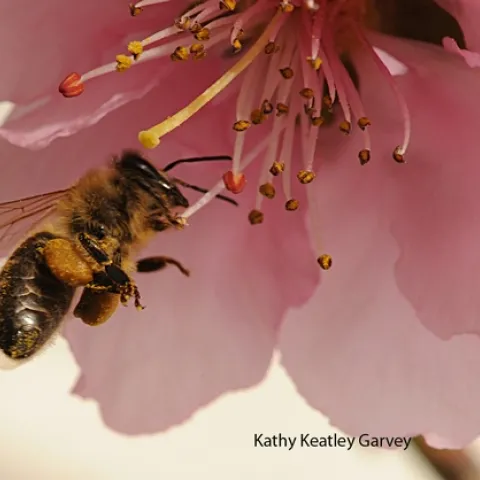
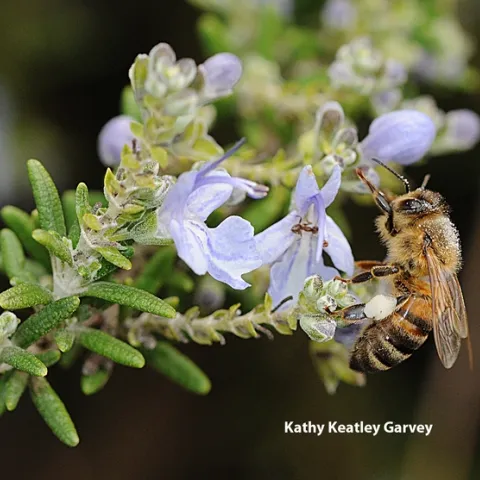
If you've ever watched honey bees work the blossoms, you'll probably see them packing pollen in their pollen baskets and cleaning their tongue as they buzz from flower to flower. Pollen is protein, and nectar, carbohydrates.
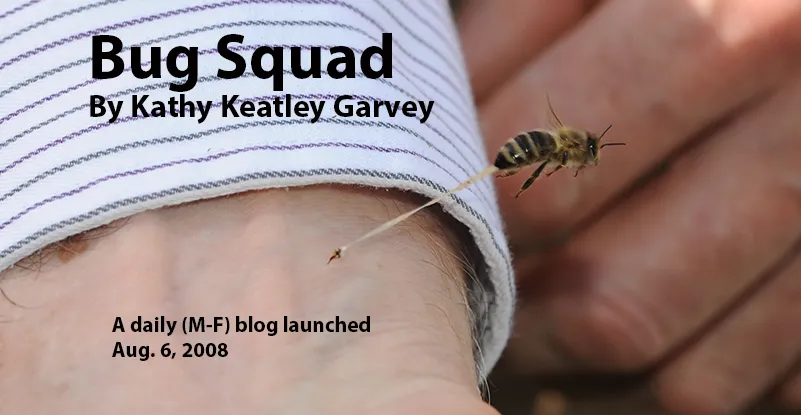
Not everybody loves honey bees. Indeed, about one percent of the population will go into anaphylactic shock if they're stung by a bee. That's a very small percentage--one percent--but it's huge if you're allergic to bees. Other folks just don't want to be around them.