Bug Squad

A daily (M-F) blog launched Aug. 6, 2008 and about the wonderful world of insects and those who study them. (Photo by Kathy Keatley Garvey)
Primary Image
Darker bee and a light-colored bee foraging on sedum. (Photo by Kathy Keatley Garvey)

Color Them All Bee-utiful

September 8, 2011
Often you'll hear kindergarten students asking one another: "What's your favorite color?" Beekeepers do that, too--in a joking sort of way.
View Article
Primary Image
Metallic green chelicerae glowing on the daring jumping spider. (Photo by Kathy Keatley Garvey)

Jumpin' Jehosaphat

September 7, 2011
Jumpin' Jehosaphat! Those jumping spiders can jump--several lengths of their body, in fact. There seem to be more spiders in our yard this summer than usual--crab spiders, black widows, web weavers and jumping spiders. Well, that makes sense--we have more bees.
View Article
Primary Image
Leafcutter bee forages on a gold coin flower, unaware that a jumping spider lurks. (Photo by Kathy Keatley Garvey)

Danger Lurks

September 6, 2011
One left hungry. One didn't. We watched a leafcutter bee (genus Megachile) foraging on a gold coin flower (Asteriscus maritimus 'Gold Coin') yesterday when suddenly danger lurked. A jumping spider peered over the petals, its legs (aka "claws") extended in anticipation, the mark of a good hunter.
View Article
Primary Image
Close-up Gulf Fritillary on sedum. (Photo by Kathy Keatley Garvey)

Showtime for the Gulf Fritillary

September 5, 2011
It's showtime! The Gulf Fritillary butterfly is one of the showiest butterflies in California, says butterfly guru Art Shapiro, professor of evolution and ecology at UC Davis. Indeed it is. The bright orange-red butterfly with a wingspan that can reach four inches visited our back yard yesterday.
View Article
Primary Image
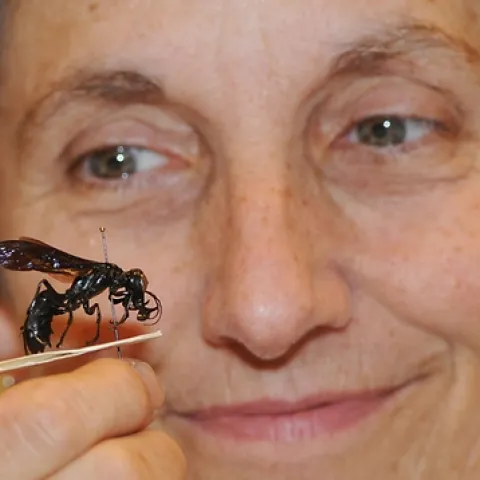
Large jaws of the male "warrior wasp" probably play a role in defense and reproduction, says Lynn Kimsey, director of the Bohart Museum of Entomology. (Photo by Andrew Richards)

Jaw-Dropping Wasp

September 2, 2011
"Just how long is that newly discovered species of wasp?" the reporter asked. "Are you sure the male is not 2-1/2 centimeters instead of 2-1/2 inches?" News media, the scientific world, and the general public can't believe it. Yes, the male "warrior wasp" is 2-1/2 inches, not centimeters.
View Article