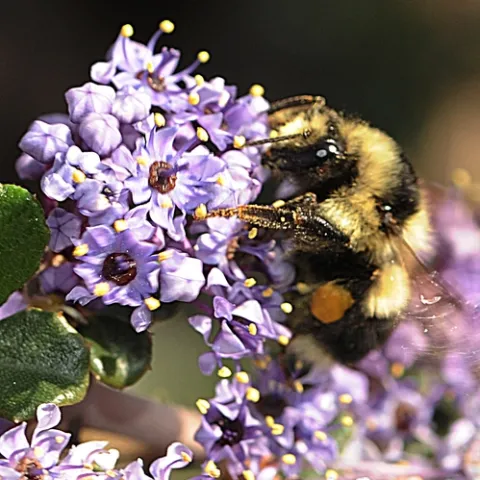
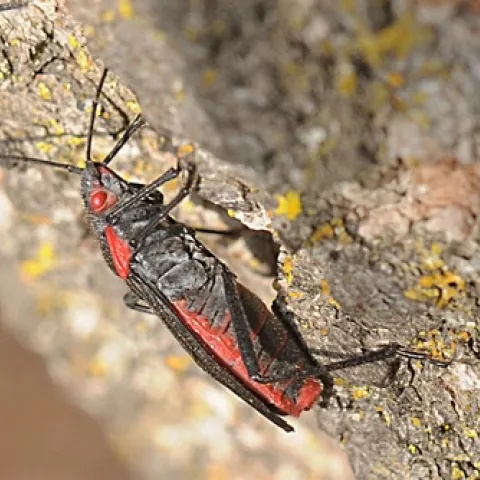
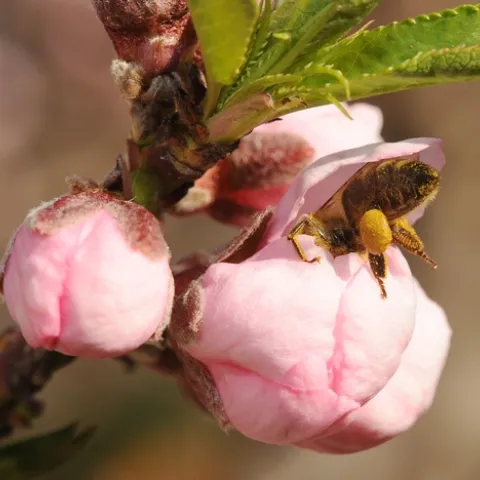
At first I thought it was a yellow-faced bumble bee. Sort of like applying the adage, "When all you have is a hammer, everything looks like a nail." That's because most of the bumble bees I see are the yellow-faced bumble bees (Bombus vosnesenskii).
Move over, Justin Bieber. Butterfly guru Art Shapiro, professor of evolution and ecology at the University of California, Davis, says he's now a "cover boy," too. Shapiro is featured in the current edition of Sacramento News & Review.
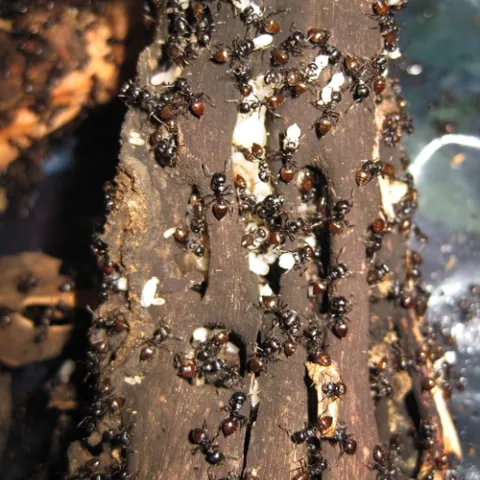
Just call it the ABC of ants. (A) Ants, (B) Bonnie Blaimer and (C) Crematogaster. Add a double "M" and you have a myrmecologist studying ants in Madagascar.
For being "retired," Hugh Dingle is one busy scientist. Dingle, an emeritus professor in the UC Davis Department of Entomology, recently returned to Davis after living in Australia for seven years and doing research at the University of Brisbane, Australia.
Cool temperatures and honey bees do not a good team make. Since honey bees don't forage until temperatures hit 50 to 55 degrees, we haven't seen many bees gathering pollen from our nectarine trees. If you love nectarines, there's a lot to love.