

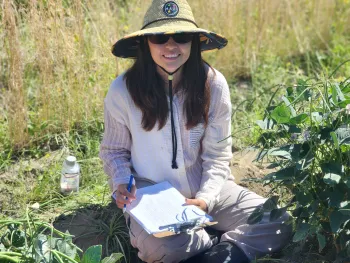
Climate-smart agriculture programs have taken root in the Imperial Valley thanks to the dedication and persistence of Ana Resendiz, our Climate-Smart Agriculture Community Education Specialist serving Imperial and Riverside counties.
When Ana stepped into her role, adoption of CDFA climate-smart grants and practices across the region was still limited. Building on the foundation laid by her predecessor, she made it her mission to expand outreach, awareness, and access to these programs, especially among underserved growers. Today, thanks to her efforts, the Healthy Soils Program and SWEEP (State Water Efficiency and Enhancement Program) are widely recognized among local farmers, with dozens of completed projects and a growing waitlist of interested participants.
Outreach to Underserved Producers
With grant funding cycles fluctuating in recent years, Ana diversified her outreach and technical assistance to meet broader grower needs. One of her biggest focuses has been building relationships with Spanish-speaking farmers, many of whom had never previously connected with Cooperative Extension or other technical assistance providers.
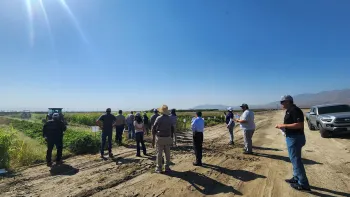
This work requires patience, consistency, and trust. Over time, Ana has helped farmers navigate disaster relief programs, resources from the Small Farms team, business development support, and connections to direct-marketing opportunities
One of her most meaningful contributions has been helping farmers participate in the Farm to School program by providing translation, assistance with paperwork, and one-on-one support so local vegetables can make their way into local school districts.
Because of her commitment to inclusion and equity, Ana has been nominated for the UC ANR Workplace Inclusion and Belonging Award.
Advancing Research on Climate-Smart Practices
Ana’s work extends beyond outreach. She collaborates with multiple local Cooperative Extension advisors on applied research projects, with a special focus on cover crops and agave production. Since there is limited local data on effective cover crop varieties and management practices for this region, Ana worked with local advisors to establish a cover crop demonstration plot that is showcased during annual field days. She also collaborates on two Healthy Soils Demonstration projects testing summer cover crop varieties that can withstand high heat and minimal water.
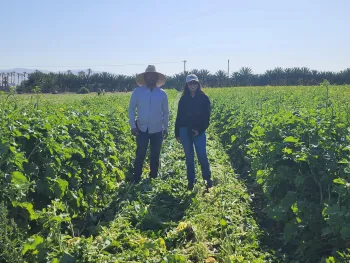
Recognizing local interest in alternative crops that require little water, Ana has begun working with growers on agave production. While agave shows promise for desert agriculture, California growers have lacked research, data, and best-practice guidelines.
Many farmers are also curious about integrating sustainable practices—such as cover crops—between agave rows, an area Ana hopes to explore further.
Looking ahead, Ana will be co-hosting a Spanish-language workshop on agave production at the 2026 Small Farms Conference. If you’d like to learn more, register for the conference here to join the workshop and connect with Ana.