
Here on the North Coast, we are blessed with moderate winter temperatures and abundant moisture in the form of fog, rain, mist, spritz, drizzle, downpours, and the occasional bomb cyclone. All that moisture and our abundant plant growth make for some terrific slug habitat. Now is the time to search out their eggs before they hatch, remove any of the surviving adults you find and clean up the yard to reduce the havens slugs rely on.
Slugs lay their eggs in fall, which then overwinter and produce a new spring crop of the slimy, slippery creatures we all know and loathe. Eggs are laid in clusters under garden debris, on the underside of pots and rocks, and other moist, protected places on or near the soil surface. While they are small, they are visible and can be gathered up and disposed of with the same techniques you use for adult slugs.
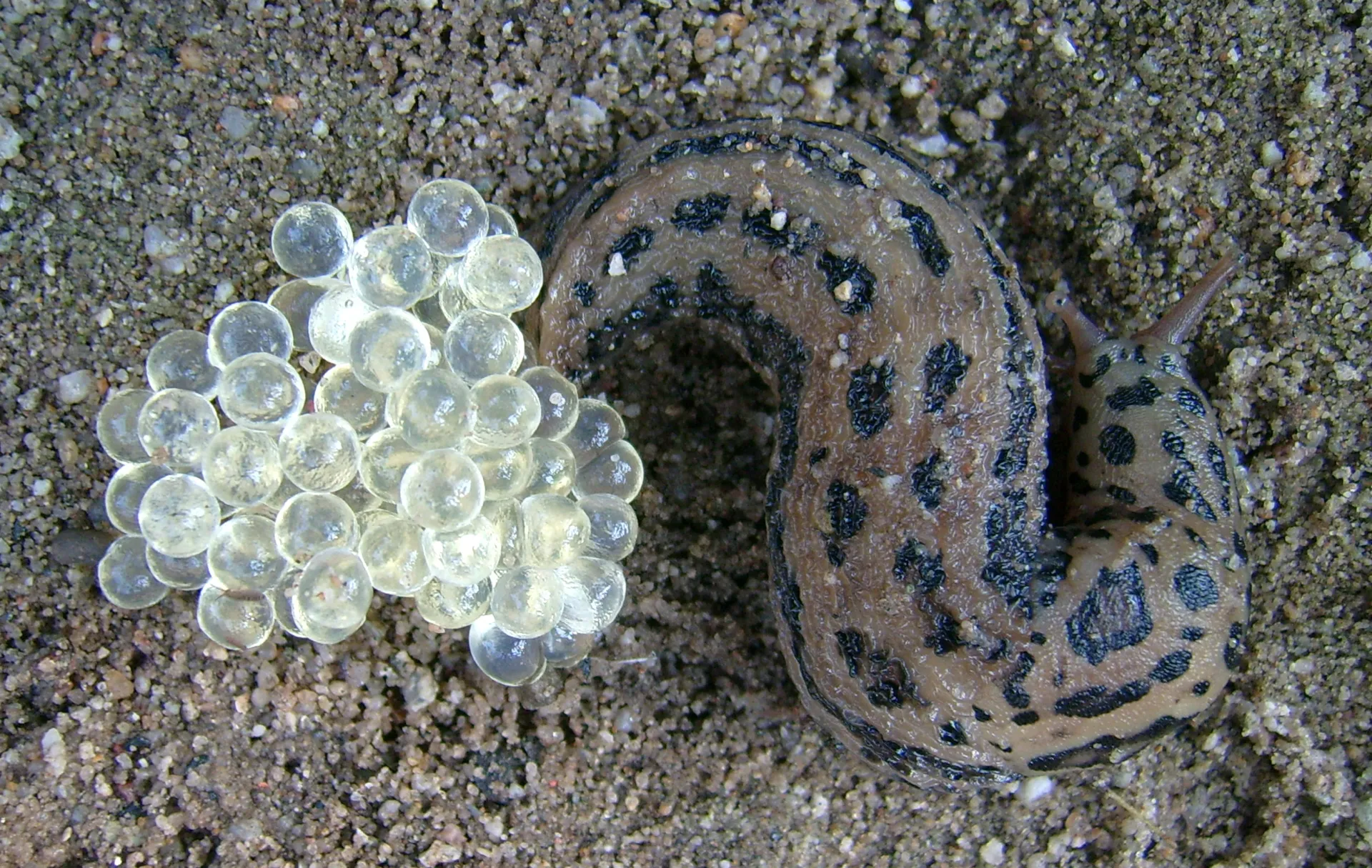
Although our weather makes day and night propitious for slugs prowling around under plants and among tender young plants, slugs are most commonly active on humid nights when temperatures are above 50 ℉. If you’re a nocturnal person and like to venture out at night, you can start picking slugs off plants and the soil around plants about two hours after dark.
If you are a more diurnal person, you can put out boards, cardboard, or tarps under and near your plants. Then you can remove the slugs that shelter under the “traps” in the morning. On damp foggy or cloudy mornings, early slug management trips often work well too. You can find them replete after munching on your tender transplants and collect them just as the slugs are retiring from their night out foraging.
Cleaning up fallen leaves, decaying plant bits, and other rubbish regularly and working the soil around plants to about six inches will remove hiding spaces for adult slugs, help to eliminate suitable places for infant slugs emerging in spring and reduce the density of slug eggs. Even children’s sandboxes left covered over winter can provide hiding and egg laying sites for slugs, so check covered items like BBQ’s, heat pump housings, woodpiles, etc.
Slugs may not be as visible in winter, but they and their eggs are lurking, waiting for spring. Get a jump on slugs this winter.
Resources
Slugs: A Guide to the Invasive and Native Fauna of California. R.J. Mc Donnell, T.D. Paine and M.J. Gormally UC ANR Publication 8336 • January 2009
How to Control Slugs in Your Garden. Neil Bell and Amy J. Dreves OSU Extension Service EM 9155 | Revised April 2021, Reviewed 2023
Pests in Gardens and Landscapes: Quick Tips Snails and Slugs, Published April 2024
Snails and Slugs UC IPM Home and Landscape Updated March 2018