
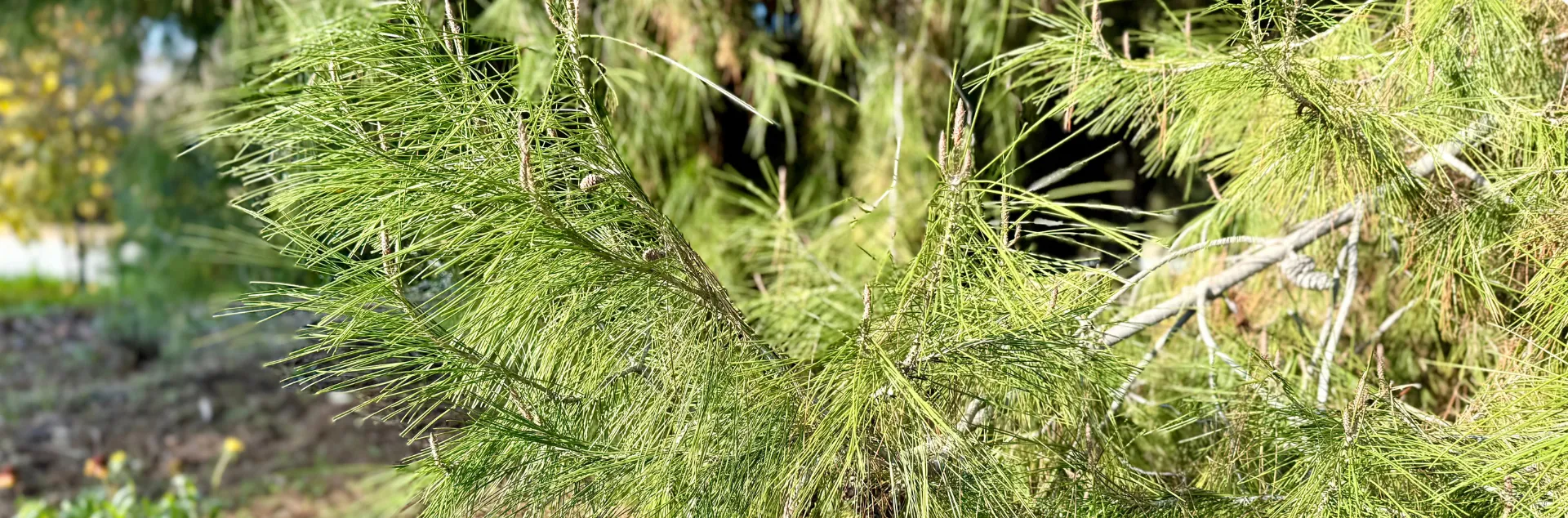

If your pine tree has become unwieldy or some parts look diseased, winter is the best time to prune out unwanted twigs and branches. When the weather is warmer, the pruning cuts may attract pests that threaten the health of the tree, including pine bark beetles, pitch moths and western gall rust, according to the UC Integrated Pest Management Program.
Bark beetles
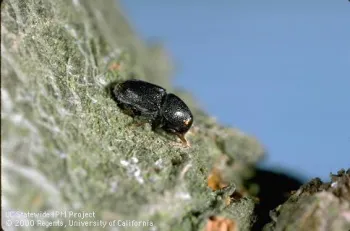
Native bark beetles typically attack trees already stressed by drought, disease or mechanical damage. They are small, dark insects about the size of a grain of rice. Adult beetles can fly and spread from tree to tree. Larvae are tiny grubs that feed beneath bark on trunks and branches.
Once bark beetles have become established in the tree, pesticide applications won’t help. Prevent bark beetle infestations by keeping the trees healthy and only pruning between October and January. If you already have bark beetles, prune and dispose of infested branches during the same time frame. Large galls on major limbs or the trunk can lead to structural failure, so consider removing and replacing trees that may be hazardous.
More information on bark beetles
Pitch moths
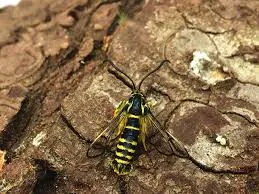
Pitch moths are day-flying, clearwing specie
s whose larvae tunnel into pines and cause trees to ooze sticky resin that collects in large, unsightly masses. The presence of the masses can cause limb dieback and weaken trees.
Small limbs infested with larvae and pitch masses can be pruned off during the colder months. On the trunk or large branches, scraping away or prying off resinous pitch cankers is the only recommended method of controlling pitch masses and larvae.
More information on pitch moths
Western gall rust
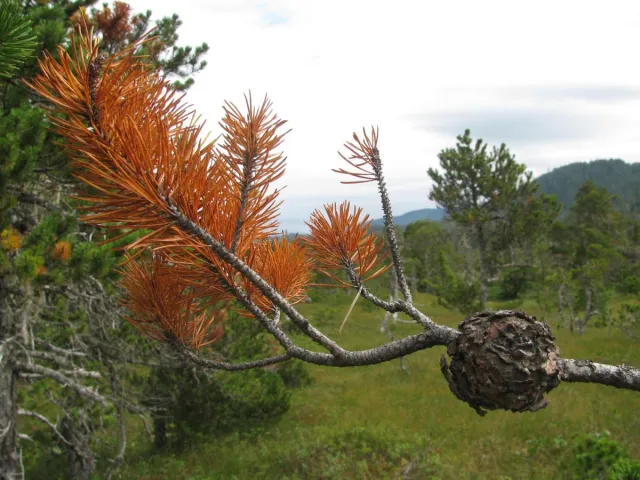
Western gall rust is most easily identified by irregular woody swellings on the pine tree trunk or branches. At first, they are pea-sized and difficult to see, but they grow larger over several years, sometimes reaching the size of a mini watermelon or even larger. The foliage on parts of the tree becomes yellowish, then brown or reddish and drops prematurely. Beyond the galls, foliage may become stunted and bushy.
Galls are sometimes colonized by other fungi or insects or they may become a place where small animals gnaw on the tree. The top of the tree may dieback or break off.
In the winter, prune out galls on small- and moderate-sized branches. Collect all fallen branches, twigs and needles and dispose of them away from host plants. If the galls are severe on the trunk or major branches it may be time to consider removing and replanting the tree.
__________________________
Written by UC Master Gardener Jeannette Warnert