


Last month, I promised you more info on pruning roses. Some of this will be a repeat and some is new (such as pruning climbers that I said I would go into this month). Pruning is not difficult. Take a deep breath and relax. You can do this!
First things first. Gather your rose pruning tools while ye may. That means, get your leather gloves, rose gloves or welding sleeves, sharpen your tools before each pruning session, clean your shears with alcohol wipes before pruning each rose bush. Second, cut down taller canes on your rose bushes to about 3 to 4 feet from the ground.
I prune from the bottom up. Rose pruning goes quickly by doing this (rose bushes only — you will prune a climber differently, which I describe later in this article).
- Look at the base of the rose bush. Check out the canes. If any canes appear dead (black, no signs of life, flat EEG or EKG line, etc.) damaged or diseased, cut those off the plant or down to where you see a nice white pith (inside center of the cane) to an outfacing bud.
- If you have rose bushes that are grafted (have a knob in the center of the bush), remove suckers (canes growing up in the ground that are not on the knob). Make sure you dig down and remove the sucker and the root attached to it. If you don’t, you will eventually get several suckers instead of one. Own-root roses will not have that knob.
- Remove canes that cross through the center of the plant or rub on other canes.
- Remove older gray canes in established plants to stimulate new cane growth. New canes are a nice, shiny green or greenish red color. Older canes may have linear streaks on them or are grey and thick. Remove an old grey cane, near the ground or graft, just above a bud union. It will stimulate new growth to replace the cane you removed. You want all green or greenish red canes. If you have only old canes, remove about a third of those each year to stimulate new growth. Continue this yearly until all the canes are green or that wonderful greenish red color. This is how you rejuvenate an older rose bush.
- When you cut a cane, cut below any dieback on the cane so a healthy, white center (inside) of the cane shows.
- For those canes with a Y shape at the end of the cane, cut below any of those Y's to the main stem of that cane.
- Remove any small, weak stems. Good size for a stem is about the size of a #2 pencil.
- Open up the center of the bush to allow for good air circulation. This will help to keep diseases at bay and allow for sunlight to reach the center of the bush.
- After cutting out the canes as mentioned in numbers 1 through 4 above, trim the bush for size and shape. Make those cuts slightly above a bud that faces outward about ¼ above the bud.
Hybrid tea, shrub, floribunda and grandiflora roses
- Prune to a vase shape plant with an open center. Height should be about 2.5’ to 3.5’.
- Roses will benefit from removing between 1/3 to ½ of last year’s growth.
- Important! Pull off any remaining leaves and clean up any leaves off the ground. They can harbor diseases that you don’t want on your rose.
- Dispose the rose debris in the green bin. One’s own compost pile does not usually get hot enough to destroy rose diseases.
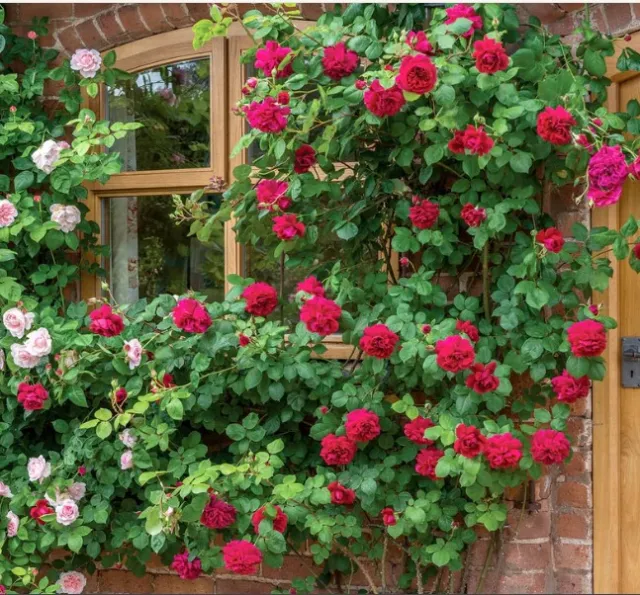
Pruning climbing roses (not ramblers)
Please note that climbing rose canes should be tied horizontally on a support, such as a rose trellis. If a cane is at an angle (anywhere from 45 to 60 degrees), none of the buds will have dominance and all the buds will grow and bloom (which is what you want for a climber). Follow the same pruning techniques in removing any diseased or dead canes.
- Keep up to six young, vigorous canes that can be secured to your support.
- Prune any side shoots, coming off those canes by 2/3 of their length. I generally keep about 4 to 5 bud eyes on those side shoots.
- If there are a lot of really old branches on the rose, again remove about 1/3 of those to stimulate new growth at the base. Do this every year until all of those really old canes are gone. Don’t remove all of those old canes at once, only a third at a time. Patience is a virtue here!
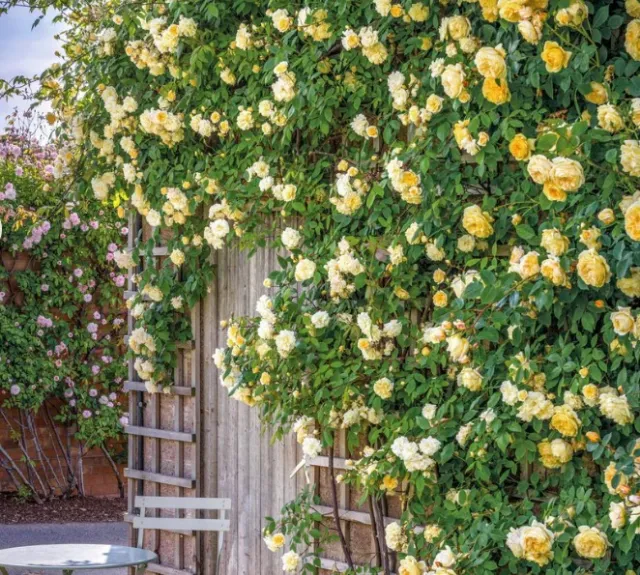
Pruning rambling roses (once blooming climbing roses)
Follow the instructions above but do this after the rose has finished blooming for the year (summer). Don’t wait until the following spring to prune. If you do, you will cut off all the blooms for the following year.
Pruning miniature roses
Minis are easy. Prune back any weak growths, twiggy growths, old (grey or streaked) canes near the soil level to encourage new growth at the base. Remove any debris from around the rose to discourage diseases.
Fertilizing
Since we have been having colder mornings, I would wait to fertilize until frost/freeze danger has passed. That is usually around February 15, and later in the mountains. Any new growth can be damaged by a freeze, so I would wait to fertilize until danger of frost/freeze is gone.
OK, so you made it to the end of the article (hopefully). Rosie, how do I know what type of rose bush I have? If you know the name of the rose, you can always look it up on Help Me Find Roses. We tend to grow a lot of Iceberg roses here is Fresno, so if you have white shrub rose and don’t know the name, it may be that one. Just FYI Fresno, there are lots of other white roses that do great here in Fresno county!
Until next month … “A bit of fragrance always clings to the hand that gives you roses.” – Chinese proverb
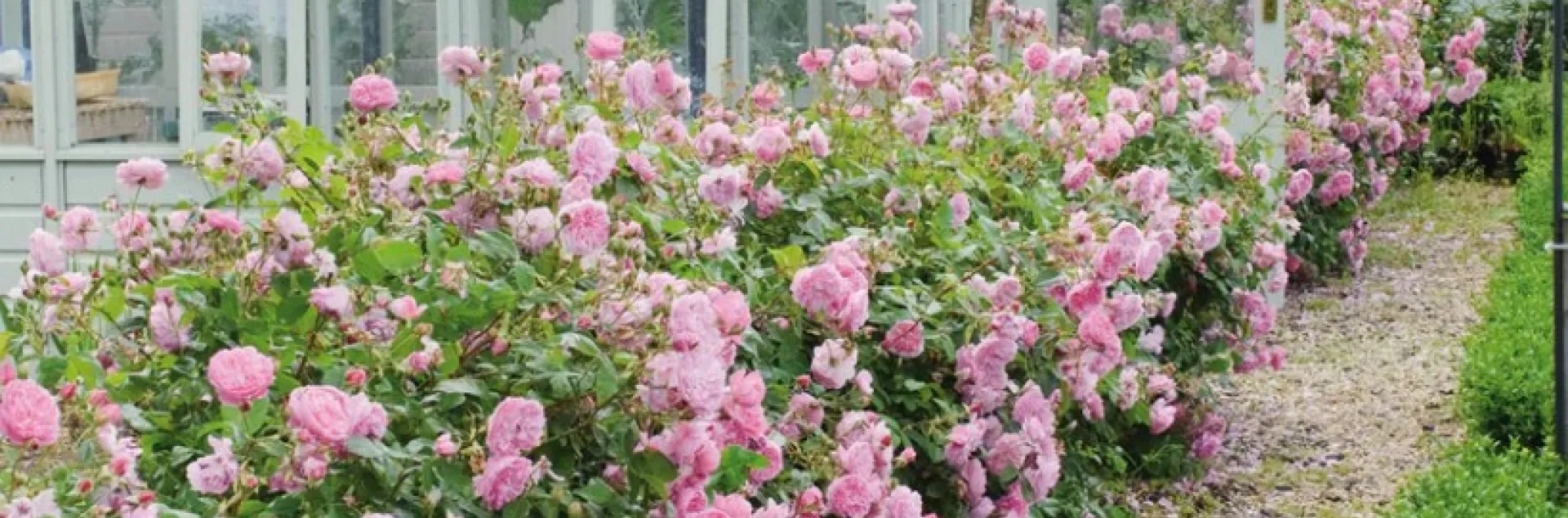
The image at the top is hybrid tea rose Harlow Carr. (Photo: David Austin Roses)
_________________________
Written by UC Master Gardener Debbie D.