

Program in El Dorado County shows many benefits of ‘good fire’, training events
Fresh out of high school, Marcus Hampshire, a member of the United Auburn Indian Community, was invited by his uncle to participate in a cultural burn – the controlled use of fire by Indigenous peoples to manage the land. He was hooked.
“From then on, I always had a torch in my hand or I was dragging fire with a tool,” said Hampshire, who is part of the Fire Leadership for Intertribal Conservation Knowledge-keeping Eco-cultural Revitalization (F.L.I.C.K.E.R.) Crew. “I really enjoy being able to see how fire works on the landscape.”
Providing the public a chance to see beneficial fire in action was one objective of the second Forester Prescribed Fire Training Exchange (FTREX), held Oct. 26 to Nov. 1 in and around the University of California, Berkeley Blodgett Forest Research Station.
About 50 people participated in the hands-on training event in El Dorado County, which brought together foresters, land managers, fire professionals and cultural practitioners such as Hampshire.

“There were foresters attending with less knowledge and background in how to conduct fires – and then there were ‘fire people’ attending who had a lot of knowledge about how to implement fires, but less about how to manage forests,” said Susie Kocher, UC Cooperative Extension forestry and natural resources advisor for the Central Sierra. “So it was a great exchange of information.”
Given the success of the first FTREX in Santa Cruz County last year, it was not surprising to see the tremendous enthusiasm for the second, according to David Benterou, a staff research associate with UC Agriculture and Natural Resources.
Benterou helped organize the training alongside UCCE fire advisor Barb Satink Wolfson. The FTREX was hosted by UC ANR, the Central Coast Prescribed Burn Association and the UC Berkeley Blodgett Forest team led by UCCE forestry specialist Rob York.
“We had to turn a lot of people away, unfortunately; it was hard to make a decision on who could attend this event,” said Benterou, noting that there were over 130 applicants and people came from as far away as Humboldt and San Diego counties.
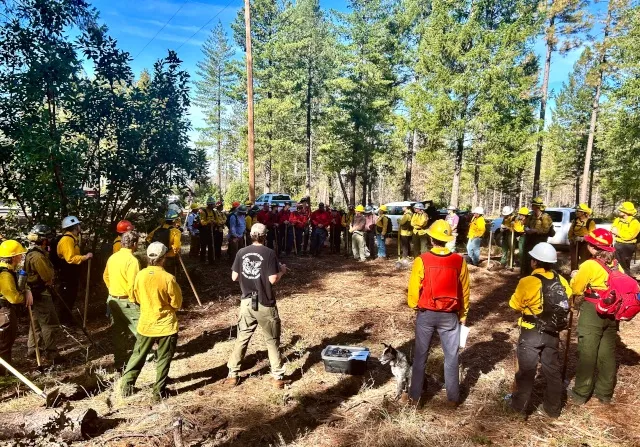
In addition, Benterou said there were members of the public who came to observe the burns – a woman charged with tending her family’s forested property and her niece who is contemplating a career in land management.
“People were really excited to take part in this and to be thinking about these issues around how to use fire,” Benterou said.
For Hampshire, the FTREX offered an opportunity to explore how cultural practices can help inform forest management practices. He also hoped to hone his skills so he can pass along the knowledge to youth in his community.
“We’ve been doing this for thousands of years, but the cycle has been broken,” he explained. “I believe that's why I’m here today [at the training], doing what I do. It’s to fix that cycle.”

UC ANR, prescribed burn associations drive essential training opportunities
Historically, Indigenous peoples used fire as a tool in stewarding California’s lands and forests, but the arrival of Europeans greatly diminished those practices.
“We’ve gone through more than a century of really intense fire suppression – and that has particular ramifications in forested systems where fuel buildup gets so high,” said Spencer Klinefelter, a program coordinator with the Central Coast Prescribed Burn Association. “We’ve seen the consequences of that with really intense wildfires, of a magnitude that we’ve never seen before in recorded modern history.”
Klinefelter; Jared Childress, CCPBA program manager; and representatives from the local prescribed burn association were instrumental in organizing the training exchange in El Dorado County. The formation of California’s influential Prescribed Burn Associations, in turn, has been guided by the efforts of the UC ANR Fire Network and its director Lenya Quinn-Davidson.
“We have been very embedded with prescribed burn associations across the state,” Kocher said. “We’ve been some of the moving force to get those first PBAs started back in 2017.”
The FTREX advances many of the prescribed burn associations’ goals of sharing knowledge, providing hands-on training and building community among the diverse participants.
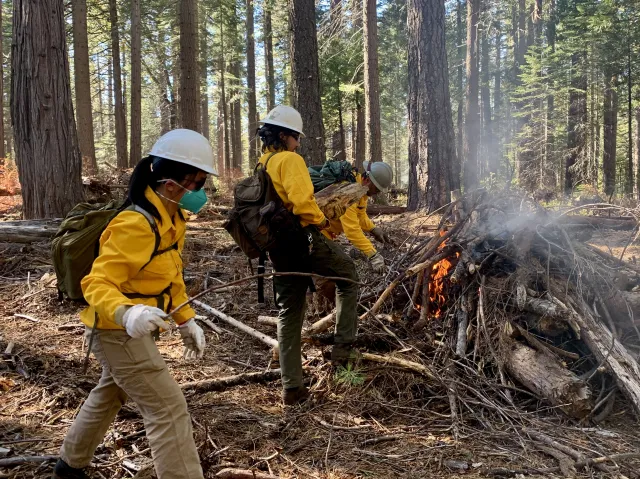
“We’re also providing them time to get to know one another, time to interact with their peers,” Klinefelter explained. “And I think that is almost more important in some ways – building that social network and that culture of people who understand fire’s place on the landscape.”
Caitlin Grace, a forestry assistant with CAL FIRE, has a deep understanding of fire suppression, but she participated in the FTREX to expand her understanding of prescribed fire. She sought to bring the latest research to her work at Jackson Demonstration State Forest, where the agency helps show landowners how to apply fire safely.
“Working for one of the largest wildfire-fighting agencies, I have a lot of access to training –but I don’t have a lot of access to landowner knowledge, as well as different techniques that we don’t use in CAL FIRE,” Grace explained. “It’s good to get a broad range of techniques on getting fire back to the land.”
Land managers offer valuable insights on use of prescribed fire
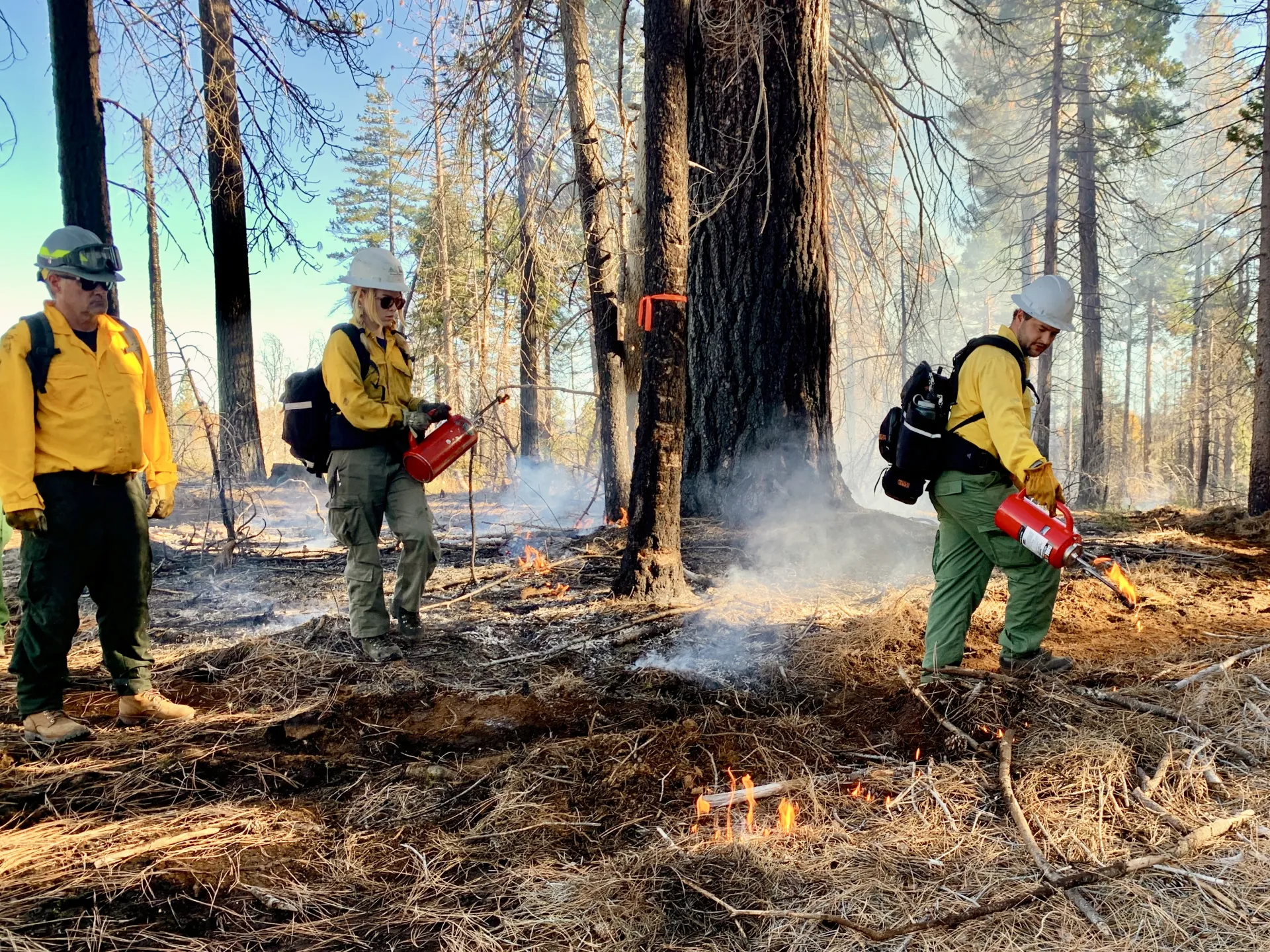
FTREX participants benefited from the extensive experience of people such as Lara McNicol, a fifth-generation forest landowner in Tuolumne County. McNicol, who manages 2,000 acres of mixed conifer forest in the Sierra Nevada, is also a steering committee member of the Tuolumne Prescribed Burn Association.
McNicol said she wants to help private landowners across her county and region put prescribed fire on the ground. And while she has gained invaluable knowledge by applying fire to her own land, McNicol added that FTREX augments her expertise through more formal training and background in fire science.
“One of the reasons that I came…was so that I could learn how to utilize fire in a silvicultural practice, and have it scientifically backed up to show that I can increase the safety and health of my forest, as well as make my forest more fire resilient and able to survive some of those catastrophic wildfires,” McNicol explained.
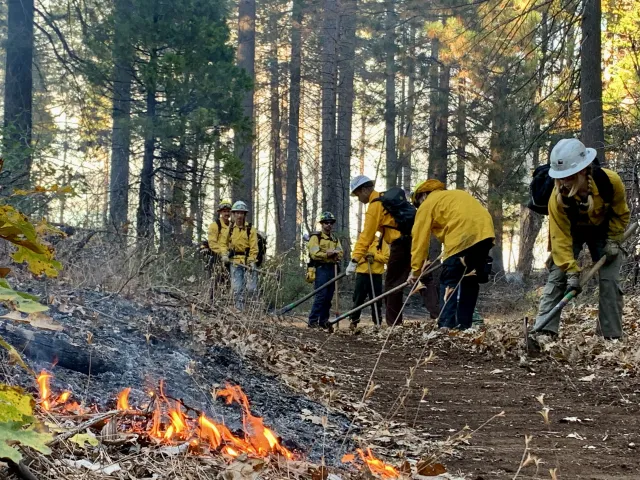
Nadia Hamey, a Registered Professional Forester in Santa Cruz County, has seen firsthand the aftermath of major fires. In 2020, the high-intensity CZU Lightning Complex fires in Santa Cruz and San Mateo counties showed the efficacy of prescribed burns, as areas that had been previously treated proved to be far more resilient, according to Hamey.
“It was really clear to anyone who witnessed those locations, post-fire, that the good fire we had put on the ground made a world of difference in how the wildfire moved through there,” she emphasized.
Hamey, who operates a consulting company, Hamey Woods, is the property manager of a 9,000-acre parcel of redwood forest owned by several conservation nonprofits. In the aftermath of the 2009 fire in that region, she observed the necessity of fire in thriving, healthy ecosystems.
“I saw a real diversity of species come back to the forest that I had been managing, that I had never seen before,” Hamey noted. “It was a completely fire-dependent and fire-adapted ecosystem…and ever since then, I’ve been just striving to bring more good fire back to the land in order to help that ecological process.”
‘Empowering for people’: Prescribed fire can be a practical tool
Just as seeing that revitalized forest was a “lightbulb moment” for Hamey, the FTREX organizers hoped that the tours, presentations and hands-on trainings would be equally illuminating for participants.
Morgan Galliano, coordinator of the El Dorado-Amador Prescribed Burn Association, said that such learning opportunities are rare for people outside of agencies that work directly with fire and natural resources.
And even for those with some prescribed fire experience, the FTREX offered a chance to see how fires of a larger scale could be planned and managed.

“This burn event gives me and other people that participate in prescribed burn associations the opportunity to observe how a larger burn is managed – organizing the people that are involved, coordinating the weather, monitoring the fuel conditions,” Galliano explained.
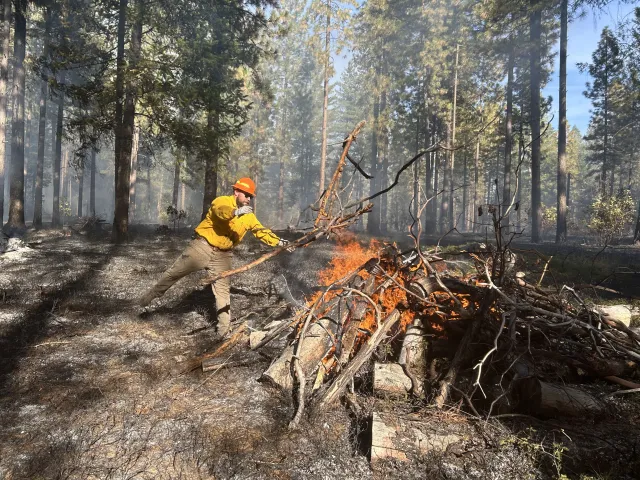
All told, participants were able to burn three out of the five days of FTREX – a positive development given the rains the weekend before, according to Kocher, the UCCE advisor. By learning to adapt to changing conditions and building a comfort level, the training aims to make fire a more feasible and practical tool for landowners and managers.
“We are going to need affordable ways to reduce the fire risk to timberland – as well as to communities – and prescribed fire in many cases offers that,” Galliano said. “One of the best things about working in prescribed fire is that it is empowering for people; it’s something that is accessible at a scale that they can manage and implement and learn about.”
It is especially important to empower the next generation of foresters and land managers, according to Zeke Lunder, founder of The Lookout website, an oft-cited source of fire information.
Lunder, a California Certified Prescribed Burn Boss who served as a “coach” during the FTREX, said that the trainings aim to get early-career professionals familiar with the entire process – from filing paperwork to executing the prescribed burn.
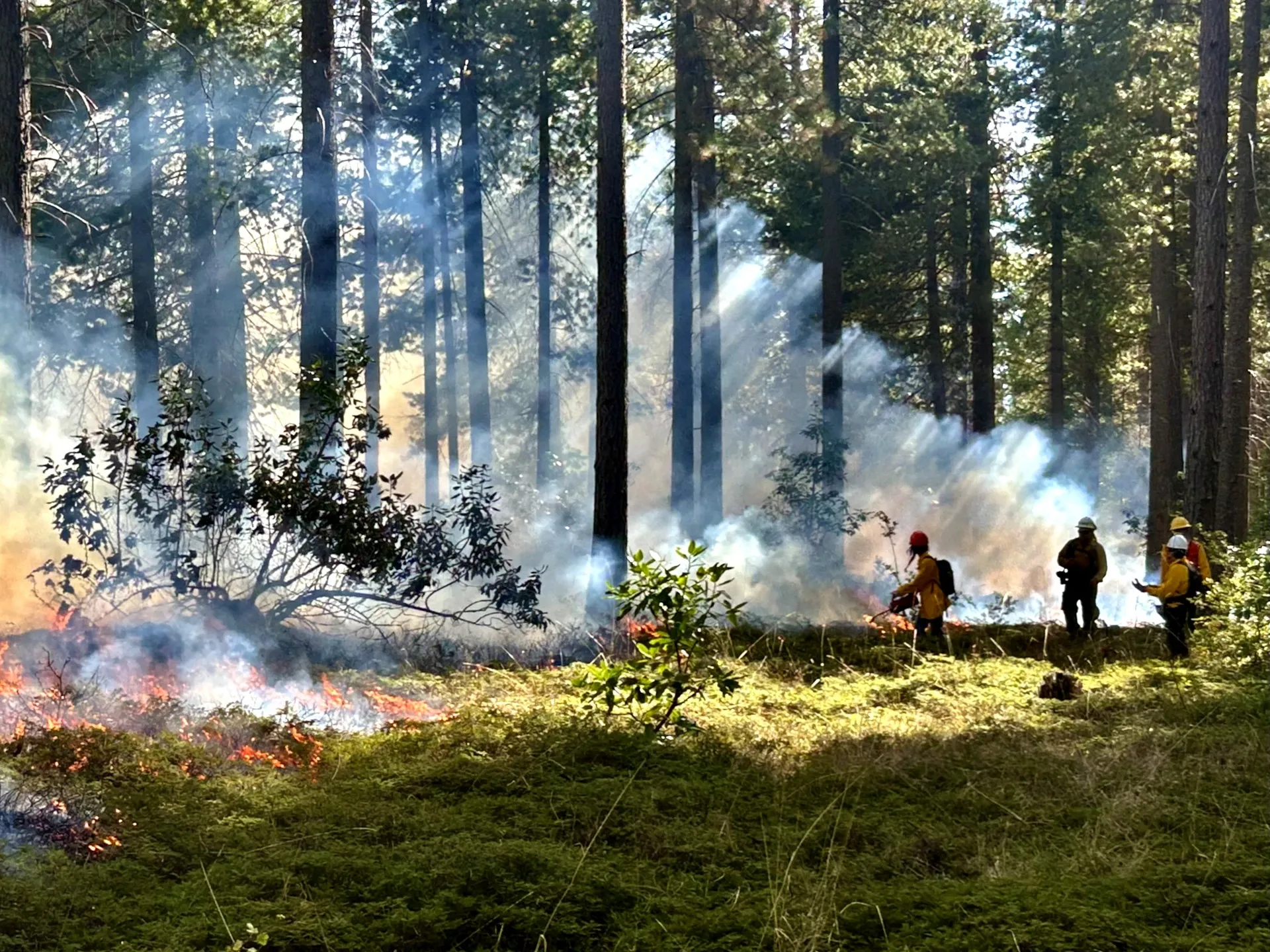
As he sees young people investing time in learning about this “incredible land management tool,” Lunder voiced optimism that there will be a resurgence in the use of prescribed fire. “I’m hoping that we can see foresters of all types and stripes get their matches back,” Lunder said.
That far-sighted outlook – and the potential positive impacts of prescribed fire on the environment – are what inspire Hampshire.
“What fuels my burning passion for the work that I do is knowing that I’m creating a better community for my elders and for the youth that follow after me,” he explained, “and knowing that this work isn’t something that I’ll directly benefit from, but something that my offspring will benefit from and my grandchildren will be able to benefit from.”