
UC Cooperative Extension explores how dogs can help detect, control rodent populations
JJ has a uniform to keep himself safe on the job. As a consummate professional, he always wears a collar. A harness fits snugly around his shoulders. When he treads on dangerous terrain, he sports protective booties on all four paws.
JJ is a rodent detection dog. For seven years, the yellow Labrador retriever has lent his nose to Working Dogs for Conservation, an international environmental nonprofit. In addition to tracking rare or invasive species on natural landscapes, the organization trains rescue pups to perform integrated pest management in manmade environments.
“The dogs give us insights into odor-based information beyond the limitations of what we can see,” said Mark Vick, JJ’s trainer and assistant director of programs with the organization. “A dog's superpower is how they interpret and communicate that information in a way we can actually use.”
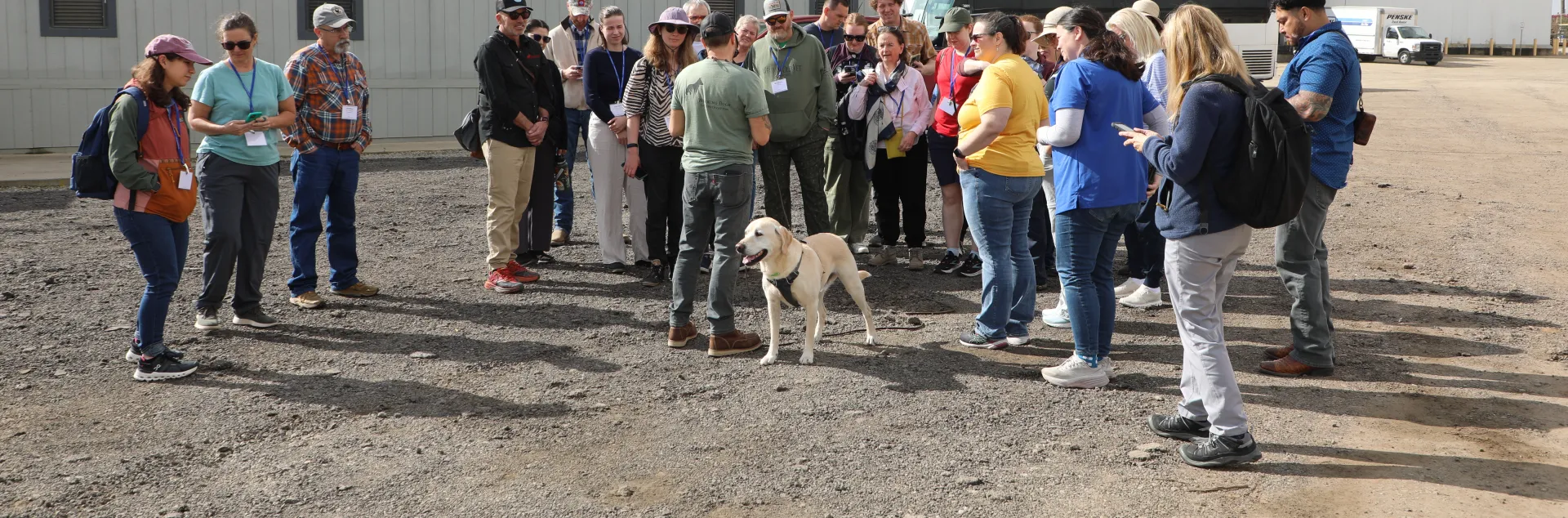
JJ’s capabilities were recently on full display during the 2026 Vertebrate Pest Conference in Southern California. Conference attendees were invited to visit a working farm owned by Mellano & Company, a multigenerational flower-growing business in coastal San Diego County, to watch JJ in action.
Mike Mellano owns the farm with his family. He was candid with the crowd – the farm has a mouse problem. The rodents chew on drip irrigation tape in the fields and cut into the farm’s profits.
“Once they chew on it, the integrity of the system is shot. We have leaks. Uniformity is gone. We have excess water. Poor crop performance. Poor yields,” Mellano said. “Vertebrate pest control is a big issue and it’s getting bigger.”
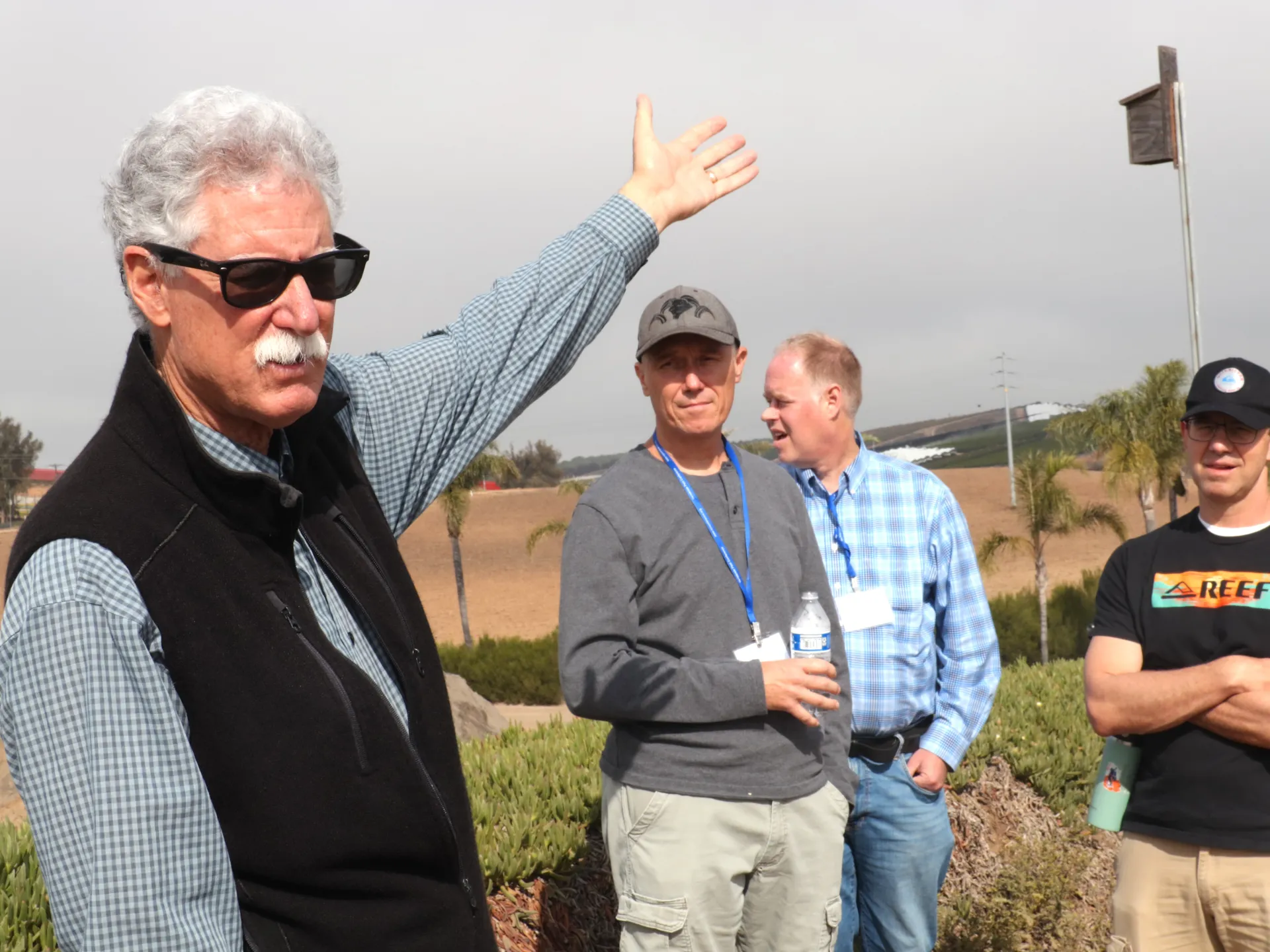
As a long-time collaborator with UC Agriculture and Natural Resources and chair of the UC President’s Advisory Commission on Agriculture and Natural Resources, Mellano is enthusiastic about testing new pest management practices. He often conducts research alongside UC Cooperative Extension human-wildlife interactions advisor Niamh Quinn, who organized the field trip.
“I’m a scientist; I love science,” said Mellano, who holds a Ph.D. in plant pathology. “Working with UC researchers allows us to try new ideas that can improve pest management while protecting the environment.”
When Quinn pitched the idea of bringing a detection dog to the farm, Mellano was game. Over the last five years, California passed AB 1298, AB 1322 and AB 2552, which banned second-generation anticoagulent rodenticides to reduce unintended poisoning of wildlife. But rodents aren’t going away on their own, so Mellano is shopping for other management strategies.
Dogs are a solution worth studying, Quinn says. By identifying rodent activity before infestations become obvious, dogs can help land managers rely less heavily on toxic measures.
“ We know that dogs can do amazing things, right? We've seen them sniff out cancer and COVID and bombs,” Quinn said. “Dogs have potential.”
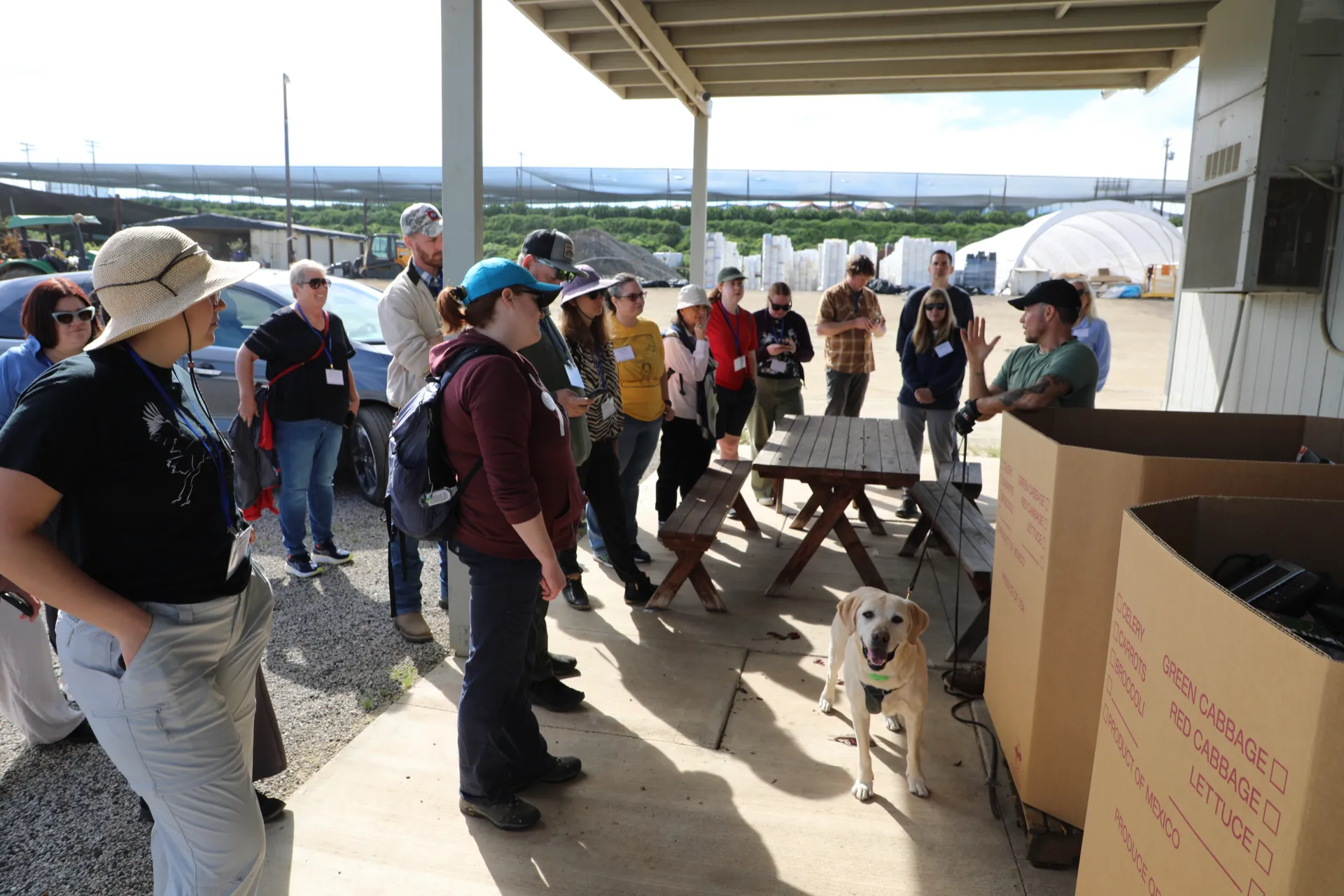
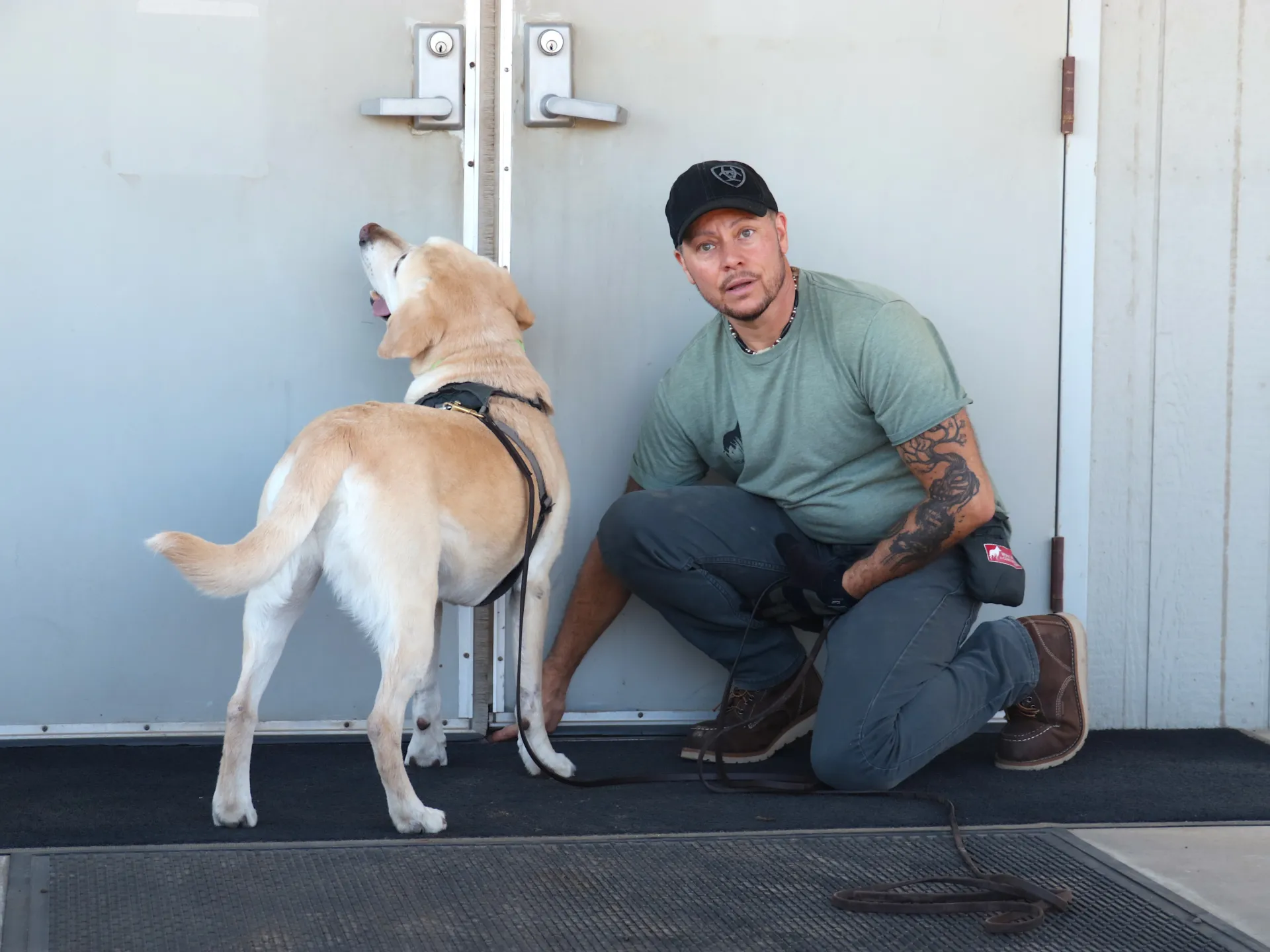
Vick and JJ began their demonstration at the entrance of a bungalow on the farm property. As they traced the building’s perimeter, JJ locked in on his task.
“It’s all the subtle cues,” said Pete Coppolillo, executive director of Working Dogs for Conservation. “As you watch JJ work, you may see his nose go up and then go down. His ears perk up or his tail just starts to wag.”
Vick knows how to read his pup partner after all their years working together. Briefly, the dog stopped in front of a wall, bringing Vick’s attention to a small hole leading into the building. But, based on JJ’s signal, that trail was cold.
“Rodents leave complex odor signatures as they move through landscapes and structures. There was odor here… but right now it’s not an active entry,” Vick said.
Based on JJ’s behavior, Vick believes rodents previously used that access point to get into the building and then holed up with resources inside. The demo ended there, leaving attendees and JJ begging for more.
“He wants to go inside the building,” Vick said, restraining JJ from climbing the stairs and continuing his work.
After attendees left, JJ got his way. His nose led the team to boxes of materials stacked in the corner of the room – bingo.
“After moving those items, we were able to access the source,” Vick said.
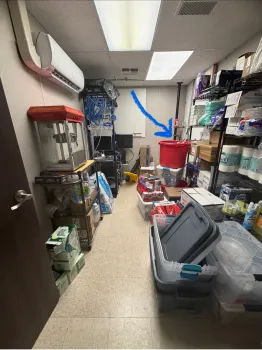
Behind the clutter, they found an oversized opening around a pipe where rodents had chewed the gap larger, along with a nearby hole in the wall. Disturbed insulation and hollowed-out wall space suggested this was a primary nesting and access area.
“At that point, it became very clear how they’re moving through the structure and where management efforts should be focused,” Vick said.
Following the demo, attendees buzzed with questions. They were eager to learn more about the four-legged pest management expert – and pet him.
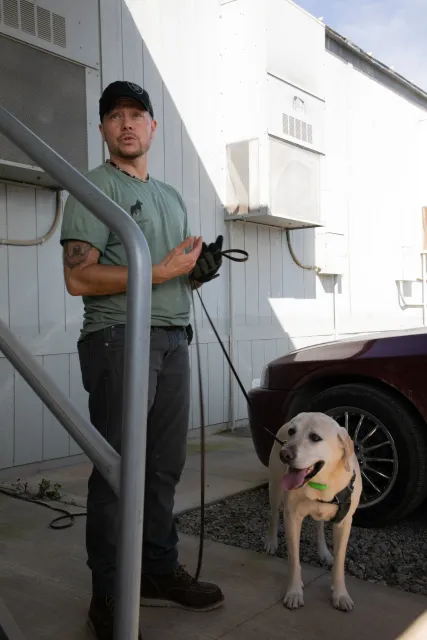
“Field demonstrations like this are a hallmark of Cooperative Extension’s approach to problem solving,” said Quinn, the event organizer. “I was trying to open people’s eyes to alternative rodent management.”
According to Quinn, rat detection isn’t the only career path available to modern canines. In the last few years, she’s also noticed the proliferation of rat abatement companies, which train dogs to catch and kill pests. (One of Quinn’s contacts has dispatched 300 rats in a single night using two dogs, and that’s apparently on the low end of the spectrum.)
While “ratter” dogs have been around for centuries, Quinn believes public pressure to limit rodenticides is giving working dogs a new relevance.
“It’s an old school thing that’s becoming a new school thing,” Quinn said.
Based on her experience with Vick, JJ and other pest-management professionals, dog-based pest control could have a future in the pest management industry. Still, Quinn wants to know more before fully endorsing the practice. She’s currently pursuing grants to further study their efficacy.
“Our integrated pest management toolbox is just becoming more and more restricted with legislation surrounding pesticide in California. It's important to explore the viability of alternative tools,” Quinn said. “But we need to know if they work.”