Winter is peak citrus season, and a time when many people gift their home-grown fruit to friends and loved ones. This holiday season, we would like to remind everyone that harmful invasive pests can move to new areas on citrus fruit. There are several active quarantines in California aimed at slowing the spread of these pests, including invasive fruit flies and the Asian citrus psyllid.
If you live in one of these areas, we encourage you to skip the fruit and choose alternative gifts instead. All citrus is prohibited from being brought or shipped into California, so it’s also a good time to remind your out-of-state visitors to leave their produce at home.
Invasive Fruit Flies
Invasive fruit flies can infest many kinds of fruit and vegetables grown in California, including citrus. Several species have been detected across the state. Quarantines are in place for the Caribbean fruit fly (Los Angeles County), the Mediterranean fruit fly (Santa Clara and Alameda counties), and the oriental fruit fly (Riverside and San Bernadino counties).
If you live in a quarantine area for invasive fruit flies:
Don’t move fruit off the property where it was grown.
Monitor your fruit trees for signs of invasive fruit fly damage and report suspected infestations to the California Department of Food and Agriculture (CDFA) at 1-800-491-1899, online through CDFA’s pest reporting system or your County Agricultural Commissioner.
Allow authorized CDFA workers access to your property to inspect fruit, set traps, or conduct eradication activities.
Dispose of homegrown fruits and vegetables by double-bagging and sealing then placing them in the trash–not in your green waste or compost bin.
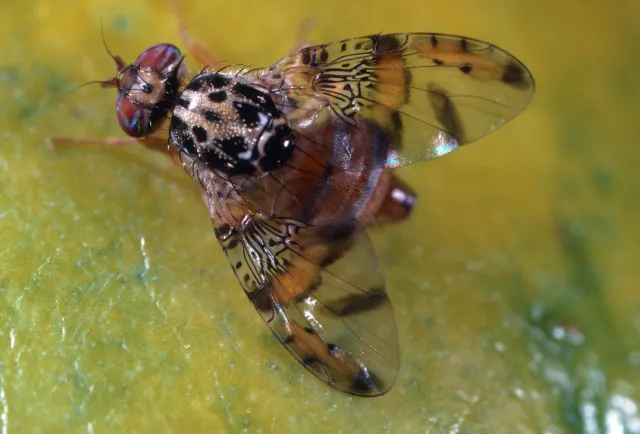
Adult Mediterranean fruit fly. Photo credit: Jack Kelly Clark, UC IPM.
Asian Citrus Psyllid and Huanglongbing Disease
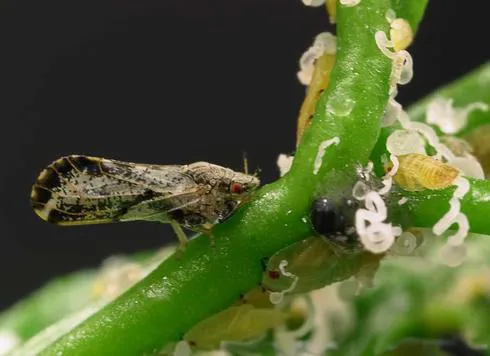
The Asian citrus psyllid (ACP) is a small sap-sucking insect that feeds on all kinds of citrus plants and can transmit a disease deadly to citrus trees called huanglongbing (HLB), also called citrus greening. HLB can kill healthy trees in as little as 5 years after infection and has no cure.
ACP has been found in many areas of Southern California and some parts of Northern California and the Central Valley. HLB has so far only been detected in some parts of Los Angeles, Orange, Ventura, San Diego, San Bernadino and Riverside counties. View an up-to-date quarantine map for HLB on the California Department of Food and Agriculture’s website. Whether or not you live in a quarantine area, all cases of HLB should be reported to CDFA.
If you live within an HLB quarantine area:
Do not move citrus plant material from your residence.
Allow authorized CDFA workers access to your property to inspect trees, set traps, or conduct eradication activities.
If you live outside of HLB quarantine areas:
Monitor your citrus plants for ACP, and report suspected infestations to CDFA in areas where ACP is not known to be present.
In areas known to have ACP, take steps to manage infestations. Visit UC IPM’s Pest Notes: Asian Citrus Psyllid and Huanglongbing Disease for more information about identification and management.
While the holiday season is a time of giving, we urge you to not share these invasive citrus pests!