
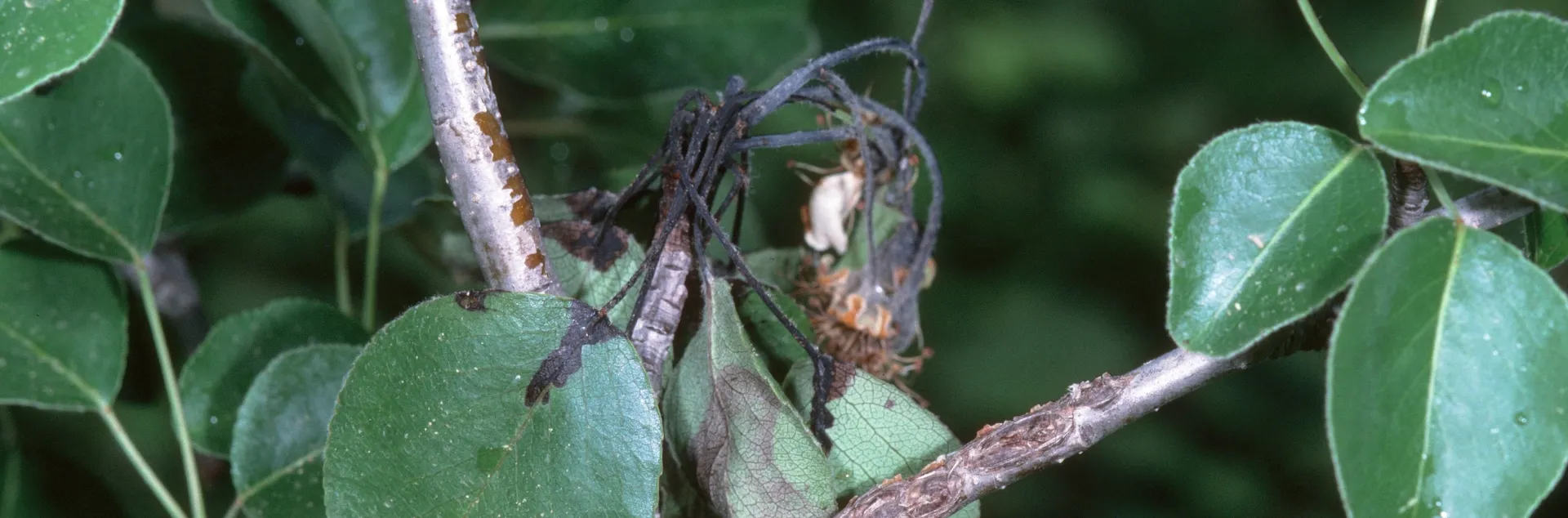
A warm March followed by rain in April and May in many parts of California has set up the perfect conditions for the development of an unsightly and damaging tree disease called fire blight. Pome fruit trees like pear and apple, and other related trees like pyracantha, are all susceptible to this bacterial disease. The bacteria spreads when rain splashes water from cankers and infected leaves and blossoms to healthy plant parts. Pollinators like bees can also spread the disease as they visit blossoms.
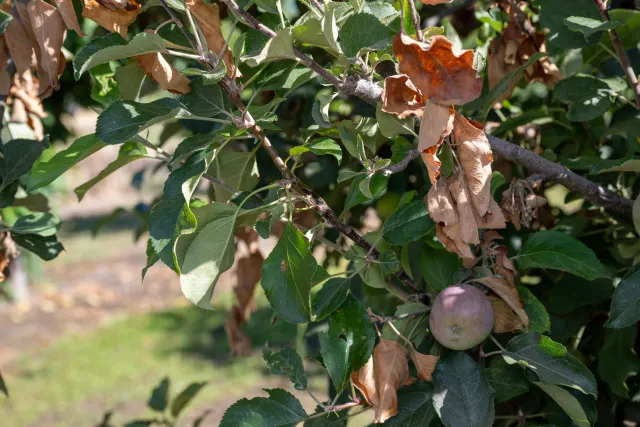
How can you tell whether a tree has fire blight?
Monitor your trees and shrubs for fire blight signs and symptoms. The first sign is bacterial ooze on branches and twigs but it's easy to miss. As the disease progresses, infected flowers and flower stems wilt, turning black on pear trees and brown on apple trees. Small, infected shoots wilt, forming a crook. Leaves on diseased shoots often show blackening along the midrib and veins before dying completely. The necrotic leaves cling firmly to the tree after death, a key diagnostic feature of fire blight.
New growth is especially vulnerable to infection, so avoid heavy fertilization and pruning of healthy trees during mild wet weather.
How can you control fire blight?
Rapidly advancing infections on very susceptible trees (pear, Asian pear, quince, and some apple varieties) should be pruned out as soon as they appear in spring. Otherwise, prune in winter or summer when the bacteria are no longer spreading through the tree. Remove the infected branch and the branch to which it is attached, 12 to 18 inches below the visibly infected tissue. Sterilizing shears is not needed as long as the cuts are made at the recommended distance below the visible canker.
Pesticide sprays prevent new infections but won’t eliminate wood infections and by the time symptoms on shoots and flowers appear, won't be effective. The spray must be applied to open blossoms.
The Pest Notes: Fire Blight contains much more detail on identification and management of this disease.