
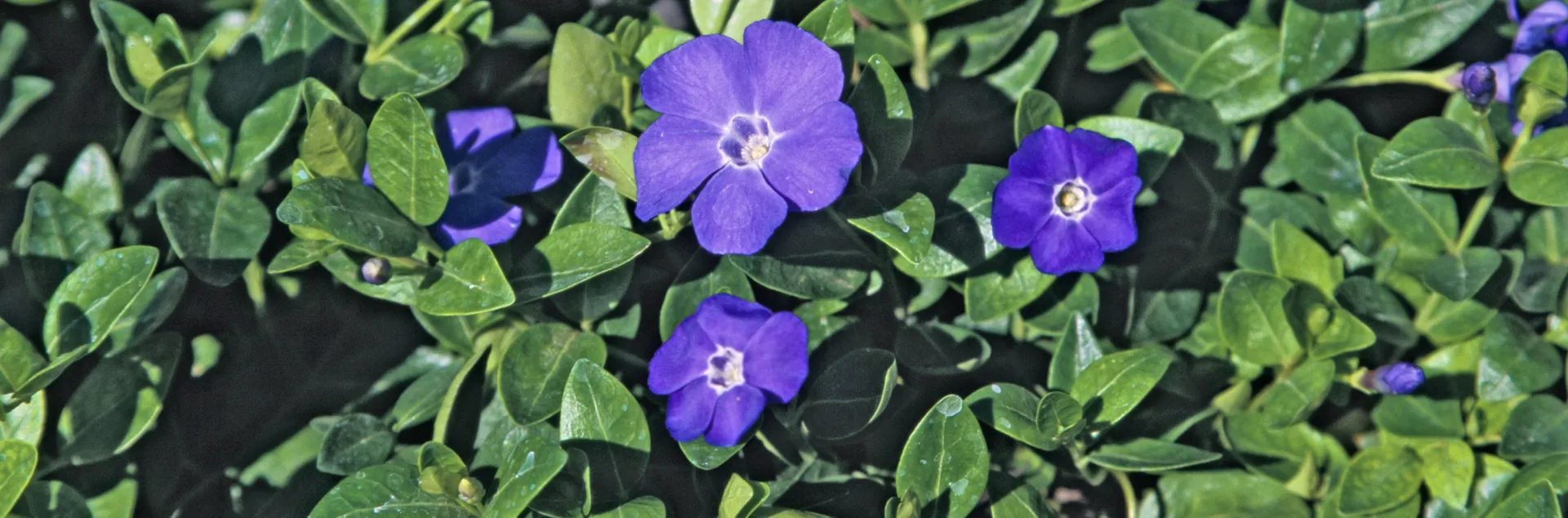
You might be surprised to learn that a few of your favorite ornamental plants are invasive to California and can “escape” your yard causing big problems in the wild. When plants escape landscape and garden boundaries, it is often due to seed distribution or aggressive roots. An invasive plant species can grow uncontrollably, become established, shade out and replace native plants, and damage the local ecosystem.
The Problem
People can spread invasive plants to new regions unintentionally. Seeds stuck to clothes or mud can travel on hikers, pets, equipment, or vehicles from one location to the next. There are also many invasive plants threatening California that have been introduced intentionally for landscape, erosion control, or wind breaks that “escape” into natural areas. Ornamental plants can spread beyond the boundaries of our homes and communities, becoming invasive threats to the local ecosystem. Landscape ornamentals are often non-native plants, and some of those ornamentals are fast growing aggressive plants that if left to grow freely, will quickly spread.
Why Some Plants Become Invasive
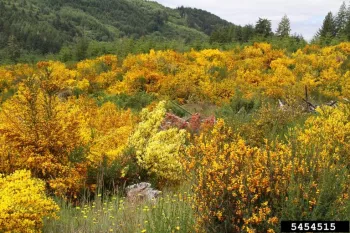
Less than 1% of plant species become invasive when introduced into a new environment, but these few can cause extensive damage. There are several characteristics shared by invasive plant species including rapid reproduction, aggressive growth, adaptability, and the lack of natural predators found in their native habitat. Invasive plant species can spread aggressively through a habitat and outcompete native species by monopolizing resources such as light, nutrients, water, and space. Scotch broom (Cytisus scoparius) is one example of a plant that became invasive in California after it was intentionally introduced as an ornamental for gardens and erosion control. Its rapid growth, prolific seed production with explosive seed pods, and the ability to colonize disturbed areas like roadsides makes scotch broom extremely difficult to control. Scotch broom currently infests over 700,000 acres in California.
Battling Escaped Ornamentals
There are groups working to raise public awareness about invasive ornamental plants and promote the use of non-invasive alternatives. The California Invasive Plant Council’s (Cal-IPC) mission is to stop the spread of invasive plants across California. Cal-IPC keeps an updated inventory list that includes plants rated with moderate to severe ecological impacts and high reproduction, dispersal, and establishment potential. The inventory list also includes “watch” plants that are at a high risk of becoming invasive in the future.
Of the species listed on the California-IPC Inventory, 63% were intentionally introduced as landscape, pond, aquarium, soil stabilization, forage, food, fiber, or medicinal plants. Almost 80% of these were intentionally introduced through the nursery industry as ornamental landscape plants. While some of these plants are listed on the California Department of Food and Agriculture (CDFA) noxious weed list, allowing them to be regulated by CDFA and County Agricultural Commissioners, many invasive ornamental plants can still be legally sold in California nurseries.
What You Can Do
It is important to know what ornamental plants are invasive and to avoid planting them. For any new projects, research and plan your landscape design, following regulations and restrictions in your area, prior to purchasing any plants. Visit Cal-IPC's don’t plant a pest website for region-based restrictions and wildland-safe alternatives for invasive plants sold in nurseries. In established landscapes, remove any plants that are spreading outside of the intended areas and consider replacing any invasive plant species in the landscape.
Choose non-invasive and native plant alternatives that are adapted to your local climate and soil that support native wildlife. Look for local resources, such as university extension offices or native plant societies, and explore these helpful resources for native and non-invasive alternative recommendations:
California Department of Fish and Wildlife’s native plant and invasive species page for alternatives to plant in your garden.
Plant Right website for non-invasive plants to consider for your yard.
Three examples of invasive plants to avoid when visiting your local nursery:
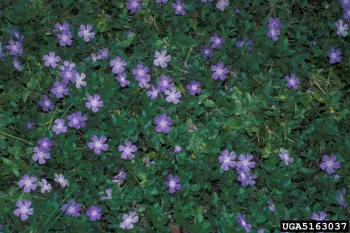
Big periwinkle (Vinca major): Big periwinkle is an invasive ground cover in California that escapes cultivation, spreads rapidly, forms dense mats that displace native plants, and is difficult to control due to aggressive vegetative reproduction. When choosing a ground cover for your garden, please do not plant big periwinkle.
Non-invasive alternatives to consider: douglas iris (Iris douglasiana) or alumroot (Heuchera micrantha or Heuchera maxima)
For more information and other alternatives visit plantright’s webpage on periwinkle.

Calla lily (Zantedeschia aethiopica): Calla lily is a fast growing invasive plant in California, where it escapes cultivation and spreads in moist and riparian areas, forming dense stands that displace native vegetation. The seeds are popular with birds, which assist in spreading this invasive to new areas.
Non-invasive alternative to consider: bush anemone (Carpenteria californica)
For more information visit plantright’s webpage on calla lily.
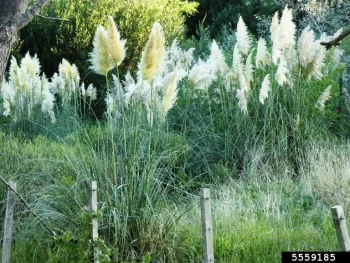
Pampas grass (Cortaderia selloana): Pampas grass is a highly invasive plant in California, that spreads aggressively by millions of wind-dispersed seeds, forming large long-lived clumps that displace native plants, and creates safety hazards for wildlife and people.
Non-invasive alternative to consider: giant wildrye (Elymus condensatus)
For more information and other alternatives visit plantright’s webpage on pampas grass.
Have questions, need to make a report?
To report invasive species and for information about them, specific to your area:
Contact your County Agricultural Commissioner’s office
Reach out to your local UC Cooperative Extension Office
Connect with your local UC Master Gardener volunteers
For help managing pests, visit the UC IPM website at ipm.ucanr.edu.
References:
US Environmental Protection Agency. (2025, August 18). Invasive Non-Native Species. EPA. https://www.epa.gov/watershedacademy/invasive-non-native-species
Bossard, C. (1996). IPCW Plant Report - Cytisus scoparius. Invasive Plants of California’s Wildlands. https://www.cal-ipc.org/resources/library/publications/ipcw/report39/