
Research update from a project throughout Central California1
This post is by Devii Rao, Roger Baldwin, Theresa Becchetti, Josh Davy, Royce Larsen, Fadzayi Mashiri, Ryan Meinerz, and Rebecca Ozeran
Click here for the pdf fact sheet version of this article.
Ground squirrel damage described by ranchers
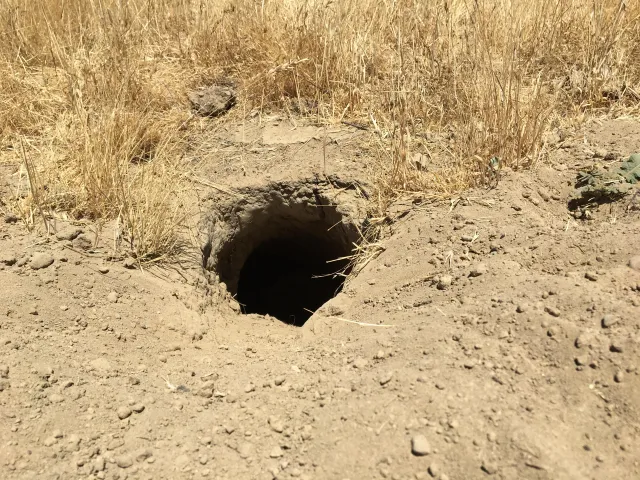
• Ground squirrels eat forage.
• Livestock can break a leg if they step in a burrow.
• Networks of burrow systems can cause piping and erosion during winter storms.
• Burrowing can damage pond dams and ranch infrastructure.
Historic damage estimates
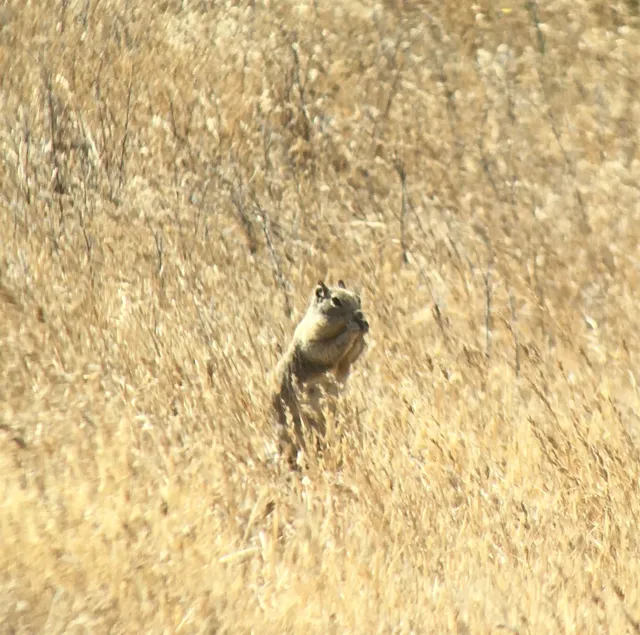
• 200 ground squirrels eat approximately the same amount as 1 steer.2
• 6 male ground squirrels reduced forage availability by 529 lbs./half acre,3 though authors thought this was high. Years later a different researcher estimated 21.1 lbs./acre was probably more accurate.4
• Heifers increased their weight gain by 33 lbs in a field where ground squirrels were eliminated compared to a field where they were not.5
Our study
• We estimated how much forage was eaten by ground squirrels, depending on the density of their populations.
• To do this, we sampled four, 1-acre plots at 16 sites in California’s Central Coast and Central Valley, in May to early-June of 2019 and 2020.
• We visually estimated the number of ground squirrels for 3 days, both morning and afternoon.
• We also estimated the amount of remaining forage at the time of sampling.
Results
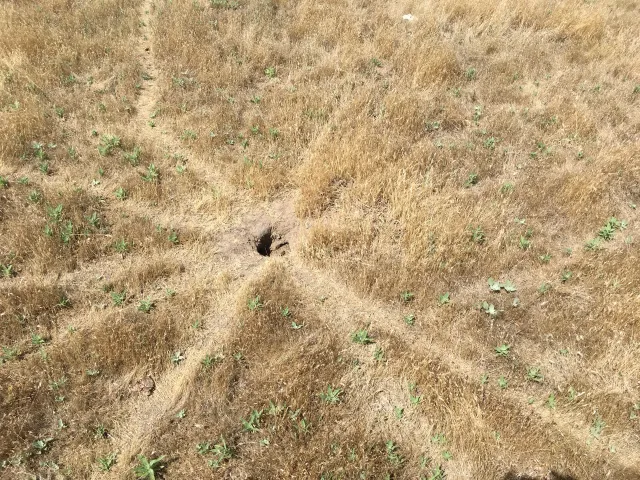
• Location, rainfall, and ground squirrel density all affected the amount of remaining forage in May/June.
• On average, each ground squirrel reduced the available forage by 24.3 lbs./acre.
• Variation in squirrel density substantially changes squirrel impact. For example, five squirrels in an acre can reduce forage by 122 lbs./acre, whereas 30 squirrels in an acre can reduce forage by 729 lbs./acre.
• For context, a cow/calf pair needs about 1,000 lbs of forage/month.
• Dry years did not have higher levels of forage loss due to squirrels, but having less available forage to begin with in dry years makes them even more challenging.
Management Implications
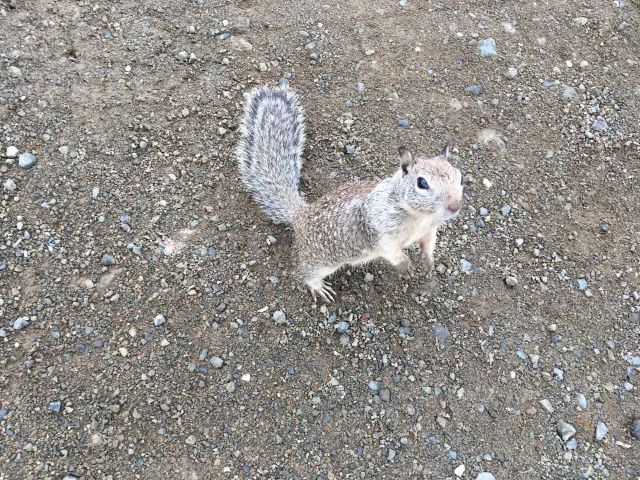
• Ground squirrels are native to California and their burrows are used by other important native wildlife species. Therefore, the goal is not to eradicate them, but to find a balance between ranching goals and natural resources goals.
• It’s important for ranchers to consider the cost of managing squirrels versus the cost of their damage, depending on their density.
• Controlling ground squirrels in dry years, when forage is low, may be most cost effective.
References
1. Baldwin, R.A., Becchetti, T.A., Davy, J.S., Larsen, R.E., Mashiri, F.E., Meinerz, R., Ozeran, R.K. and Rao, D., 2022. Estimating reduction in standing crop biomass from California ground squirrels in central California rangelands. Rangeland Ecology & Management, 83, pp.50-58.
2. Grinnell, J. , Dixon, J. , 1918. Natural history of the ground squirrels of California. California State Commission of Horticulture Monthly Bulletin 7, 597–708.3.
3. Fitch, H.S. , Bentley, J.R. , 1949. Use of California annual-plant forage by range rodents. Ecology 30, 306–321.
4. Lidicker Jr, W.Z. , 1989. Impacts of non-domesticated vertebrates on California grasslands.In: Huenneke, L.F., Mooney, H. (Eds.), Grassland structure and function: California annual grassland. Kluwer Academic Publishers, Dordrecht, The Netherlands, pp. 135–150 .
5. Howard, W.E. , Wagnon, K.A. , Bentley, J.R. , 1959. Competition between ground squirrels and cattle for range forage. Journal of Range Management 12, 110–115 .
