
This column is written by the Master Gardeners of Yolo County each month. It provides answers to selected questions recently asked by Yolo County gardeners.
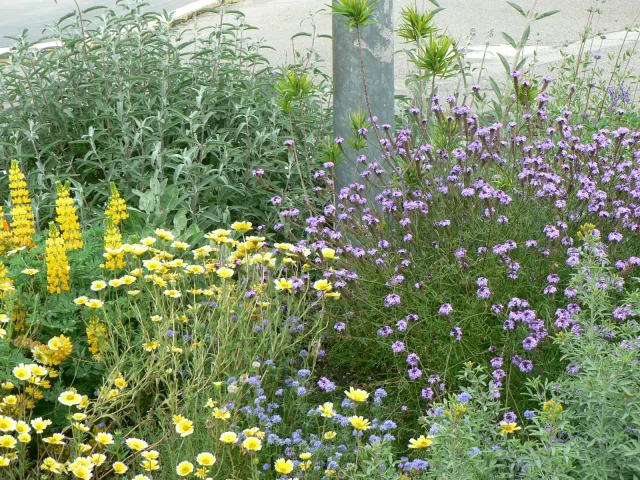
Question: If one wants both drought-tolerant (water-efficient) and California native wildflowers, what are the options?
Answer: California native plants are excellent choices for your landscape. As you mention, many are drought-tolerant, so therefore water-wise. Additionally, they require little to no pruning, no fertilizing, and most are resistant to pests and disease. Another important reason to “go native” is that native plants support native pollinators, such as butterflies and bees, and native birds.
Before you decide which plants to choose, note that the term “wildflowers” is most commonly used to indicate annual plants that flower in the spring and die back by summer, even if they are irrigated. Generally, seed-sowing is done by late fall for annuals to put on the best show in the spring. Many native annuals will reseed, so once there is a good bloom in one year, some native annuals come back without doing anything the next spring. Some great examples include California Goldfields (Lasthenia californica), Blue Field Gilia (Gilia capitata), and several species of Phacelia. All of these annuals, and a wide assortment of California Poppies, are appropriate choices for the Sacramento Valley.
Some good choices of perennial flowering native plants are California wild lilac varieties (Ceanothus), Buckwheat varieties (Eriogonum), and California fuchsia varieties (Epilobium). But why limit yourself to only flowering plants? California native flora includes dramatic trees, shrubs, and groundcovers that will thrive in our area’s specific climate zones.
Some local garden centers offer a decent selection of popular native plants, or at least a representative selection of the more popular ones. You can also visit specialty native plant nurseries and area plant sales organized by native plant societies. Be aware, though, that because of California’s many different climates, a plant listed as a California native that will do well in Southern California or the Bay Area will not necessarily thrive in our Sacramento Valley climate zones. Some native plants grow along stream banks or in other moist, shady areas, so it is good to have an information source dedicated to California native plants, such as Calscape, an informative website of the California Native Plant Society.
The ideal time to plant California natives is in the fall through early spring, to help plants to establish themselves during the cool and wet weather. Obviously, planting now means getting a bit of a late start, but anytime into spring should be fine. Also, keep in mind that although we have shared names of drought-tolerant natives, new plantings will still need watering during the dry seasons for the first year or so.
If your primary objective is drought-tolerant and water-efficient plants in your landscape, you need not limit yourself to California natives. Because our Yolo County climate is considered Mediterranean, featuring wet winters and dry summers, most plants that can grow in Mediterranean climates also do well here and can achieve your goal. But remember, native plants support native insects and birds, and many are easy to grow and beautiful! For more information on native plants, see: Calscape, UC Davis Arboretum All Stars, and various companies offering California native seeds such as Larner Seeds.
Have a gardening question? Send it to jmbaumbach@ucanr.edu, with “Ask MGs” in the subject line. Include as much detail as possible and pictures if you have them.