
Article by Kathy Polkinghorn -
When I applied to become a UC Master Gardener in 2015 after a few years of retirement, I was not sure what to expect. Although my career took me in a different direction, I had a midwestern farm family background and a lifelong affinity for plants. As a child, I admired trees, as a young adult, I collected houseplants, as a parent, I grew a vegetable garden, and when we moved to a house with roses, I learned to prune. Retirement seemed like the time to learn more about the science of gardening in all its forms. I did not imagine the many new directions becoming a Master Gardener would take me.
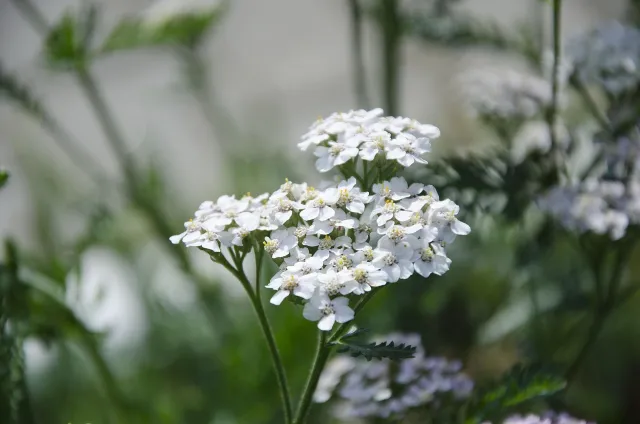
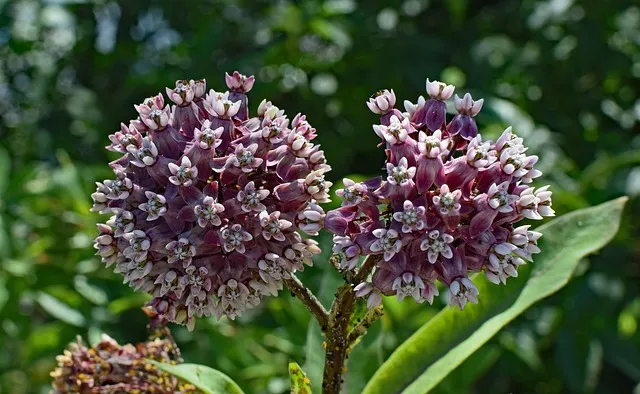
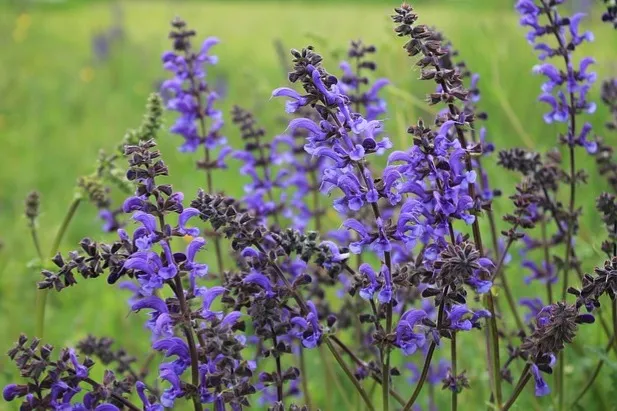
My first brush with the subject of monarch butterflies (Danaus plexippus) came in 2022 when I attended one of our continuing education programs on weed identification. We were invited to bring a weed for the university presenter to identify. I chose a tall, rangy, gray-green weed with large pods and white fuzz laden with small seeds that was growing, without any invitation, in the middle of a bed of yarrow, rosemary, California fuchsia, and sage in my backyard. That evening the presenter happened to choose my weed from the table of samples, and as he lifted it out of the bag, he announced, “milkweed.” Two things flashed before my mind: a vision of two beautiful orange and black monarchs I had observed in my yard that June, and the fact that I had been weeding their host plant.
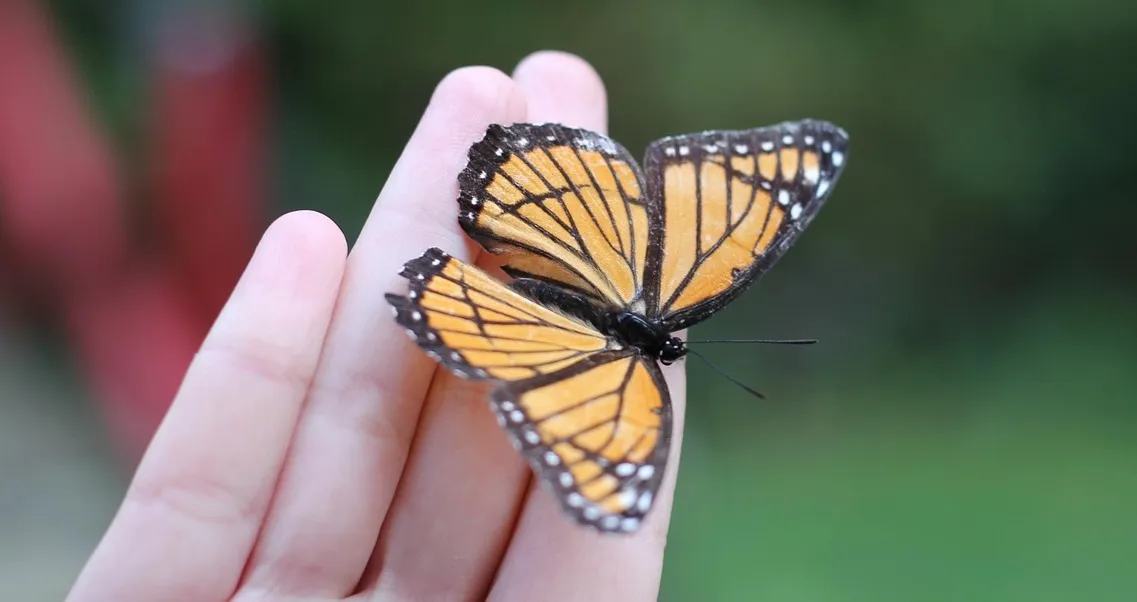
With a wingspan between three to four inches and a distinctive harlequin orange and black coloring, the monarch has become the most recognized butterfly in the United States. Seven states have named them their state insect! There are documentaries and movies about them, they have appeared with Anderson Cooper in a 60 Minutes segment, and they are periodically reported on by the New York Times. Tourists climb above ten thousand feet to observe them in their wintering grounds at the Monarch Butterfly Biosphere Reserve, a UNESCO site in Central Mexico, just one of many protected sanctuaries provided for them by governments around the world. In California, many of us are familiar with their sanctuaries along the coast.
Why are monarch butterflies so loved? These heroic beauties help to maintain the balance of our native plant communities by acting as an important pollinator for native flowering shrubs and wildflowers. And they have captured the imagination of the science community with their navigation and migratory abilities. Over the course of a year, which can span three to five generations, they travel along a migratory path to breed. Then in the fourth or fifth generation, they produce a “super generation,” longer living butterflies that are able to fly great distances—from hundreds to thousands of miles—all the way back to their original home colony to overwinter. While monarchs exist worldwide, there are two distinct migratory populations in the United States. East of the Rockies, the butterflies migrate from Ontario, Canada, to winter in Central Mexico, covering distances from 1,200 to 2,800 miles. Here in the west, they travel from the northwestern Rockies and Washington state to winter all along the California coast, at distances from 500 to 800 miles.
Much of our public awareness of the monarch is due to the lifelong efforts of Dr. Orley “Chip” Taylor, a professor emeritus at the University of Kansas, who established a citizen science group called Monarch Watch in 1992. Professor Chip has spent the better part of his career motivating an army of volunteers to sticker tag monarchs to study their migratory routes. As part of his public advocacy, Professor Taylor first proposed the idea of public and private butterfly “waystations,” or stopping points along the migratory route that could provide food, habitat, and breeding sites for butterflies on the move.
Just last year, Michael Lanzone, founder and CEO of Cellular Tracking Technologies, carried Chip Taylor’s primitive tagging effort further by inventing an ultralight tracking device smaller than a grain of rice that can be glued to the underside of a monarch’s wing. His company distributed the tracking devices to scientists and Project Monarch partner organizations who carefully placed the tiny devices on the butterflies to track their eastern migration from Canada to central Mexico. The scientists and citizen volunteers were able to use a free cell phone app called Project Monarch Science to track the butterflies with amazing results. For the first time, they were able to follow the detailed migration of individual butterflies. It worked so well that they established an informal betting pool via group chat to see which monarch would arrive at their home colony first. Flying at an estimated six miles per hour, the first individual butterflies made it to central Mexico in about forty-seven days. I was deeply impressed because last summer my husband and I traveled from California to Massachusetts and back in an Audi; it took us twenty days, and we were exhausted. In an article that appeared in the New York Times in November 2025, writer Dan Fagin described the monarch’s effort, which weighs about ten times more than the tracking device, as “a half raisin carrying three uncooked grains of rice.”
In 2015, the U.S. Fish and Wildlife Service announced that one billion monarchs had been lost since 1990. Eighty-five percent of the eastern population had vanished, while the western population had declined by ninety-five percent and was headed for probable extinction. Since then, a massive coalition of scientists, academics, government agencies, and conservation organizations has joined forces to save the monarchs. A clarion call has gone out to the general public to establish waystations for the monarchs by planting milkweed and creating pollinator-friendly gardens with the goal of enlisting millions of people to save the species. In 2020, not one butterfly appeared in “Butterfly Town, USA,” at the Monarch Grove Sanctuary in Pacific Grove. Last year, the numbers were slightly up but still dismal, as fewer than ten thousand monarchs were counted along the entire California coast, where once a million overwintered.
The decline has been caused by a complex interaction of factors, including a loss of habitat through tree disease, fires, logging, and development, pesticide use on crops, home gardens, and nursery plants, and climate change. Today, with our enhanced awareness of the long-term effects of climate change, the fate of these butterflies serves as a bellwether for the general health of our ecosystem.
In Yolo County, monarch butterflies feed on the nectar of native flowering plants and shrubs and lay their eggs on the undersides of the leaves of several native varieties of the milkweed plant. When their eggs hatch in spring and summer, ravenous caterpillars eat their own egg and then the leaves of the milkweed. The poisonous toxins from the milkweed leaves remain in the butterflies throughout their short life span, discouraging predators and helping to ensure their survival.
If you would like to answer the call for public support in Yolo County by hosting a monarch waystation in your yard or on your property, a local resident of Davis, Rich Marovich, has made it his mission to plant 150 of these waystations in the next two years. Rich was inspired by a monarch waystation installed by the Yolo Resource Conservation District at Fishing Access #1 on Putah Creek with one hundred Woollypod Milkweed seedlings that generated two hundred caterpillars. This experience proved that waystations can boost monarch numbers. Marovich is now partly retired, but formerly he was the streamkeeper for the Lower Putah Creek Coordinating Committee (LPCCC), a nursery operator for the Solano County Water Agency, and the nursery manager for the LPCCC. The waystations are a Rotary project for Rich and are funded by Rotary District 5160, Rotary Club of Winters, and Davis Sunrise Rotary.
Rich will need a minimum of one hundred square feet in full sun (e.g., 10' x 10') to plant a butterfly waystation on your private or public property.
Last week, Rich and a helper named Ian arrived at our house in Winters, and together they planted a garden for us with pesticide-free native pollinator and milkweed plants Rich had propagated himself. I feel good about that, and I can’t wait until spring.
For more information about helping to propagate the monarchs, contact Rich Marovich at ramarovich@gmail.com.
References –
Fagin, Dan. (2025, November 27). We Can Now Track Individual Monarch Butterflies. It’s a Revelation. The New York Times.
US Fish & Wildlife Service. (2024, December 10). Fish and Wildlife Service Proposes Endangered Species Act Protection for Monarch Butterfly; Urges Increased Public Engagement to Help Save the Species.
Xerces Society. (2025, February 4). Bug Banter Podcast: Monarch Conservation: Tracking migration with rice-sized technology.
National Wildlife Federation, Monarch Butterfly (Danaus plexippus).
National Wildlife Federation. (2015, February 9). U.S. Fish and Wildlife Service Teams with Conservation Partners to Launch Campaign to Save Beleaguered Monarch Butterfly, Engage Millions of Americans.
National Park Service, (Last updated: 2025, June 20). Pollinators—Monarch butterfly.
Nelson, Ian A. (2025) Western Monarch Butterflies: Protecting our Pollinators, a film.
Cooper, Anderson. (2025, September 21) Flight of the Monarchs: the mystery of the Monarch butterfly migration, CBS News broadcast, 60 Minutes (segments can be found on YouTube).