
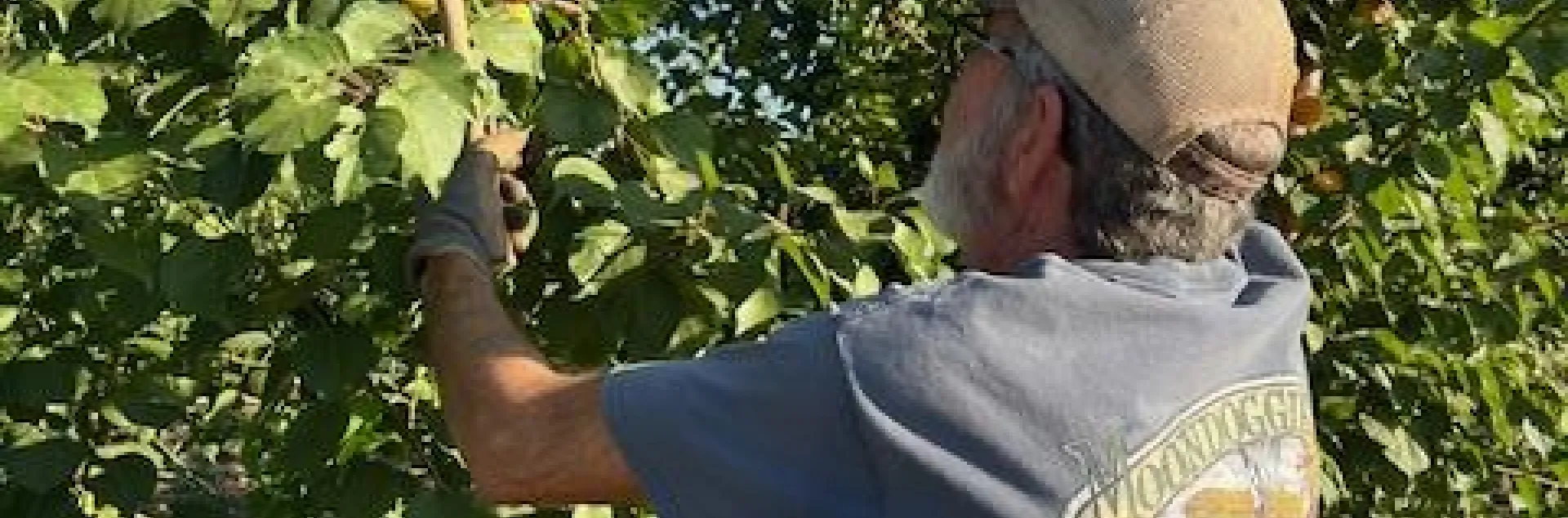
During my time as the Horticulture Advisor for UC Cooperative Extension (UCCE) in Stanislaus County (1978-2011), I frequently received questions from gardeners asking what to do about neglected and/or overgrown deciduous (trees that lose their leaves each year) fruit trees such as peach, plum, and cherry.
An overgrown fruit tree is difficult to care for, however, Chuck Ingels*, former UCCE Horticulture Advisor in Sacramento County, wrote a publication on how to make your tree more home-garden friendly that includes three ways to deal with overgrown fruit trees:
1. Maintain the tree height and make mostly thinning cuts.
This method assumes that the tree is structurally sound and not much taller than you are able to easily manage with a ladder. If the tree has been unpruned for a while, you will need to remove many branches, especially high in the tree. Thin out enough branches to allow sunlight to penetrate to the lower parts of the tree, but don’t create such big gaps that the main branches become subject to sunburn. If necessary, prevent sunburn by painting large, exposed branches with tree whitewash or a 50:50 mixture of interior white latex paint and water. Remove any branches growing beyond fruit picking height. By keeping the tree at this height, it will produce new vigorous shoots - especially at the top of the tree. These shoots will need to thinned out each year, preferably by summer pruning.
2. Reduce the height slowly over a period of 3 years.
This approach requires follow-up pruning, especially summer pruning. Determine how tall you would like the tree to be, then reduce the height by one-third each year for three years until the final size is reached. Vigorous shoot growth will follow such severe pruning, so it will be important to remove or cut back many of these shoots once or twice in the summer to avoid shading the lower fruiting branches. Thin out enough small branches to allow sunlight to penetrate the tree.
3. Drastically cut back all main branches by one.
This is an extreme method of reducing tree height in a single season. To use this method, cut all but one main branch back to the desired height. If possible, cut above one or more lateral branches, even if they are small branches. These branches, along with the shoots that grow later, will form the framework for the new, smaller tree. To prevent sunburn, whitewash all the exposed main branches. While such drastic pruning removes a great deal of leaf area, the root system remains large. It’s therefore important to leave one main branch unpruned so that its leaves can manufacture food that will nourish the root system. This branch can be removed the following year, after new branches have regrown. Both summer and dormant season pruning will be necessary to rebuild the tree properly. Ingels wrote that not all trees are capable of resprouting from large, lower branches. Apple and pear trees will usually resprout, but old stone fruit trees like peaches may not because lower buds may not be able to push through the thick bark.
In some cases, it may be best to simply remove an old overgrown fruit tree and replace it with a new one. Bare-root fruit trees start arriving in nurseries in December, so you may want to consider planting some new trees.
Ed Perry was the Environmental Horticulture Advisor for UC Cooperative Extension in Stanislaus County from 1978-2011. He is currently the Emeritus Advisor and helps support the UC Master Gardener Program by providing his expertise.
Resources
UCANR. Fruit Trees: Pruning Overgrown Deciduous Trees. https://anrcatalog.ucanr.edu/pdf/8058.pdf
Chuck Ingels was the Environmental Horticulture Advisor for UC Cooperative Extension in Sacramento County from 1996-2018. He is missed and remembered fondly by many. https://ucanr.edu/blog/anr-employee-news/article/memoriam-chuck-ingels
This article was originally published on December 21, 2009, and was updated on December 9, 2025. The information remains relevant today - you may recognize Ed Perry’s name from he had a weekly column featured in several Stanislaus County newspapers.