
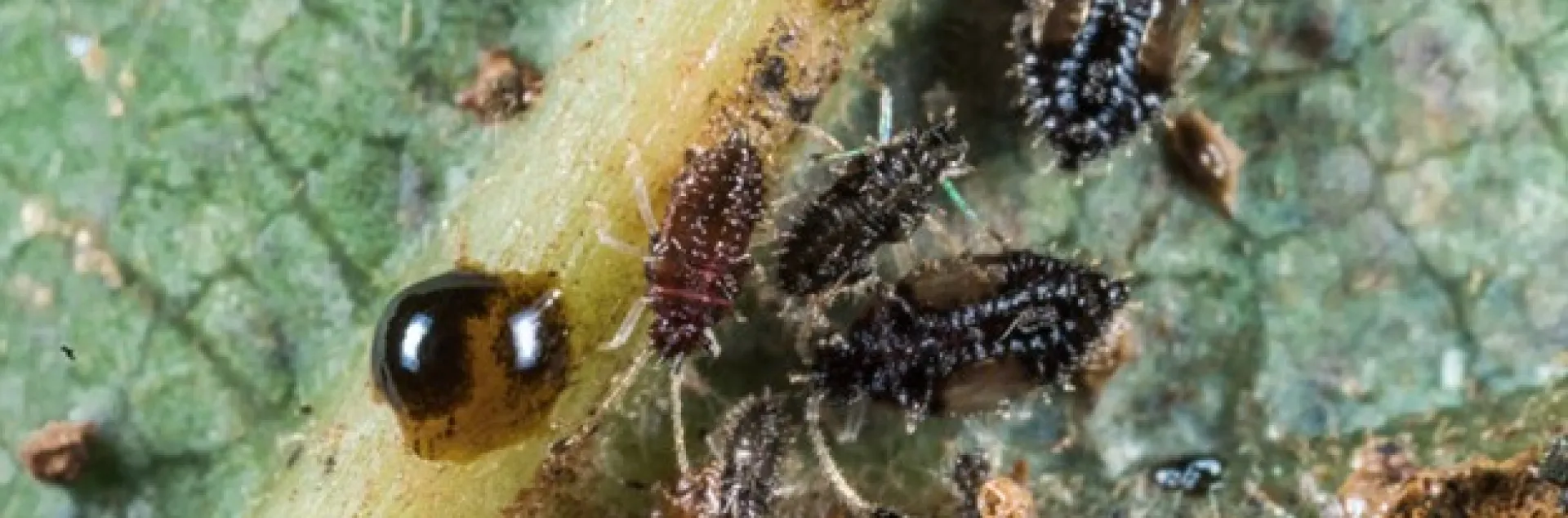
Avocado Lace Bug also known as the camphor lace bug, its only known hosts are various Persea species and the camphor tree (Cinnamomum camphora), which is grown as a landscape ornamental and commercially for its aromatic extracts.
Lace bugs do not feed on fruit. Adults and nymphs feed in groups on the underside of leaves. This sucking pest causes chlorotic blotches on foliage, which become necrotic. Severely damaged leaves may drop prematurely. Defoliation can result in sunburned fruit and wood and stressed trees, reducing subsequent yield.
Adults are about 0.08 inch (2 mm) long oval shaped insects with a dark (black or brownish) head and thorax. Their abdomen, antennae, legs, and wing covers have both dark and light (orangish, yellowish, or white) areas. Nymphs are mostly dark and orangish, resembling the adults without wings. Eggs are laid on leaves within shiny black globs of excrement. Insects develop from egg to adult in about 1 month during warm weather and have several generations a year. All stages can be present throughout the year.
It was first found in San Diego in 2006 and has spread to Santa Barbara causing defoliation. Come here what we know about this pest and its management.
Avocado Lace Bug
Featuring a talk by
Doors Open at 8:30