

Rain is wonderful stuff. If it comes and washes the accumulated salts of the last several years out of the root zones of citrus and avocado, that's a good thing. But what happens if there is a little too much of the good stuff? In the winter of 2005, Venture got over 40” of rain, which is 200% of what is normal. The last time big rains occurred prior to that was in the winter of 1997-98. That year the rains were evenly spaced on almost a weekly basis through the winter and into the late spring and over 50" fell. That year we had major problems with both citrus and avocados collapsing from asphyxiation. The same occurred in 2005 but not so pronounced.
Rain is good, right?
In 2023 we had a lot more rain than we normally see and in Carpinteria it rained 4 inches in July!!!!!! In some young trees with poorly developed root systems, we saw some collapse from asphyxiation. Avocados tend to be more susceptible than citrus, and some rootstocks more than others. Even big trees collapsed.
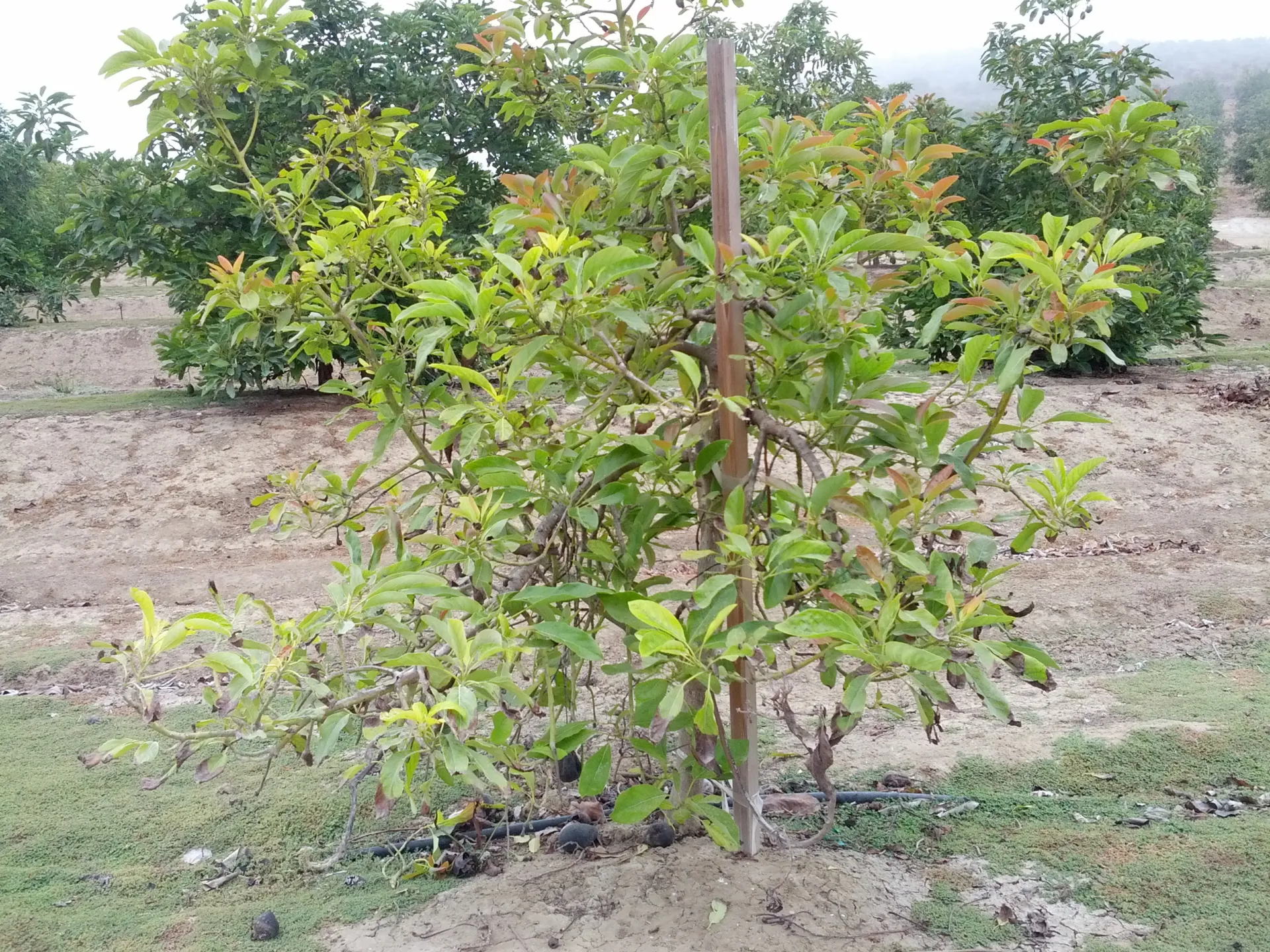
Asphyxiation is a physiological problem that may affect certain branches, whole limbs or the entire tree. Leaves wilt and may fall, the fruit withers and drops and the branches die back to a greater or lesser extent. The condition develops so rapidly that it may be regarded as a form of collapse. Usually, the larger stems and branches remain alive, and after a time, vigorous new growth is put out so that the tree tends to recover. Young trees can be harder hit, but sunburn damage from lack of leaves may be more of a problem.
Asphyxiation is related to the air and water conditions of the soil. The trouble appears mainly in fine-textured or shallow soils with impervious sub-soils. In 1997-98, this even occurred on slopes with normally good drainage because the rains were so frequent. When such soils are over-irrigated or wetted by rains, the water displaces the soil oxygen. The smaller roots die when deprived of oxygen. When the stress of water shortage develops, the impaired roots are unable to supply water to the leaves rapidly enough and the tree collapses. The condition is accentuated when rainy weather is followed by winds or warm conditions.
Excluding air reduces root function, especially on the uptake of iron. It also allows ethylene to accumulate. Ethylene is a plant growth regulator that accelerates maturity. When roots sense ethylene, it causes leaf and fruit drop. The combined lack of oxygen and accumulation of ethylene leads to iron chlorosis and leaf drop. These are characteristic symptoms of asphyxiation and wet soils.
And then came the winter of 2023/24, and there was more rain and more devastation (mudslides, buried orchards, etc.). But in general, trees looked good. The consequences of low rainfall and the resulting greater application of salty irrigation water are leaf burn and often Botryosphaerias. After two wet rainy winters, we see much less of this kind of damage. And in the right drainage situations, the trees loved all that water. Then came two winters of low rainfall and trees started to look droughted – tip burn from salt and leaf blight from water stress.
And now we have had the beginning of 2025/2026 winter and since October 1, we have had nearly our normal yearly average in most places – 32 inches at San Marcos Pass!!!!!!!. And we have most of January and February to go, usually the rainiest months of the year. So more rain?
Mulch does lots of good things, like reducing erosion, controlling weeds, improving infiltration, increasing organic matter to control root disease, reducing soil temperatures, reducing evaporation loss and therefore improving soil moisture content. Ah, but that is a problem when there is a lot of rain. It can lead to asphyxiation, just because of that last point. In rainy conditions, there needs to be a period of air entry into the soil and mulch because it reduces evaporative loss and can keep the soil TOO wet, leading to asphyxiation.
So, what do you do with a thick layer of mulch when there is too much rain? You pull it away several feet from the base of the tree, so that sun can dry out the soil. It's a lot of work, especially after you have put a lot of work into spreading it.
On flat ground, your avocados are planted on mounds or berms, right? And the soil texture is somewhat sandy and well drained, right? In that case, unless we get rain like 1997-98 when Ojai got nearly 50 inches and it rained just about every week from November through April and it seemed everything was under water, most trees should be all right this year. But this last fall I have seen cases where unbermed, heavy soil avocado plantings have had severe asphyxiation problems. Besides pulling back the mulch, it might be a good idea to let the weeds grow so that they can help dry out the soil. In a managed situation, it’s called a cover crop. When confronted with new conditions it’s time to make changes to your regular practices.