
It has been a busy year! Here is a quick recap of some of our studies.
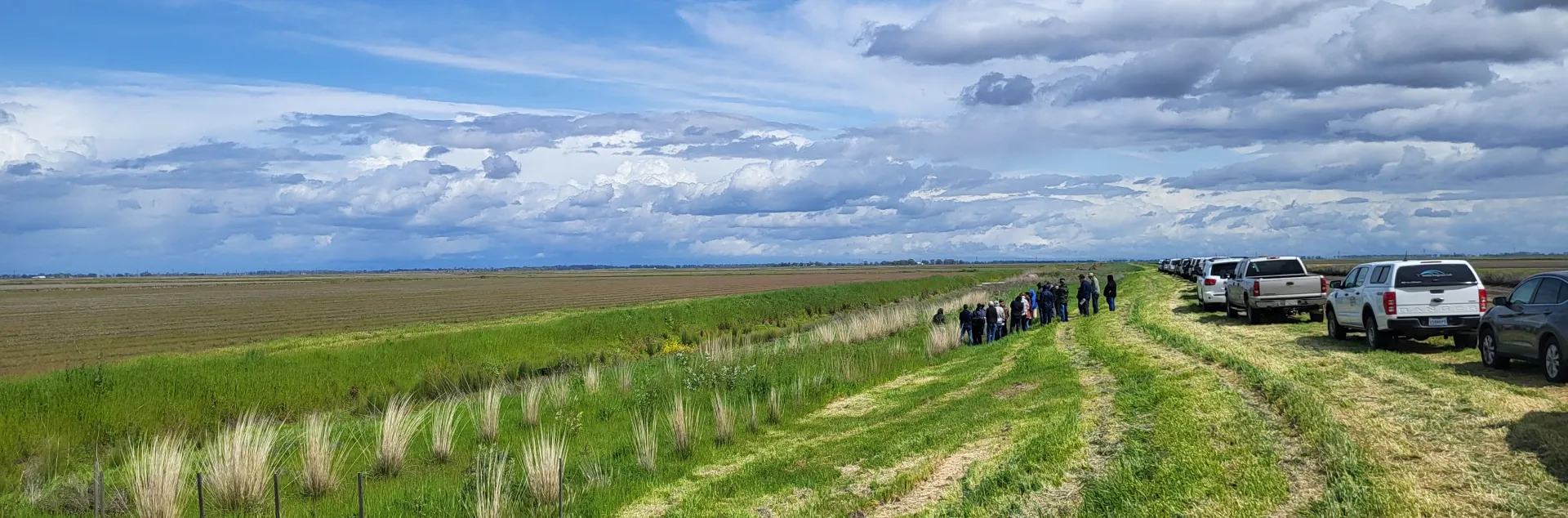
Hedgerows: This study, initiated in 2024, is evaluating how planting rows of native species along permanent levees can influence beneficial insect activity in rice fields as well as weed pressure on levees in rice systems. Preliminary data show a shift in weed species within the hedgerow away from grasses towards broadleaf species.
Evaluating Alternatives to Double Propanil: Watergrass remains one of the most challenging weeds in rice production, and concerns about resistance have heightened the need for alternative control strategies. To address this, we have been conducting herbicide trials over the past three years at numerous grower fields and at the Rice Experiment Station. Previous trials focused on evaluating tank mixes combining Regiment® (bispyribac-sodium) and propanil with other products. This year’s work refined the timing between an application of Regiment® (bispyribac sodium) followed by propanil, as this combination was the most consistent in controlling grasses across sites from the previous two years.
Herbicides for No-Till Drill-Seeded Rice: Interest in no-till drill-seeded rice continues to grow as a potential strategy for reducing water use, input costs, and environmental impacts. However, the lack of herbicide recommendations for this system remains a key barrier to implementation. To address this, the team conducted an herbicide trial to evaluate combinations and tank mixes for no-till drill-seeded systems. The study focuses on pre- and postemergence herbicide combinations for effective control of sprangletop and watergrass. Although data will be useful for no-till systems, combinations will also be applicable for any drill-seeded rice system. This is the first study conducted in over 10 years specifically for herbicide programs in drill-seeded systems.
Winter Cover Crops: This year marked the conclusion of the three-year cover crop study at three sites across the valley. This trial yielded some key information about cover crop species selection, as well as potential insights into cover crop establishment based on soil moisture and rainfall. Preliminary results indicate that planting before heavy rainfall is a key to success, while vetches continue to be one of the best species, both in terms of biomass production as well as nitrogen production.
Winged Water Primrose: A project with several key collaborators led to the updated mapping of winged water primrose across Butte County, as well as new infestations in Placer County as well. We are working on an updated herbicide screening using both rice herbicides and those registered for use in aquatic systems (ditches, canals) to provide a way to limit the spread of this invasive pest. Stay tuned for updates on many of these projects at the 2026 Winter Rice Grower Meetings, as well as in upcoming newsletters!
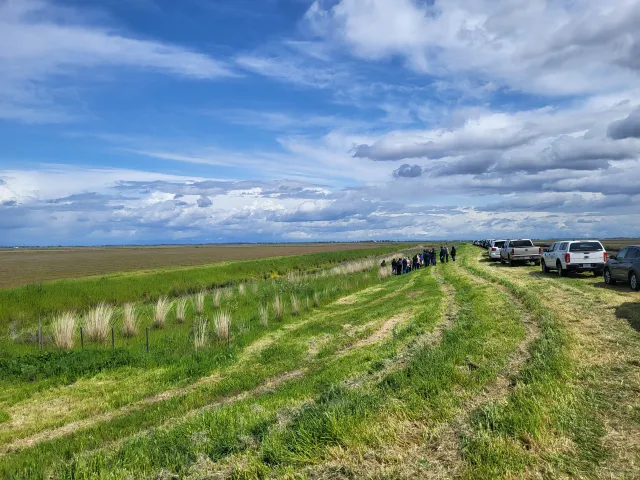
Figure 1: Hedgerow study site during a field day event.