There are a limited number of herbicides registered for melon production in California and Arizona, two of the major production areas for cantaloupes and honeydews. Shallow cultivation and nonselective herbicides with no soil activity can be effective if used after bed formation and before planting.
A recent call about the poor control of marestail (horseweed, Conyza canadensis) to glyphosate (Roundup) wasn't surprising, but that paraquat didnt do the trick was. It turns out that there is multiple resistance to the materials.
Spring is in full swing and summer is right around the corner. If you work in agricultural, turf, landscape, or structural settings, you are probably at your busiest. If you handle pesticides as part of your work, you most likely wear some sort of personal protective equipment (PPE).
It's getting hot and dry in the Central Valley and the movement of equipment in and out of fields/orchards/vineyards has the potential to stir up a significant amount of dust. Among its other impacts to agriculture (soil erosion, tissue damage, reduced photosynthesis, etc...
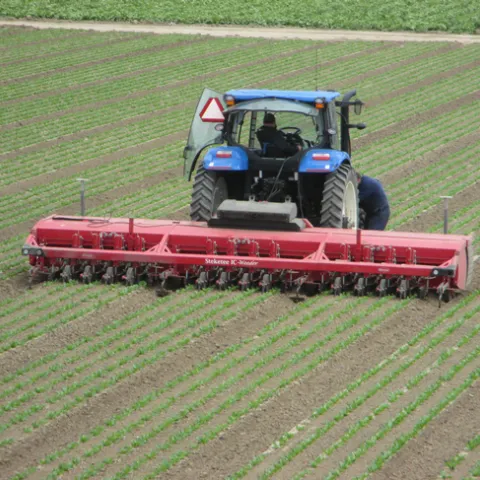
In vegetable production, growers cultivate most of the bed leaving only a 4-inch wide uncultivated band around the seedline. Weeds not controlled by preemergent herbicides or cultural practices in the uncultivated band are ultimately controlled by hand.