
Blog article by Cindy Yee
About 5 months ago, I purchased a Taiwanese guava tree and Ningxia goji berry plant from a home grower in Fremont, California. She has all 5-star ratings on Facebook Marketplace and was very helpful with advice on how to care for them.
Happy to say that both plants are doing well (will talk about the guava in a future blog). The goji berry surprised me with flowers and fruit very quickly. In spite of being planted in a pot, its 3 spindly branches grew rapidly and bloomed pretty star-shaped purple flowers.
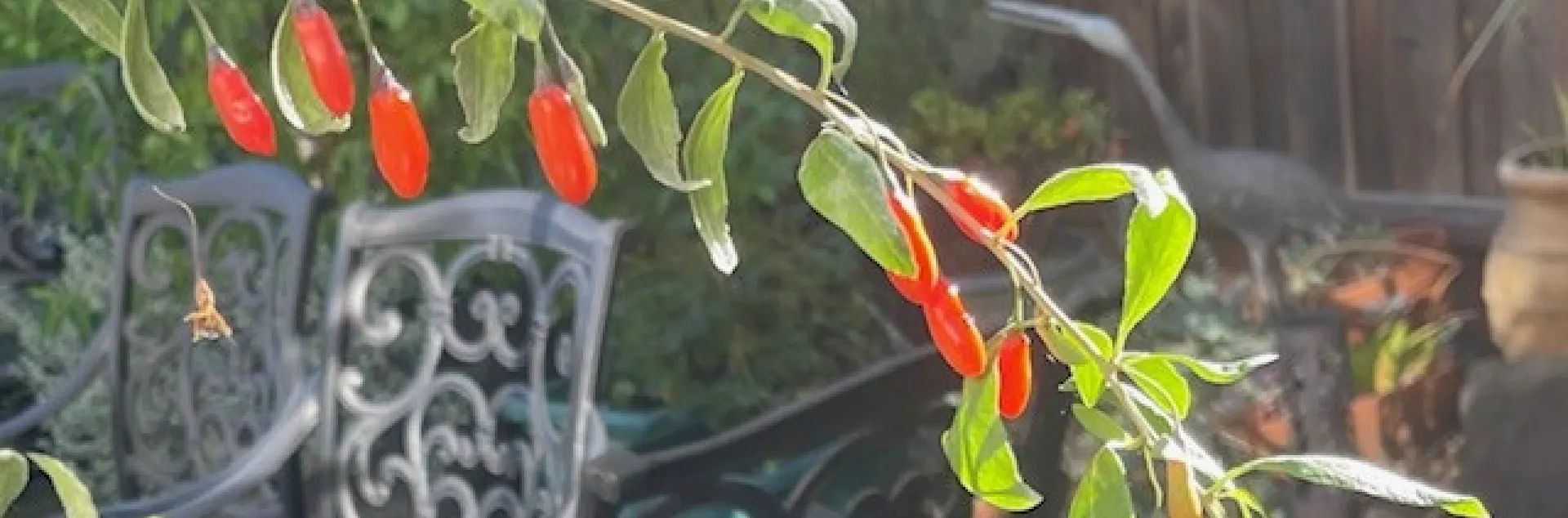
Here are the ripening berries. They hung on the branch a long time while I debated whether it was time or not to pick them. When finally one showed a wrinkle, the fruits detached from their stems with the tiniest tug.
Happy to say that both plants are doing well (will talk about the guava in a future blog). The goji berry surprised me with flowers and fruit very quickly. In spite of being planted in a pot, its 3 spindly branches grew rapidly and bloomed pretty star-shaped purple flowers.
Here are the ripening berries. They hung on the branch a long time while I debated whether it was time or not to pick them. When finally one showed a wrinkle, the fruits detached from their stems with the tiniest tug.
Image
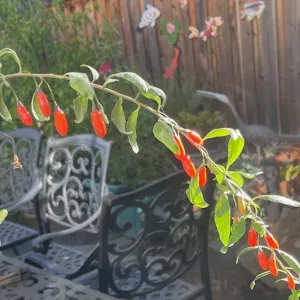
Goji berry is a native plant of China, and has been cultivated and used for 4,000 years in the arid northwest. The fruit is typically eaten dried, and cooked in stews and soups, I do remember them from childhood. Goji berries are also used in Chinese traditional medicine and are considered beneficial for liver, kidney, and vision health. It is now recognized globally as a superfood high in antioxidants.
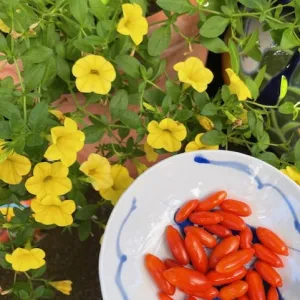
The bowl holds fruit from one branch. The berries looked so tasty that I tried one. It tasted quite bitter, yuck! Apparently, that's why they are typically eaten dried - when dried the flavor is supposed to be sweet and tart. The bitter berries are sitting on my counter, and I should set them outside to dry. Meanwhile, the deciduous goji plant is losing its leaves and looks pretty miserable. Time to figure out where it should be planted in the garden.
Image
Cheers and Happy Gardening!