
Blog and photos by Nanelle Jones-Sullivan
I live on a clay slope and rely heavily on containers for my edible gardening.
Shallots are cool-season vegetables and meet my criteria for being easier/cheaper/ or more interesting to grow than buy.
Shallots share with their allium cousins a preference for cool weather, and like garlic, multiple bulbs grow from one. After that, what a shallot is seems up for debate!
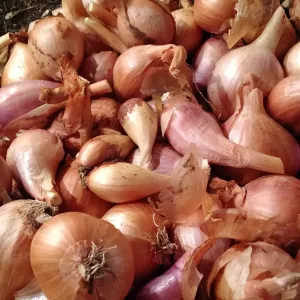
In my research, I read about “shallot wars”, the story of French shallot farmers protesting what they call “faux” shallots — onion hybrids engineered in the Netherlands to “mimic shallots.” Some feel only grey, or Griselle shallots (Allium oschaninii), are “true shallots, but the term shallots also includes Allium cepa var. aggregatum, with some called Dutch or Holland, the “French Echalion” or “banana” shallots, “potato onions”, and several shallots grown from seed, such as the Atlas, Ambition, Matador, and Prizma, which are red, and the Bonilla and Creation, which are yellow. Shallots grown from seed yield one shallot per seed.
Seeds or sets-I prefer to grow shallots from “sets.” Last year, I grew the large and easy-to-peel “banana shallots,” a cross between a shallot and an onion. They tend to flower, and the coverings seem to harbor mold in my garden, neither of which is desirable.
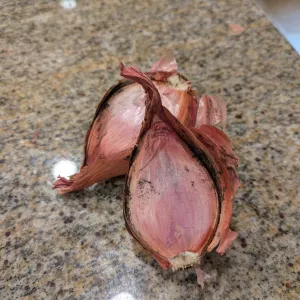
This year, I am making sure to include Dutch red and Holland yellow.
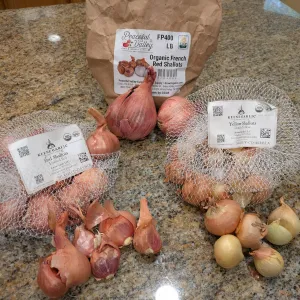
Containers-Self-watering planters are mainstays in my garden. They include a Gardener's Supply “Tomato Success Kit” that is twenty-six inches long, ten and a half inches deep, and about twenty inches wide. The usual planting recommendation for shallots is six inches apart; root ends down and pointed tips just poking out of the container mix. The planter would hold about eight sets. It is tempting to plant more, but each bulb divides into six or more shallots, and overcrowding leads to smaller bulbs.
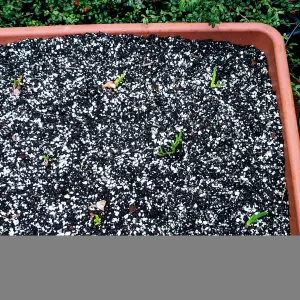
Container mix- Containers make your crops a “captive audience” and need a good container mix. A good container mix typically includes 70-80% peat moss or coconut coir for retention, 20-30% Perlite for drainage, dolomitic lime to adjust pH, and appropriate fertilizer.
Fertilizer- While shallots may not need much fertilizer when first planted in the ground, shallots in a container mix may benefit from a little more attention. Most balanced fertilizers should work.
Watering - One benefit of cool-season gardening is that there is less need to worry about watering. You might have to worry about too much, and I sometimes need to tip water out of reservoirs and dishes. They are shallow-rooted, so the mix should be moist but not wet. Wet mixes encourage plants to rot.
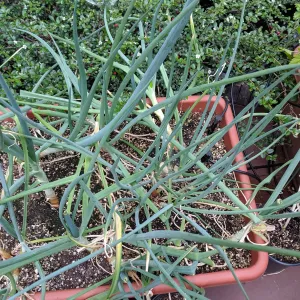
Harvest- Pam Pierce of Golden Gate Gardening says there is a saying, “plant on the shortest day and harvest on the shortest “. Harvest when the foliage has started dying down, then let the tops and outer skins dry before storing. Each bulb yields six to twelve shallots. Many shallots can be stored for twelve months and can be planted the next season.
https://growingtaste.com/vegetables/shallot.shtml
https://ipm.ucanr.edu/agriculture/onion-and-garlic/black-mold/#gsc.tab=0