

Blog by Lauren Mena
You’ve just bought a tree at a nursery, brought it to its new location and are ready to plant. Maybe you’re fairly new to planting trees and are pleased to see that the tree came with a free stake. You figure the nursery must know what they’re doing, so you go ahead and plant it, with the tree still fastened to the stake. It likely has that flexible green plastic tape attaching the tree to the stake, and you figure, “Well, if the nursery put it there, it’s probably because this tree needs it.” And you notice that the tree also comes with a label attached, stating the name of the species and maybe even more information about its care, the specific root stock, or the fruit you can expect. “Great,” you’re thinking, “Now I won’t forget and don’t have to remember. That was sure nice of them to attach this label for me.”
But that’s not what those materials are actually for. In fact, if you leave those on the tree, it is likely to eventually harm the tree. Nursery stakes, ties, and tags are just that. They’re for nursery handling and transport. They keep the tree straight and sturdy while in the pot and in transit. They protect the tree as it’s handled and moved around. It’s essentially packaging for a delicate product, making a long and unnatural trip before arriving at its final destination. An analogy is the hanger and tags you might find on a shirt at a department store. You don’t wear the shirt with the hanger and tags once it’s yours - it’s just the packaging!
So… what should you keep and what should you toss? Toss it all. Nursery stakes, ties, and tags are meant to come off after planting. Carefully remove the ties from the trunk, gently pull the stake out of the pot and remove the tags. If you think your tree might need some stakes, you may be right. But structural stakes are a different type of stake and allow some movement to promote healthy development and strength. Structural staking is typically temporary - it’s to allow for a tree to successfully adapt to a new environment.
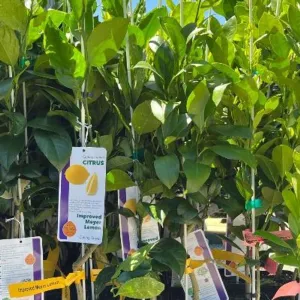
Trees are biologically designed to respond to their environment. That little bit of sway from wind or a breeze causes the trunk to strengthen and roots to reach out for stability. If a tree is held too rigidly, that beneficial movement can’t happen. Overly supported trees tend to develop weaker and more slender trunks with less taper, and they can stay dependent on supports longer than needed. Another analogy: imagine keeping the training wheels on your bicycle long after they’re needed.
Bark can be damaged where stakes or ties rub or trap moisture, creating wounds that increase stress and vulnerability. Trees will often grow right around a nursery stake that hasn’t been removed, disrupting their natural form.
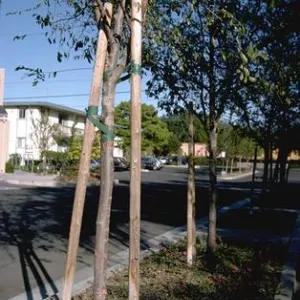
Ties and tags can also affect growth or cause deformations as trees grow. They put pressure on plant tissue and can restrict the vascular system of the tree or force the new tissue to grow around the tie. Thin bark can be damaged by the routine rubbing of a tie in the wind. If you want to keep the tags for your reference, put them in a file or even attach them to that stake and put it in the ground somewhere in the vicinity of the tree.
Once a tree is planted in its new home, it doesn’t need the protective packaging anymore - it needs freedom to grow. Sometimes the best support you can give a young tree is simply getting out of the way. Leaving nursery stakes attached is one of those common mix-ups that happens because no one ever explains otherwise. Now that you know, pass it along, the same way you’d gently tell a friend they’ve still got the sticker on their jeans.
Banner photo: Image by Patty Jansen from Pixabay