
Blog by Paula Pashby
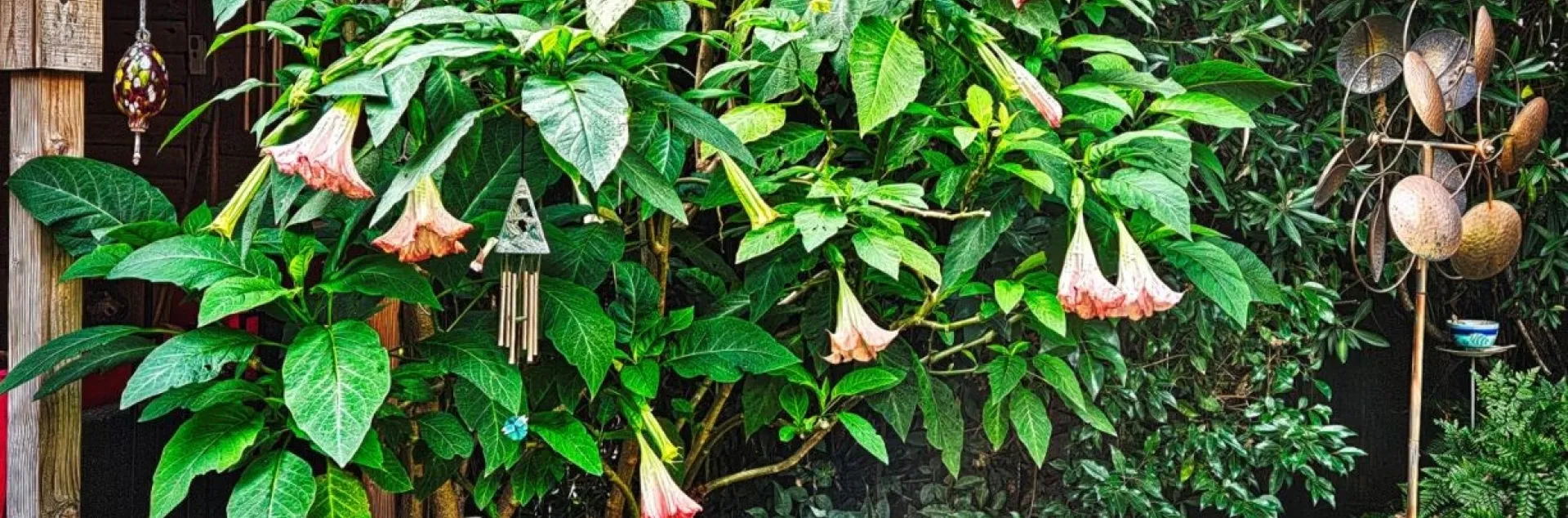
A few years ago, I wrote a blog about one of my favorite plants in our garden: the Brugmansia suaveolens, also known as the Angel's Trumpet. I purchased the plant around 20 years ago and gave it to my mom, who took care of it with love. When she passed away, we transplanted the Angel’s Trumpet to our garden, and it is thriving beautifully.
As captured by the plant name, the flowers are large, trumpet-shaped pendants. There are different varieties of Angel’s Trumpet with an assortment of bloom colors. The one I have has white and salmon-colored flowers, which bloom from late spring through the year to the first seasonal frost. I keep this plant trimmed down to about 10 feet tall; otherwise, it tends to take over this part of the garden and crowds out our gazebo.
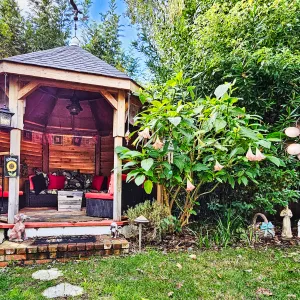
I was walking through the garden the other evening, and I noticed a strong, sweet-smelling fragrance near the gazebo. I followed the scent and determined that it was coming from the open Angel’s Trumpet flowers. I thought it was interesting that the flowers were open in the evening. The next day, I went out to take a closer look at the plant and realized that I could barely smell the scent of the flowers up close, and the flowers seemed to be mostly closed, another curious puzzle that I had to investigate.
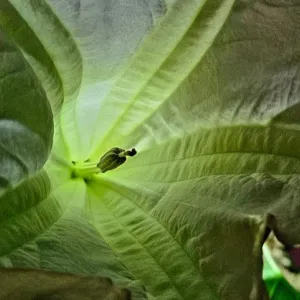
I found some information provided by the University of Wisconsin-Madison, noting that our Angel’s Trumpet variety is most fragrant at night to attract nocturnal pollinators, such as night moths. The plant apparently has a symbiotic relationship with night-flying insects to avoid competing for pollinators during the day, when there are many more open blooms from other plants to explore. The Trumpet’s strong and sweet scent will attract night-time pollinators to feast on the flowers’ nectar, and the pale glowing colors make the bloom easier to find in the dark. In return, the Angel’s Trumpet obtains the pollination that is needed for fertilization and reproduction.
A word of caution if you are considering planting an Angel’s Trumpet in your garden: the plant is toxic to people and animals if ingested in large quantities. The flowers’ nectar can also be toxic to pollinators, like honeybees. It is a good thing that the flower does not have the scent that would attract potential pollinators during the day.
The North Carolina State Extension, which supports agricultural research and education, has information on the Angel’s Trumpet toxicity:
- Poison Elements: This plant is poisonous through ingestion and/or inhalation of flowers, leaves, and seeds.
- Poison Symptoms: Poisonous symptoms may include hallucinations, dry mouth, muscle weakness, increased blood pressure and pulse, fever, dilated pupils, and paralysis.
- Poison Toxic Principle: Atropine, scopolamine, and hyoscyamine
- Causes Contact Dermatitis: No
Please be careful and wear gloves when handling.
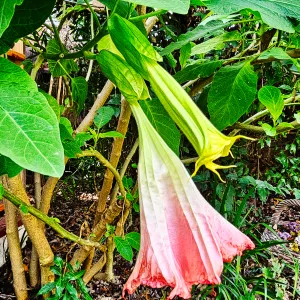
Another fascinating discovery about evolutionary botany to satisfy my Master Gardener curiosity!
Previous Blog: https://ucanr.edu/blog/under-solano-sun/article/angels-trumpet.