
Blog by Michelle Davis
Holidays are upcoming, and so are the foods we associate with them. One that I love to eat during the holidays and year-round is Ipomoea batatas, or sweet potatoes. Sweet potatoes may well have been the earliest food crop. Archaeological evidence dates it as far back as 2500 BCE in Peru. A relative of the morning glory, it tolerates less-than-ideal soil and uses less water than many plants. Overwatering kills this tuber. It is recommended not to irrigate the roots directly. Dig a trench between 2 sweet potato plants, water the trench, and let the sweet potato roots grow to the water. With climate change, we may all be eating more than the average: currently 6 pounds per year per person.
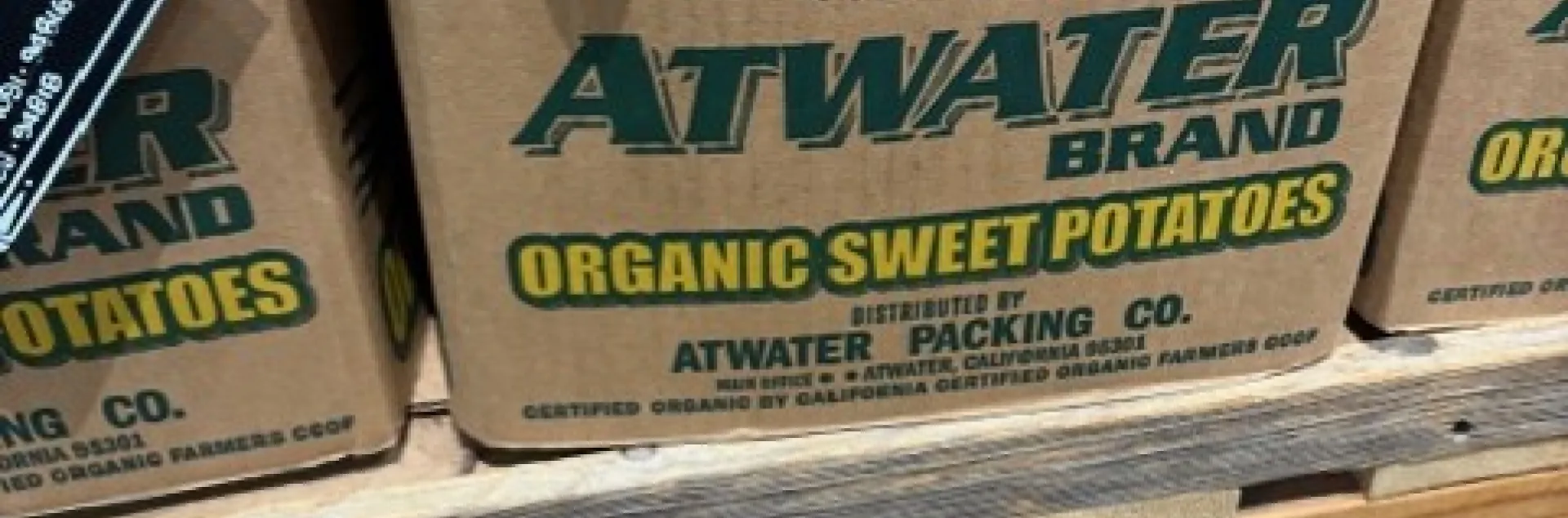
North Carolina is the main producer in the US, growing about 2/3 of the national crop. What you may not know is that California is now the #2 producer, and most of that crop is grown from just south of Turlock to just north of Merced. Livingston and Atwater, and a little bit of Kern County, are the big producers. This area is an alluvial plain that has sandy soil and receives enough water that, together with drip irrigation, has created the best growing conditions for all kinds of sweet potatoes.
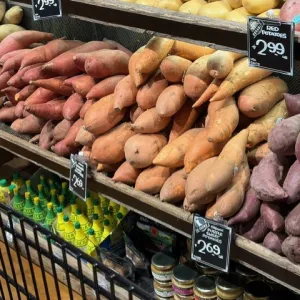
Skin color and flesh color aren’t always the same for this tuber. The ‘Diane’ and ‘Vermillion’ varieties have red skin and orange flesh. At the grocery store, an orange skin typically has orange flesh. These are usually ‘Beauregard’, ‘Jewel’, or ‘Garnet’ varieties. I ate a purple sweet potato last week that also had purple flesh. The ‘Okinawa’ sweet potato has a creamy white skin and purple flesh. One of my favorites is the ‘Satsuma-Imo,’ which has a purplish skin and creamy flesh that tastes kind of nutty. (It’s denser and takes longer to roast.) Last Sunday, my brother roasted a whitish-yellow variety with flesh that was also whitish yellow.
Many people only eat these nutritional powerhouses at Thanksgiving, Christmas, and Easter. They eat them in pies and as sweet potato casserole with marshmallows on top. Sweet potatoes are packed with Vitamins A, B6, C, E, iron, zinc, antioxidants, and fiber. If you haven’t already, just try rubbing some olive oil, and sprinkling a little salt and pepper on the outside and then roasting them in the oven for about forty minutes until you can pierce them easily with a fork. (The Satsumo-Imo takes a little longer.) They are already sweet. To preserve the inherent sweetness, keep them out of the fridge until you use them. Refrigeration reduces the sugar content and makes them hard.
A few years ago, a very good friend invited six South Korean nurses to stay at her home for a few nights while they were here for a class. The first place the nurses visited was the grocery store, where they picked up enough sweet potatoes for each of them to have one each per night. They came back from class to her house each night, roasted their sweet potatoes, and had them as a bedtime snack. Better than potato chips!