
Article by Vincent Hughes
Do you enjoy cooking or baking with cinnamon? Do you enjoy mixing it with drinks like apple cider? Then let me be the first to share with you that you can grow cinnamon right here in Solano County, in your own backyard!
Cinnamon verum (or C. zeylanicum), known as “Ceylon cinnamon” after its origin in Sri Lanka (formerly Ceylon), is considered to be “true cinnamon.” However, most cinnamon in international commerce is derived from other species, usually and more correctly referred to as “cassia”: C. burmanni (Indonesian cinnamon), C. cassia (Chinese cinnamon), C. loureiroi (Saigon cinnamon), or even the less common C. citrodorum (Malabar cinnamon). While there are four main types of cinnamon, the two most common are Ceylon and Cassia, which can be distinguished by their flavor profiles and their culinary uses. This is something that you will want to keep in mind when choosing a cinnamon variety to grow at home.
Cinnamon itself is a plant that favors warm, humid climates. It thrives in 70° - 90°F weather with moist, but not soggy, well-draining, and slightly acidic soil. In USDA Zones 9 – 11, it can be grown outdoors year-round. But in colder climates, it is recommended that it be grown indoors or in a pot that can be taken indoors to help keep it in the most ideal conditions.
If you are deciding to grow cinnamon outdoors, you will want to keep the following items in mind:
- Climate and location – When planting cinnamon, you will want to find a location that has full to partial sunlight. Ideally, cinnamon thrives in environments where it receives seven to ten hours of sunlight daily for the best spice production. This will also ideally be a location where it can receive the 70° - 90°F temperatures and high humidity that will further lead to better spice production. Cinnamon is hardy down to 30°F, however.
- Soil – Ideally, you want to plant your cinnamon tree in a sandy, loamy, well-draining soil. Cinnamon benefits from having relatively moist soil, but requires good drainage as it can be prone to root rot. The better the drainage of the soil, the easier it is to prevent rot. Additionally, an acidic soil pH between 4.5 and 5.5 is preferable.
- Watering – Cinnamon does best in relatively moist conditions. Watering is best if done consistently, moistening the soil when the top inch feels dry to the touch.
- Mature Size – Cinnamon is a tree that requires an adequate amount of space to grow. A mature tree can reach a height of forty to sixty feet with a canopy width of fifteen to twenty feet. When planting, be sure that your tree will have plenty of space.
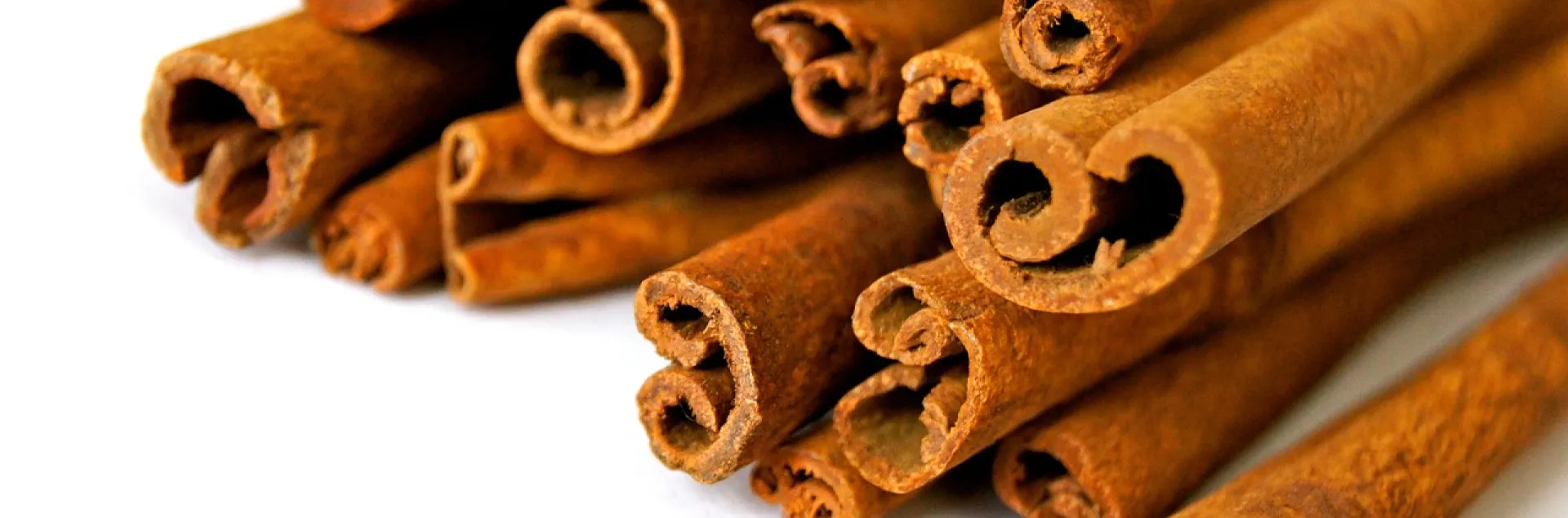
What many people do not realize is that the cinnamon that you cook/bake/season with is the bark of the tree. When it is ready to be harvested, you will need to carefully peel off the bark and allow it to dry. As the bark dries, it will slowly curl into the more distinctive cinnamon stick that most are familiar with. And once it has done so, it can then be ground if needed to produce ground cinnamon.
On New Year's Eve of 2022, my personal adventure in growing cinnamon began. I ordered my cinnamon tree, having decided that I wanted to try my hand at growing my own cinnamon, as it is one of my personal favorite spices. Even with the holiday, my three-foot-tall cinnamon tree arrived on January 10, 2023. Given the season and the temperatures, I initially chose to raise my tree indoors, keeping it in its pot near my back sliding door. But in early April, I transplanted the tree from its pot into the ground.
When planting, I made certain to select a space where the tree would have room to grow as it aged. I was also careful to plant it in a nutrient-rich and well-draining soil. However, while the soil I planted in was well-draining, the soil around my hole was less so, leading to water being trapped near the roots, which in turn led to fungal growth near the root base. I carefully removed the fungi as they emerged from the soil, and did my best to address the soil around the roots to allow it to drain better, which did allow the fungi to clear up.
However, at the time that I had planted my cinnamon, I did not know that they preferred soil that was on slightly more acidic side. This, coupled with also not knowing at the time that cinnamon prefers continuously moist soil, led to very slow growth. In the time since I planted it, my cinnamon tree has grown from three feet to four and a half feet. Knowing now what I didn’t know at the time of planting, however, I have begun to acidify the soil as well as adjust my watering pattern in hopes of providing the tree with what it needs to thrive. I hope that one day soon, I will be enjoying my own home-grown cinnamon.
So, if you are like me and want to try growing your own cinnamon here in Solano County, good luck! And Happy Growing!