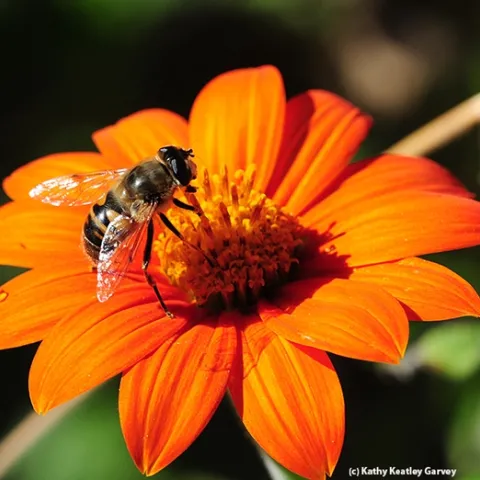
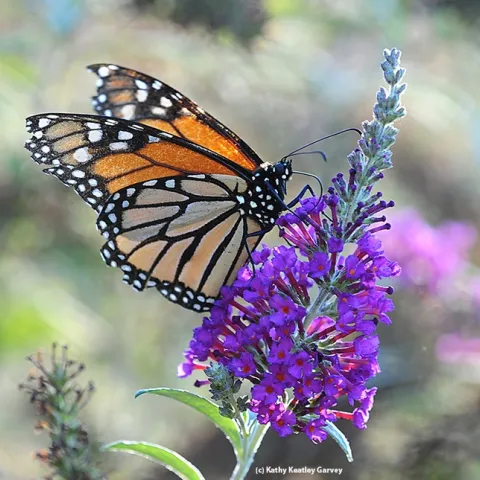
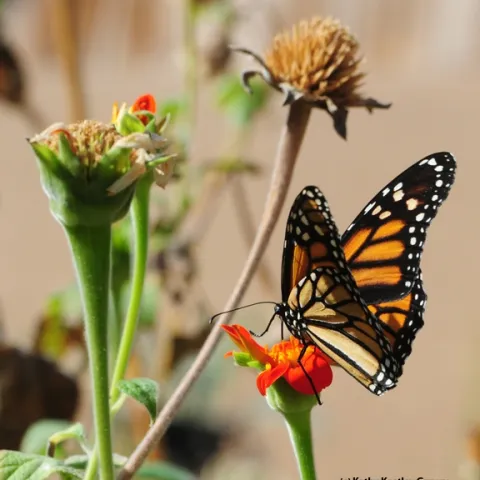
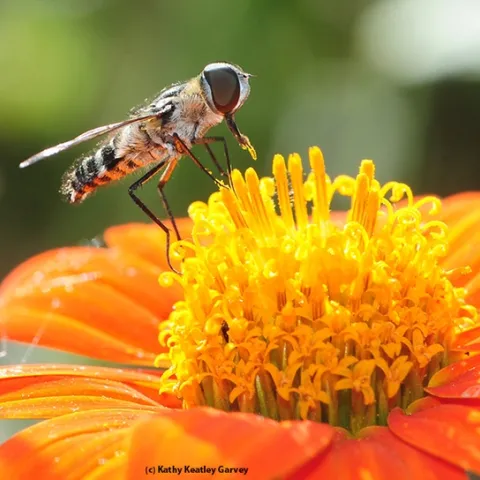
So, what's a meloid beetle to do? Here you are, a meloid beetle foraging on a Mexican sunflower (Tithonia) and these long-horned digger bees keep dive-bombing you and pestering you. Then a Gulf Fritilllary butterfly (Agraulis vanillae) decides it wants a share of your flower.
The armyworm outbreak we experienced a few weeks ago seems to be over. Several fields in Glenn and Butte counties had very high populations and experienced severe defoliation. In some cases, the affected areas have recovered (see pictures below).
It promises to be a fun and educational entomological weekend at the University of California, Davis! Think noon and night. Friday noon! At Friday noon, July 17, ant specialist Phil Ward, professor of entomology, will present a program on the species of ants found in the Hagen-Dazs Honey Bee Haven.
Recently, a grower had been observing several straw colored moths flying around his field. He worried those could be armyworm moths that were laying eggs. Turned out those moths were not armyworm moths. Below are a few pictures of what the armyworm moth looks like.
It is more than just the confusion about the effects of phosphonates, but also how to spell the words associated with the P atom. Phosphorus with an ending in us is the element we know as P, while Phosphorous with a ous ending is the adjective of P.
Take one Mexican sunflower (Tithonia). Add daylight. Add one praying mantis. Add patience, persistence and perseverance. And you have a recipe for success or failure.