I was forwarded this great article written by Barry Tickes, an Area Agricultural Agent with the Yuma Ag Center and part of the University of Arizona and Arizona Agricultural Experiment Station. With Barry's permission, I've posted his explanation of "lift off" or "codistillation" of herbicides.
Helena Chemical Company is seeking an R & D manager who supervises all research and development activities within Northern California territory. This position is based in Chico, CA and ranges south to Merced, CA.
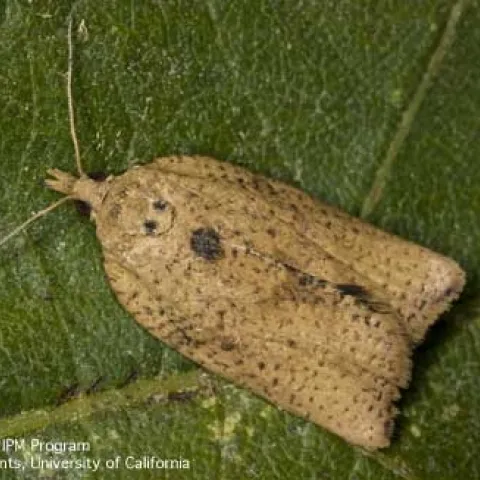
Adult light brown apple moth (Photo by Jack Kelly Clark, UC IP) Nursery workers are our first line of defense in detecting light brown apple moth when growing ornamental plants in commercial nurseries.
You say, it is a little late in the summer to be talking about using soil solarization for weed control because it works best in the summer when the days are long with high temperatures. Maybe we can learn some things from past situations where control has been marginal or poor.
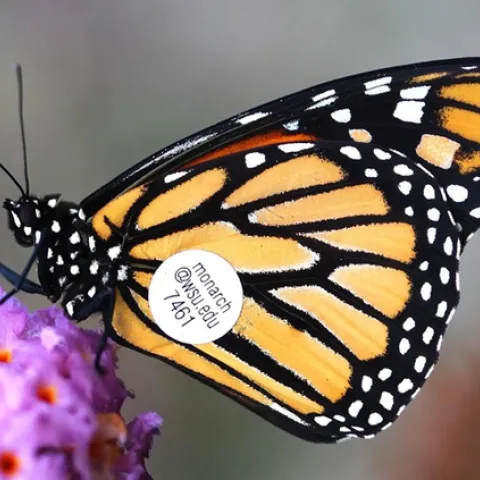
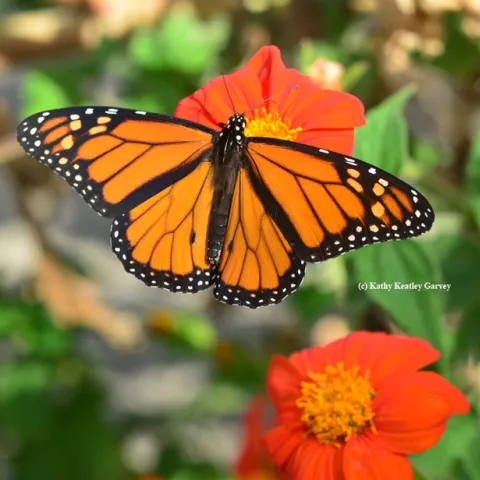
The next time you see a Monarch butterfly heading your way--or settled in at an overwintering site in coastal California or in central Mexico--check to see if it's tagged.
Average annual precipitation in California is 200 million acre-feet, out of which 42% of water is used for agriculture while 11% is used in the urban areas (municipal and industrial users) and the remaining 47% by the environment (native vegetation, ground water, and oceans) (Doug Parker, personal c...
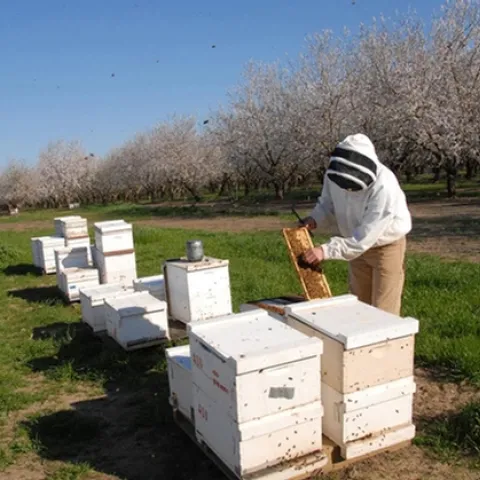
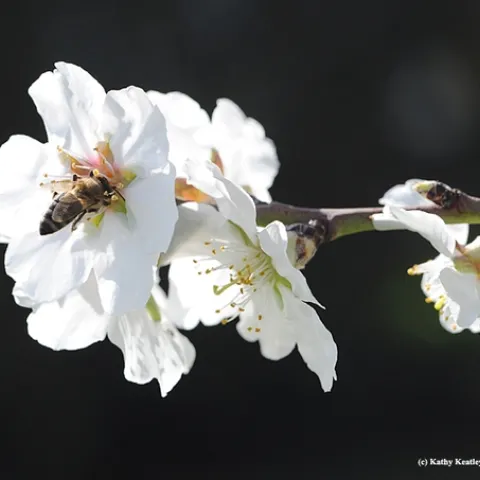
Can you say "Bee BMP?" That's a short-cut for "Bee Best Management Practices." The Almond Board of California today unveiled its long-awaited "Honey Bee Best Management Practices for California Almonds.
From a PRESS RELEASE from the USDA Office of Communications: Release No. 0227.14 Contact: Brian Mabry (202)720-4623 USDA Announces Measures to Help Farmers Diversify Weed Control Efforts WASHINGTON, Oct. 15, 2014 Agriculture Secretary Tom Vilsack today announced several steps that the U.S.
The Almond Board of California will unveil its Honey Bee Best Management Practices tomorrow (Thursday, Oct. 16) in an ongoing effort to promote and protect bee health. The board will do so by holding a press conference at 8:30 a.m.