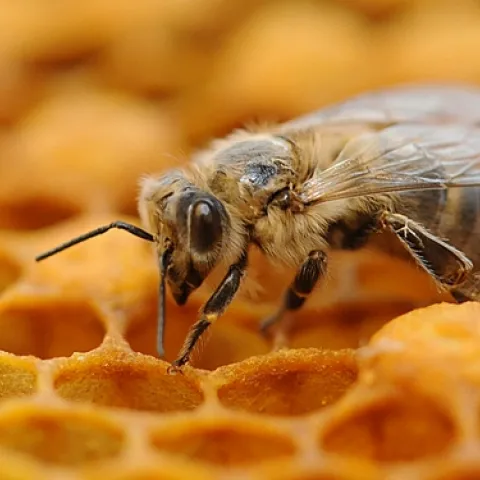
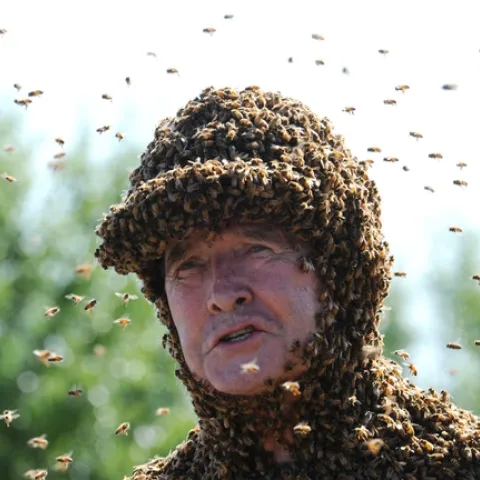
The news is not good. The honey bee crisis is worsening. Back in November of 2006, commercial beekeeper David Hackenberg of Pennsylvania sounded the alarm. Fifty 50 percent of his bees had collapsed in Florida.
When the annual California Agriculture Day took place yesterday on the state capitol grounds, thousands of visitors buzzed the booths learning more about the food they eat and the agriculturists that provide it. But that wasn't the only buzz.
To a beekeeper, it's a four-letter word. Mite. Specifically, the varroa mite, also known as Varroa destructor. It's a small (think flea-sized) crab-shaped parasite that feeds on bees, either in the brood (immature bees) or on adult bees.
Honey bees sip nectar from the Mediterranean spurge (Euphorbia characias wulfenii) planted in our bee friendly garden. So do flies. Last weekend several flies flashing colors as brilliant as those blue morpho butterflies landed on the evergreen shrub. It wasn't your basic green bottle fly.
The number of new housing developments throughout the country continues to shrink as we struggle with the throes of a deep recession. That's with human housing, not in a healthy honey bee hive. The bees are busy building up their colonies, just as they do every spring.
If you see a patch of California native wildflowers known as "Tidy Tips," look closely. The yellow daisylike flower with white petals (Layia platyglossa) may yield a surprise visitor. You may see an assassin. An assassin bug.
The hunters are back. Ladybugs, aka ladybird beetles, are searching for aphids and other soft-bodied insects. If you see a ladybug (family Coccinellidae), odds are you'll see her prey, the plant-sucking aphids.
It's a killer, pure and simple. But the issue is as complex as it comes. The malaria mosquito, from the genus Anopheles, infects some 350 to 500 million people a year, killing more than a million. Most are young children in sub-Saharan Africa.
If you've ever strolled the streets of New York, you probably noticed a few honey bees here and there. Not the HIVES (they're illegal), but the BEES. Tomorrow, the New York Department of Health and Mental Hygiene will vote on whether city residents can keep bees in the Big Apple.