

Welcome to our nutrition and food questions page! You are encouraged to ask a question and/or read the Q & A. Responses are provided by Cooperative Extension Specialists Dr. Cassandra Nguyen and Dr. Jennifer Smilowitz from the Department of Nutrition at the University of California Davis, in collaboration with the Nexus Center.


Cassandra J. Nguyen, Ph.D.
Assistant Professor of Cooperative Extension
University of California Davis

Jennifer T. Smilowitz, Ph,D.
Assistant Professor of Cooperative Extension
University of California Davis
Do you have a nutrition or food question?
To ask a question and receive an email notification when a response is ready, click on the 'Ask an Expert' button below.
Responses from our collaborators, Drs. Nguyen and Smilowitz
Jump to topic: Lion's Mane Mushrooms | Sprouted bread | Protein-enriched breads | Plastic cutting boards | Monk fruit | Types of salt
Do Lion's Mane Mushrooms impact memory, dementia risk, 'brain fog,' and mental health?
By Dr. Cassandra Nguyen, Cooperative Extension Specialist
4/18/2026
“I have gotten a few questions now about the impact of mushrooms, and especially Lion’s Mane, on memory, dementia risk, “brain fog,” and mental health. I’ve seen ads saying they have to be processed a certain way. Any actual evidence behind these claims?”
The Lion’s Mane mushroom (Hericium erinaceus) is an increasingly popular mushroom. Its name comes from the numerous long white threads it grows that become yellow with age, reminiscent of a lion’s mane. Its recent growth in popularity is connected to its potential in the “medicinal” or “functional” mushroom market as an ingredient that can improve health, particularly brain health. Notably, this marketing used to sell dietary supplements is done without any assessments for effectiveness or safety by the FDA.
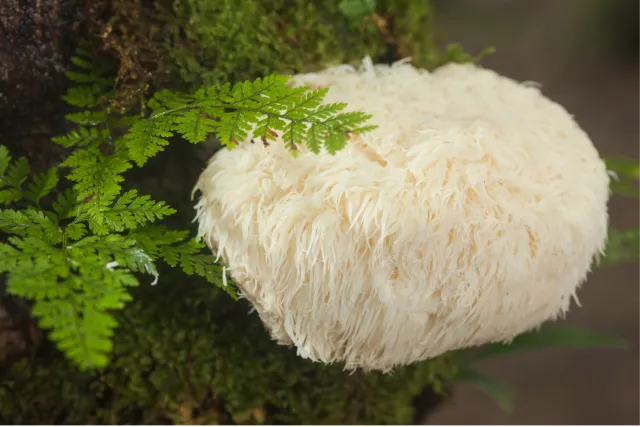
Though Lion’s Mane mushrooms are a nutrient dense food, these health-promoting claims are based on additional bioactive compounds present in these mushrooms. Bioactive compounds are chemicals that naturally occur in foods and are not nutrients but can promote health by impacting metabolic processes. In the case of Lion’s Mane, the impacted metabolic processes include those connected to neuroprotection and cognitive processes.
The documented evidence on Lion’s Mane mushrooms is promising for short-term positive impacts on older or impaired adults’ cognitive outcomes. Yet, impacts when studied with healthy young adults are often smaller or not observed. Given these inconsistencies alongside the limited number of studies, particularly randomized controlled trials, it seems too soon to claim causal effects.
It is possible that inconsistencies when comparing studies can also be a product of different processing, dosage, sourcing or formulation of supplements made from Lion’s Mane mushrooms. Researchers have identified various bioactive compounds in Lion’s Mane with differences in bioactives found in the mushroom’s mycelium vs. fruiting body (akin to the roots vs. foliage on plants). Future studies are needed to understand how cognitive outcomes vary by supplementation with differing formulations and processing.
The evidence available on Lion’s Mane mushrooms seems insufficient thus far for widespread supplementation recommendation. When you combine the existing evidence with other promising observational evidence about mushroom intake more broadly, eating mushrooms as a part of meals or snacks should be a part of all American’s efforts to eat more vegetables each day.
Is sprouted bread better than whole wheat bread?
By Dr. Jennifer Smilowitz, Cooperative Extension Specialist
3/13/2026
Sprouted grain bread is made from whole grains that have begun to germinate or sprout, which can modestly increase nutrient availability. A scoping review of studies has shown that sprouting grains can reduce the phytate content in the grain [1]. Phytate is a negatively charged compound found in plant seeds, nuts, grains and legume which bind to positively charged minerals like iron, zinc and calcium in the gut. Absorption of these minerals may be enhanced when phytate content in foods is reduced.
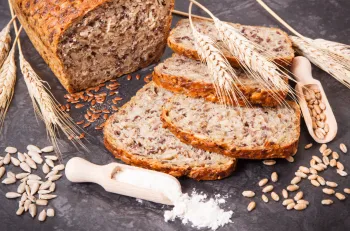
However, these benefits are incremental, and sprouted grains are still fundamentally whole grains in a different state rather than a distinct category. Importantly, sprouted bread is only nutritionally comparable if it retains all parts of the grain (bran, germ, and endosperm), which is the defining feature of a whole grain. From a public health perspective, the strongest and most consistent evidence supports choosing 100% whole grain foods, which are associated with lower risk of chronic disease and improved metabolic health [2]. Therefore, the key is not whether bread is “sprouted” or not, but whether it is truly whole grain. Some sprouted products may still include refined flours or lack meaningful whole grain content. Community members will need to review the Nutrition Facts labels to check whether their broad is whole wheat.
References
- Benincasa, P., et al., Sprouted Grains: A Comprehensive Review. Nutrients, 2019. 11(2).
- Huang, H., et al., The Impact of Whole Grains Consumption on Metabolic Health: An Umbrella Review of Systematic Reviews and Meta-Analyses of Randomized Controlled Trials. Food & Function, 2025.
What are key differences between protein bread & protein tortillas vs whole wheat bread & whole wheat tortillas? Which has the most benefits?
By Dr. Jennifer Smilowitz, Cooperative Extension Specialist
3/13/2026
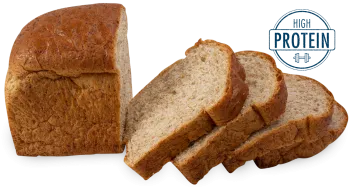
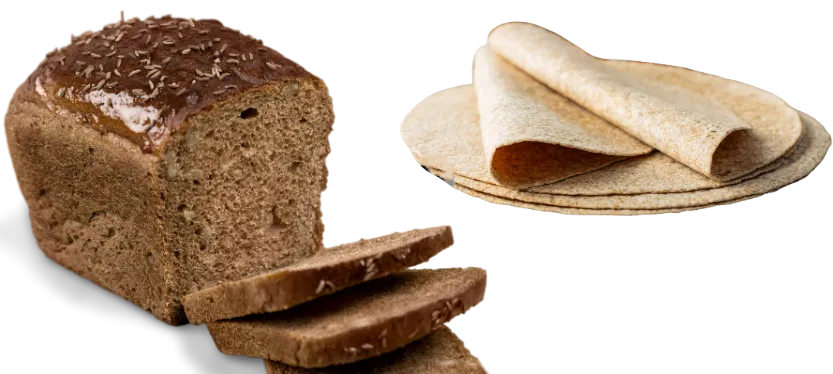
Protein-enriched breads and tortillas (e.g., “protein bread” or “high-protein wraps”) are typically made by adding isolated proteins (such as wheat, soy, or whey). These additions increase protein content but do not necessarily improve overall nutritional quality. A narrative review highlighted that many of these products contain more calories, additives, or refined flours compared to traditional whole grain options [1]. It is important for community members to read the ingredient lists to look for “whole grains” and to compare the Nutrition Facts Labels to find foods with higher fiber content and lower added sugars.
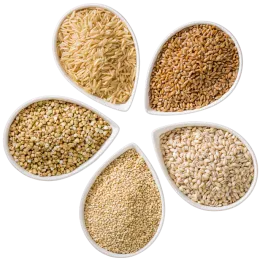
In contrast, whole wheat bread and whole wheat tortillas provide intact grain components (bran, germ, endosperm), delivering dietary fiber, vitamins, and minerals, linked to improved metabolic health and reduced chronic disease risk [2]. While higher protein intake can help individuals feel fuller longer, the broader evidence consistently shows that diets rich in whole grains rather than simply adding protein to refined foods, offer more comprehensive health benefits.
References
- Prieto-Vázquez Del Mercado, P., L. Mojica, and N. Morales-Hernández, Protein Ingredients in Bread: Technological, Textural and Health Implications. Foods, 2022. 11(16).
- Huang, H., et al., The Impact of Whole Grains Consumption on Metabolic Health: An Umbrella Review of Systematic Reviews and Meta-Analyses of Randomized Controlled Trials. Food & Function, 2025.
Thinking about microplastics, how safe is it to use plastic cutting boards?
By Dr. Jennifer Smilowitz, Cooperative Extension Specialist
1/30/2026
The World Health Organization has identified Micro- and nanoplastics are environmental contaminants of potential public health concern. These particles range from about the size of a grain of sand down to pieces much smaller than the width of a human hair.
Micro- and nanoplastics include intentionally manufactured small particles (e.g., in some personal care products) or after breakdown of larger plastics, such as food packaging or through use of plastic cutting boards. For example, a large systematic study found that normal use of plastic food containers can release micro- and nanoplastics into food [1].
What is the relationship between using plastic cutting boards and human health?
Recent experimental studies show that plastic cutting boards can release microplastics during normal food preparation [2]. A published review has revealed the detection of microplastics in human tissues, including blood and organs [3]. However, there is no direct evidence demonstrating that exposure from cutting boards or dietary microplastics causes specific health outcomes in humans.
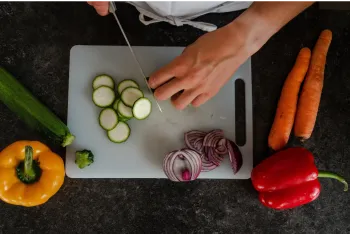
National recommendations do not currently suggest avoiding plastic cutting boards. The U.S. Department of Agriculture (USDA) recommends using cutting boards that are easy to clean, including plastic, wood, glass, marble, or pyroceramic surfaces, to reduce foodborne illness risk.
It may take many years before research clearly determines whether microplastics exposure from food preparation tools affects human health.
For individuals who are concerned and want to reduce exposure:
- Consider using glass, wooden, or other non-porous cutting boards that are easy to clean to reduce foodborne illness risk.
- Replace cutting boards (plastic or wood) when they become deeply scratched or worn.
- Avoid placing very hot foods on plastic boards, which may increase material breakdown.
References
- Zimmermann, L., et al., Food contact articles as source of micro- and nanoplastics: a systematic evidence map. npj Science of Food, 2025. 9(1): p. 111.
- Yadav, H., et al., Cutting Boards: An Overlooked Source of Microplastics in Human Food? Environmental Science & Technology, 2023. 57(22): p. 8225-8235.
- Li, Y., et al., Microplastics in the human body: A comprehensive review of exposure, distribution, migration mechanisms, and toxicity. Sci Total Environ, 2024. 946: p. 174215.
Is Monk fruit a better alternative sweetener?
By Dr. Jennifer Smilowitz, Cooperative Extension Specialist
4/14/2025
Monk fruit (also known as luo han guo) is a popular non-nutritive sweetener (NNS), meaning it provides little to no calories. It's made from the extract of the monk fruit and contains compounds called mogrosides, which are responsible for its sweetness—about 100 to 250 times sweeter than sugar. Mogrosides have antioxidant properties and do not spike glucose or insulin levels. Thus, monk fruit has been promoted as a natural sweetener for people who would like to manage blood sugar or avoid using artificial sweeteners.

While it is generally recognized as safe (GRAS) by the FDA, there are potential drawbacks to using it.
- First, commercially sold monk fruit products are often blended with other sweeteners such as erythritol, dextrose, or allulose to reduce intensity and to bulk them up. These other sweeteners may have undesirable effects such as digestive intolerance (bloat, gas, diarrhea) or other health effects. For example, erythritol consumption was recently reported across different study designs to increase cardiometabolic risk.
- Second, while consumption of NNS has been shown to reduce body weight in the short-term in certain subgroups of the population, a systematic review and meta-analysis suggests that use of NSS does not confer any long-term benefit in reducing body fat in adults and children. Results suggest there may be detrimental effects such as increased risk of type 2 diabetes, cardiovascular diseases, and mortality in adults, but these data are inconclusive.
- Finally, there is only a paucity of research on the long-term health effects of monk fruit sweetener consumption in humans.
Taken together, like all sweeteners, NNS should be used in moderation.
What is the difference between Celtic salt, Himalayan salt, and table salt? Is one better than the other?
By Dr. Jennifer Smilowitz, Cooperative Extension Specialist
9/4/2024
The difference between all three is based on how they are processed, where they are harvested and their mineral composition.

- Table salt is mined from salt deposits in the earth, which were often formed by ancient bodies of water;
- Celtic salt is sea salt harvested from saltwater lakes or the sea through evaporation; and
- Himalayan salt is harvested from the Himalayas in South Asia.
The latter two are less processed than the former and may have slightly more minerals and are moister than table salt but table salt is fortified with iodine while the other two are not. They usually are larger in size than table salt and have a distinctive taste due to the different mineral content. They are also more expensive than table salt. There is no data on any health outcomes related to using the different salt types but I will caution that if people use the Celtic and Himalayan salts, they should know the lack of iodine fortification would require them to take this essential nutrient as a supplement.