
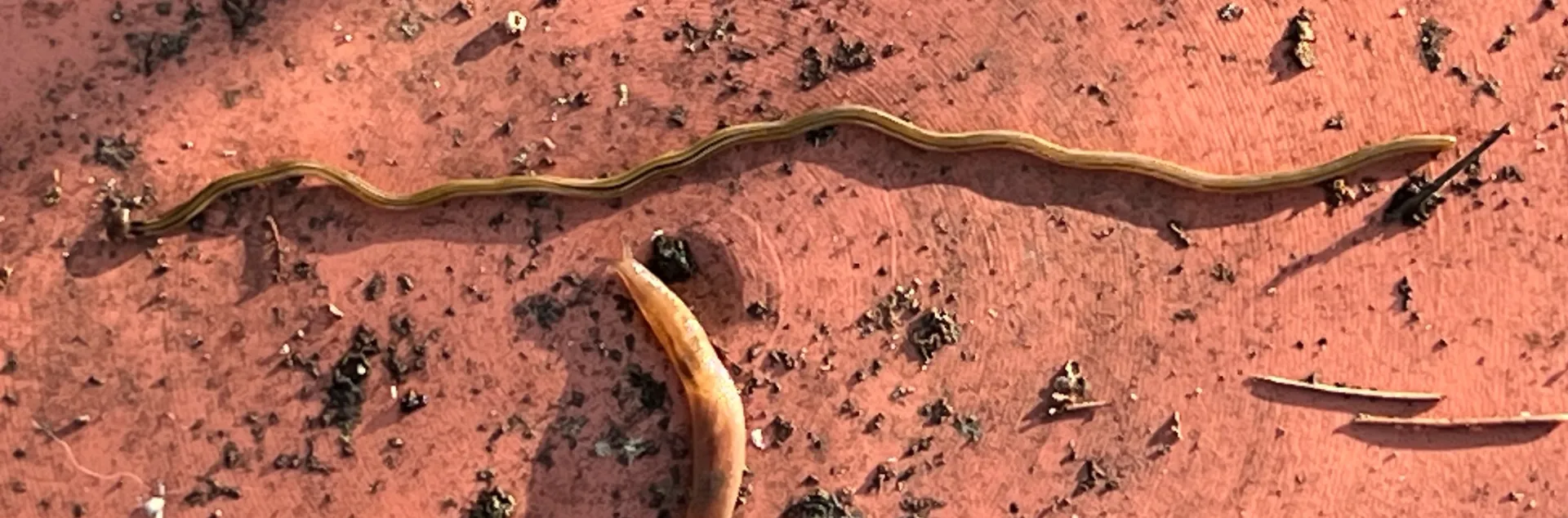

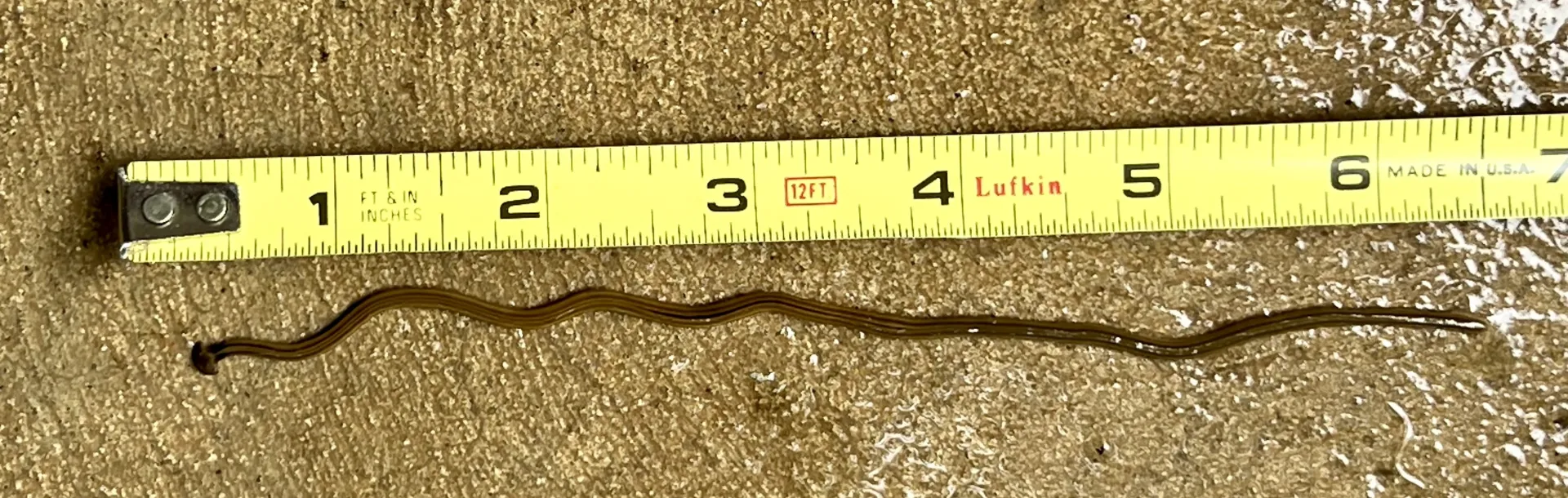
Five years ago, longtime Master Gardener Margie Reisz was walking on a sidewalk in her west Fresno backyard when she saw an excessively long worm with two distinctive dark chocolate brown stripes along its length.
“I took a picture and sent it to my husband, and he identified it,” Reisz said. “It wasn’t good news.”
The worm she found near her own home was an invasive shovelhead worm, a sticky specimen from Southeast Asia that kills and eats earthworms, beneficial garden soil builders. The invasive worms wrap their bodies around their prey and fatally coat them with toxic mucus.
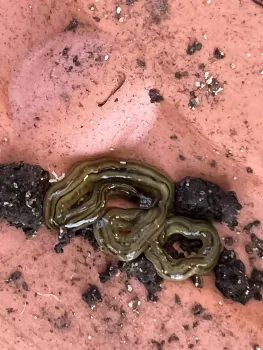
The occasional shovelhead made an appearance in Reisz’ backyard over the years, but three weeks ago she found two curled up on the bottom of a pot along with four babies.
“They seem to be multiplying,” she said ominously. To control shovelheads, Reisz drops them in a bowl of table vinegar. Rubbing alcohol is also effective, according to the UC Integrated Pest Management Program. Because their toxic mucus is distasteful, they have few natural predators.
Shovelhead worms have both male and female reproductive organs so they can mate with any other worm of the same species. They can also reproduce through “binary fission,” in which one worm splits into two separate individuals.
Reisz is part of the team of Master Gardeners who regularly answer the public’s questions on the program’s free online Helpline. However, she hasn’t received inquiries about the worm.
“People may not be noticing this pest and leaving it alone,” Reisz said.
Rainy weather is a good time to check your yard for shovelhead worms. They need moisture, so look in wet environments, such as under rocks and logs, in plant pots and under bushes. After a heavy rain, they may be found on sidewalks and driveways.
Resources:
Weird Worms: Land Planaria, by Belinda Messenger-Sikes, UC IPM Pests in the Urban Landscape Blog
Master Gardener Helpline. Fill in an online form with a brief description of your problem and a photo, if possible. When submitting photos of a botanical issue, please also include a picture of the whole plant.
_________________
Written by UC Master Gardener Jeannette Warnert