
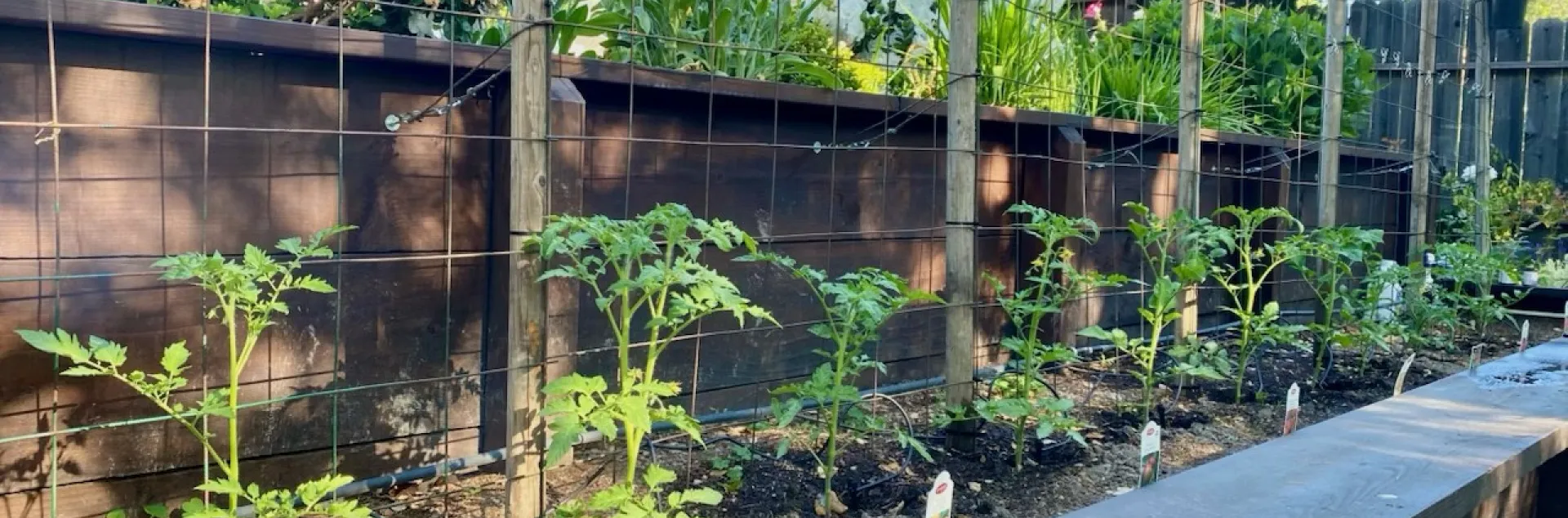
Few vegetables reward a home gardener quite like a sun-warmed tomato picked straight from the vine. A raised bed takes that satisfaction further: it gives you control over your soil, improves drainage, and if you plan carefully from the start, supports the crop rotation that is essential for long-term tomato health.
Choosing the Right Location: Sun is Non-Negotiable
The most important decision you will make is where to put the bed. Tomatoes require a minimum of six to eight hours of direct sunlight per day. Fewer hours of direct sun means poor fruit set and higher disease risk. Watch your yard throughout the day before committing; shadows from fences, trees, and structures shift considerably across the season. A south- or west-facing spot is generally ideal. In hot inland valleys, a touch of afternoon shade can prevent sunscald; along the coast, choose the warmest, most open spot you have and select varieties suited to cooler summers.
Air circulation matters too. Avoid placing the bed tight against a wall or fence because stagnant, humid air around the foliage invites fungal diseases. A spot with open sky and a gentle breeze is ideal.
Getting the Size Right: Depth and Width
Tomato roots are ambitious. Planting deeply with only the top half to one third of the plant above soil encourages the buried stem to sprout additional roots, dramatically improving water and nutrient uptake. Your bed should be at least 12 to 18 inches deep to accommodate this without restriction. For width, keep it to four feet or less so you can reach the center from either side without compacting the soil by stepping in.
Leave at least two feet between plants or three to four feet for large indeterminate varieties. Crowded plants trap humidity, restrict airflow, and invite the fungal diseases that are tomatoes' most persistent enemies.
Soil and Amendments: The Foundation of Success
A raised bed lets you build the ideal growing medium from scratch. Tomatoes thrive in loose, fertile, well-draining soil rich in organic matter. Start with a blend of quality topsoil and compost, then work in an organic fertilizer before planting. Once fruit sets, apply a balanced, organic tomato fertilizer every four to six weeks, but resist the urge to over-apply nitrogen: too much produces lush foliage at the expense of fruit.
Aim for a soil pH of 6.2 to 6.8. After planting, cover the bed surface with a layer of mulch — straw works well — to conserve moisture, moderate soil temperature, and suppress weeds.
Think Ahead: The Importance of Crop Rotation
The most overlooked aspect of raised bed tomato growing is rotation. Tomatoes belong to the nightshade family (Solanaceae), along with peppers, eggplant, tomatillos, and potatoes. Planting any of these in the same soil year after year builds up soil-borne fungi — especially Fusarium and Verticillium — that cause wilting diseases capable of destroying an entire planting.
The fix is to move tomatoes to a different bed each season and wait at least three to four years before returning them to the same spot. This is why building a second bed, even a small one, pays dividends well beyond the extra growing space. Map out which plant family occupied each bed and plan your rotation before you plant, not after problems emerge.
A Little Planning Goes a Long Way
A well-sited, well-built raised bed placed in full sun, filled with compost-rich soil, properly spaced, and part of a thoughtful rotation plan will reward you with healthier plants and better-tasting tomatoes for years to come. The time spent planning before the first seedling goes in the ground is the most productive time you will spend in the garden.
For More Information
- Cultural Tips for Growing Tomato — UC IPM (UC Statewide Integrated Pest Management Program) https://ipm.ucanr.edu/home-and-landscape/cultural-tips-for-growing-tomato/#gsc.tab=0
- Tomato — UC Marin Master Gardeners (raised bed planting, rotation, soil, and watering guidance) https://ucanr.edu/site/uc-marin-master-gardeners/document/tomato
- Growing Food in Raised Beds — UC Master Gardener Program of Alameda County https://acmg.ucanr.edu/Growing_Your_Own_Food/Growing_Food_In_Raised_Beds/
- Prepping Soil for Raised Vegetable Beds — UC Contra Costa Master Gardeners https://ucanr.edu/blog/hort-coco-uc-master-gardener-program-contra-costa/article/prepping-soil-raised-vegetable-beds
- Growing Tomatoes in the Home Garden — UC ANR Publication 8159 (PDF) https://ucanr.edu/sites/default/files/2018-07/287732.pdf
Help Desk of UC Master Gardeners of Contra Costa County (TEC)