
Lured by the recent warm weather, some of us have already put some transplants in the garden. So far, so good!
But that luck surely can't hold out forever.
Yesterday my beds were 62°F so I planted my cucumbers. It's pretty likely that the temperatures will plunge at some point. Even if we don't get a freeze (which we still could!) cooler temperatures mean slower growth.
One way we can raise temperatures is by enclosing our plants in a cloche. A cloche is just a dome shaped covering. In this case it's meant for plants so it would be transparent or semi-transparent.
Fancy versions of these exist. You may be even using one, since walls-of-water are essentially just a cloche with an opening on top. I have several and use them each year, however, having gotten carried away with planting early, I probably don't have enough. This is where milk jugs come in.
Milk comes in the perfect container to protect plants. It's semi-transparent plastic provides some protection for the light and night cooling, and the lid is removable which keeps temperatures in a safe zone during the day. It even has a convenient handle that can be used to hold the jug down in wind.
To make one, take a plastic 1-gallon milk jug, cut the bottom off, and remove the lid. I usually cut a small hole on top of the handle and insert a stick to secure it in place when it's windy, but you can also use tape or something more creative. Place the jug over a small plant so the open bottom sits on the soil and the open top allows some ventilation to prevent overheating.
I tried to get ChatGPT to make a pretty DIY diagram for you, but it turns out it really struggles with the concept of handle and what those are all about. What it made was nice looking but a bit detached from physical reality, so here's a 5¢ version I made for visual learners. It may or may not be better. 😉
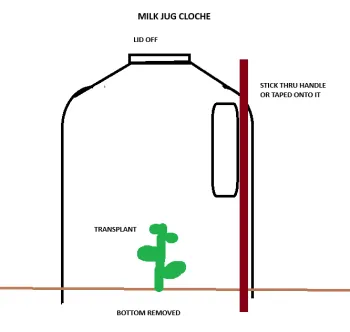
The clearish plastic lets sunlight in and traps heat, warming the air and soil around the plant during the day while offering a bit of protection from cold temperatures and wind at night. Remove it once temperatures get warm. You can use these for several seasons.
Keep in mind you can totally roast a plant in this so keep an eye on temperatures when it gets hot. I recommend using these in cool weather, not the 88° it's been in my garden every day this week.
With our current warm streak, we don’t need much help to increase temperature right now. But when, or if, temperatures drop back to more normal early spring conditions, this trick can make a big difference for plants that were planted a little early. A few degrees of protection can be the difference between steady growth and a plant that just sits and waits for warmer weather. It can even provide some (small) frost protection.
It’s not fancy, but it's an cheap option if you know an avid milk drinker. (I'm married to one.)