Can a honey bee participate in a maggot art activity?
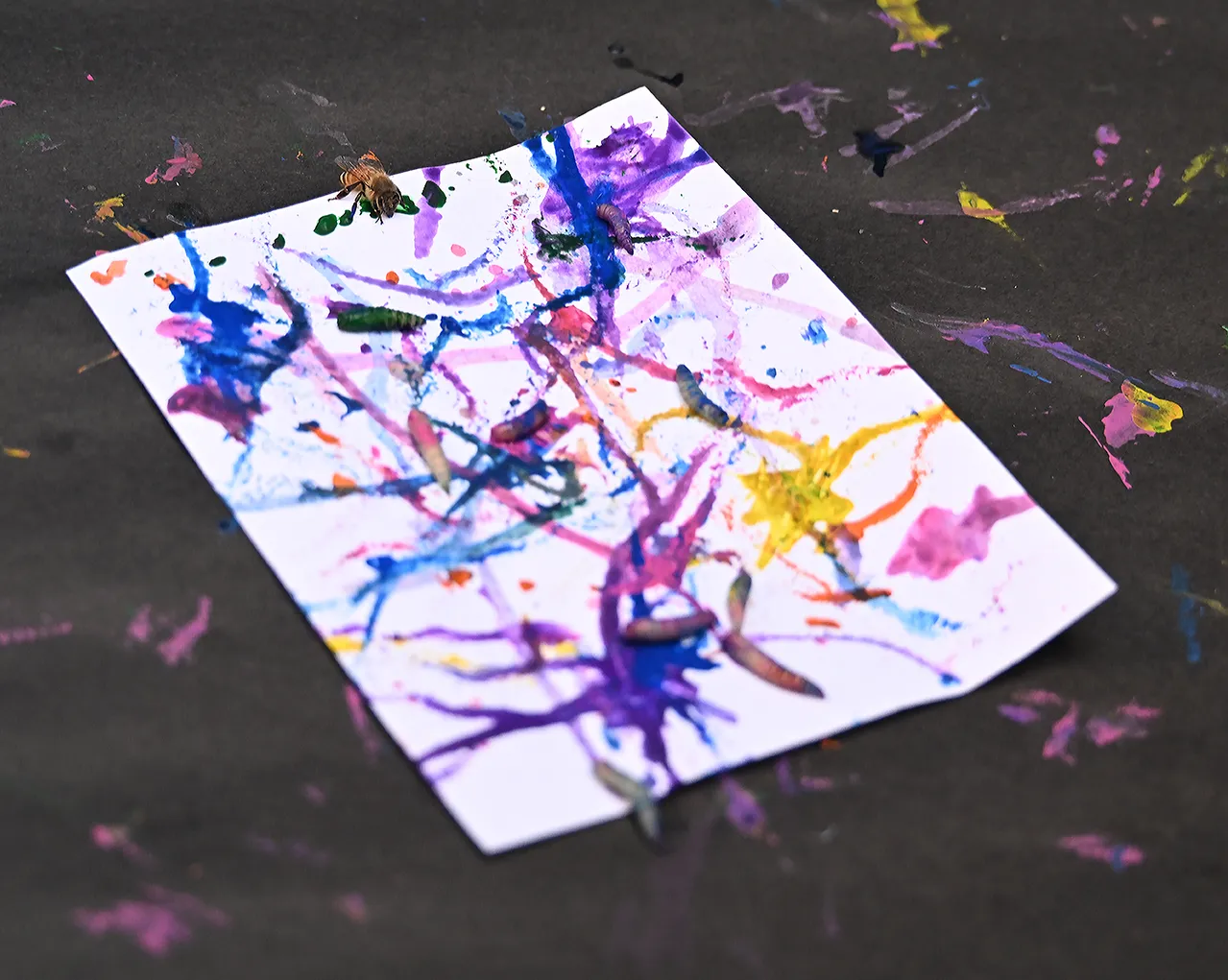
Yes, it can. And yes, it did.
When the UC Davis Entomology Graduate Student Association (EGSA) hosted its annual maggot art activity in the Briggs Hall courtyard during the 112th annual UC Davis Picnic Day, a worker bee seemed to want to join in, too.
Or perhaps it was just curious about the intriguing scents of maggots, the paint, and the people.
Honey bees have an exceptional sense of smell—estimated to be approximately 100 times more sensitive than the human sense of smell, scientists tell us. In fact, honey bees, with approximately 170 odor receptors on their antennae, can identify specific floral scents from miles away, distinguish between individual nestmates, and detect tiny traces of pheromones, such as the banana-like scent of alarm pheromones.
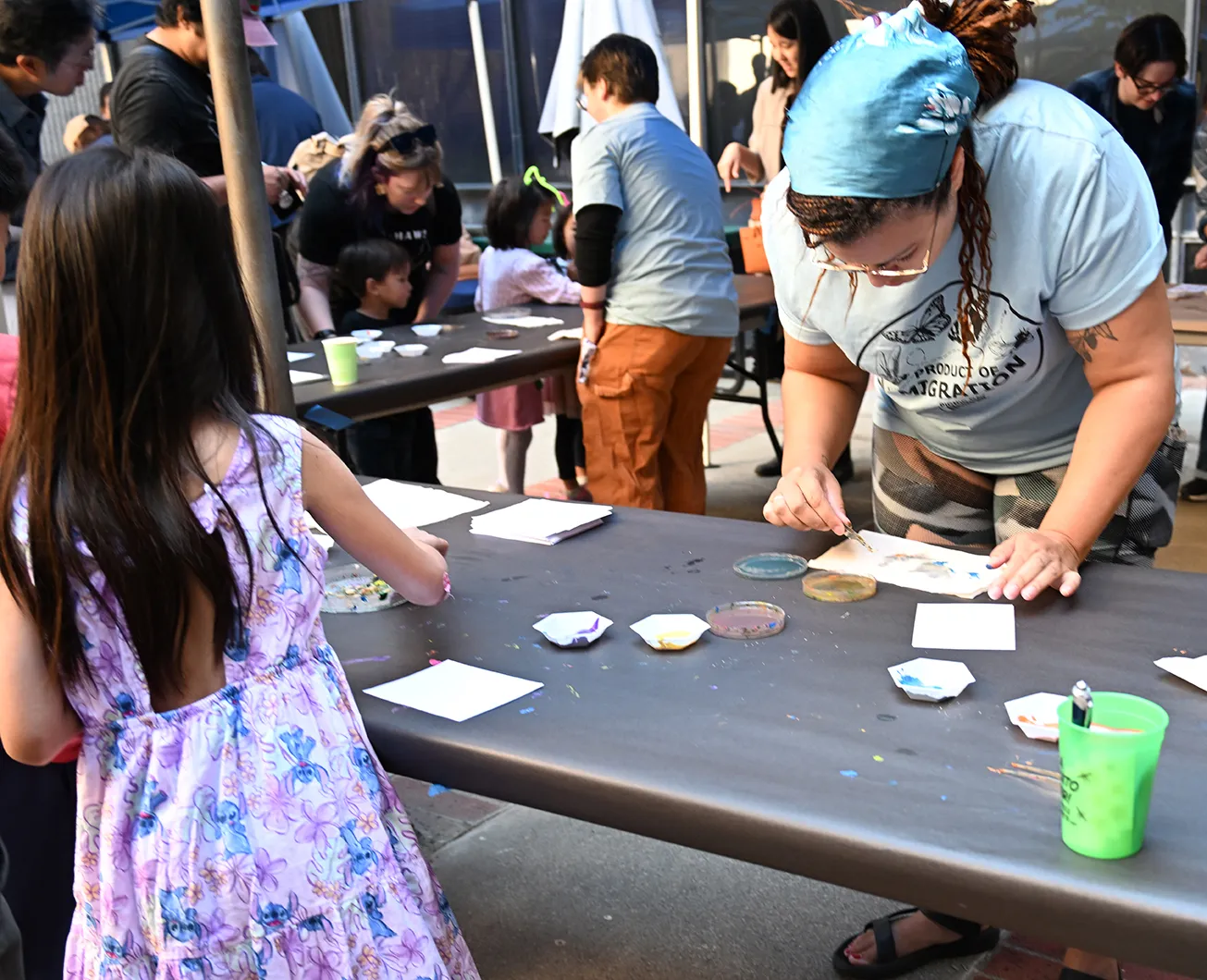
"Hey, there's a bee!" said a woman as she began creating maggot art. She let it be, much to the delight of onlookers.
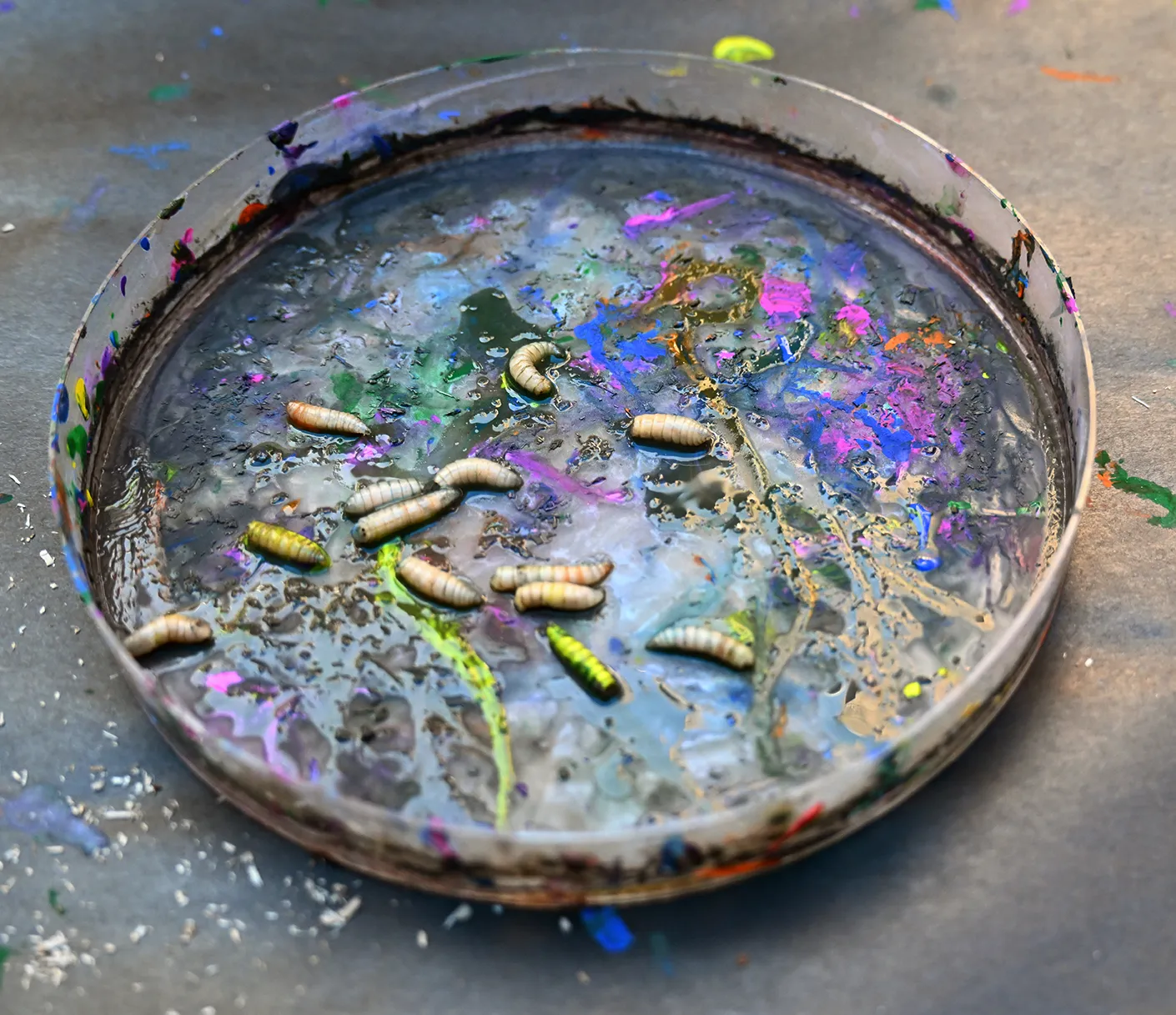
Maggot art involves dipping a maggot into water-based, non-toxic paint and letting it crawl--or be guided--on paper. It's billed as a conversation piece suitable for framing or for refrigerator art. Educationally, it's a way to learn about insects and not be appalled.
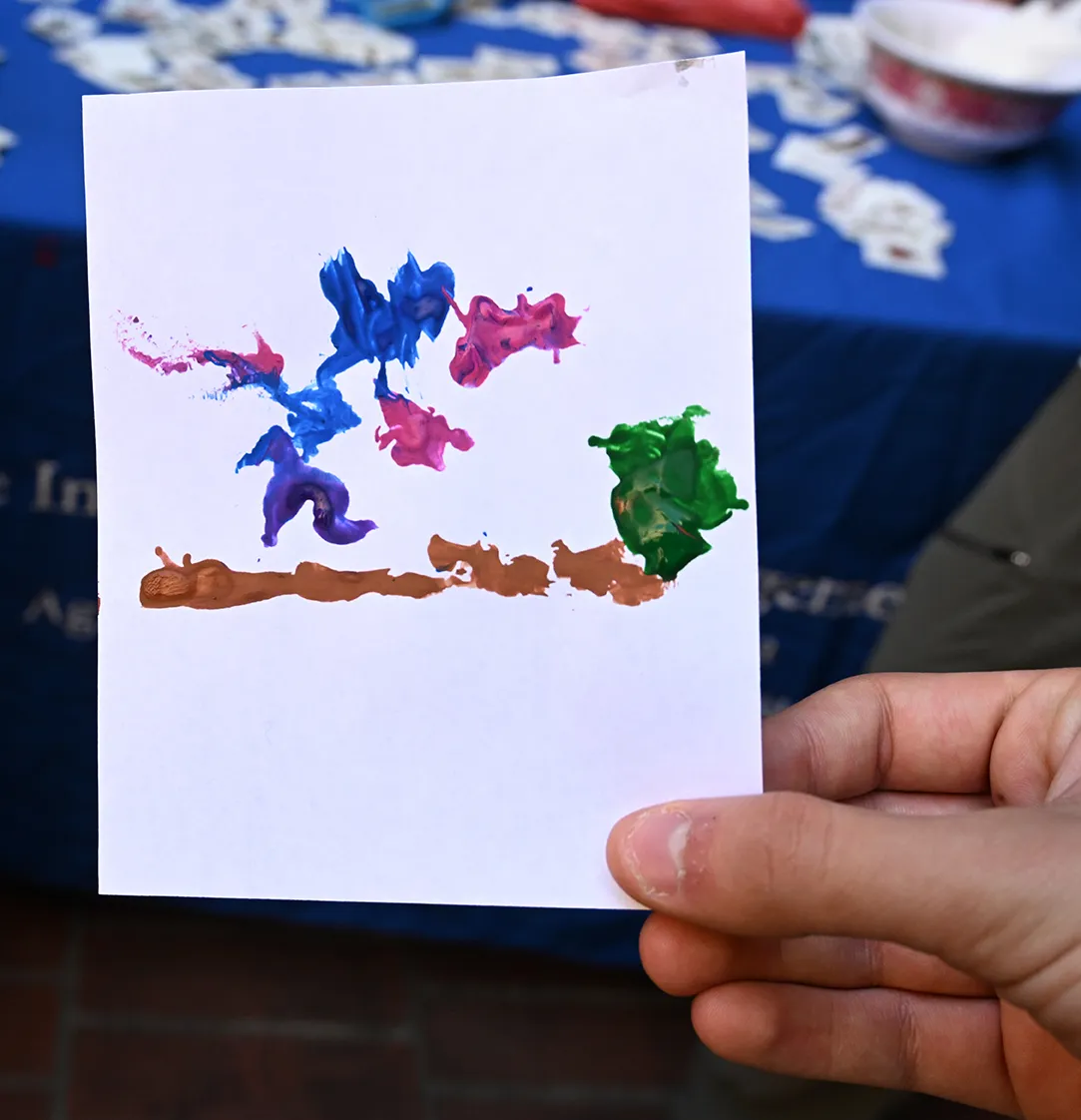
Youngsters and adults alike lined up to work on their maggot art, choosing multiple colors, ranging from yellow, red and brown to pink, blue and purple.
"Maggot art went well," commented one of the hosts, EGSA member Iris Quayle, a doctoral candidate in the lab of Professor Jason Bond, UC Davis Department of Entomology and Nematology. "Lots of beautiful creations and the addition of more colors for artists to select from!"
In a previous year, a boy asked to take a maggot home. This year, no. "But lots of people were interested in holding several at a time so I let them do that and they got a kick out of it!" said Quayle, who just returned from the Namib Desert, southwestern Africa, to do research on darkling beetles.
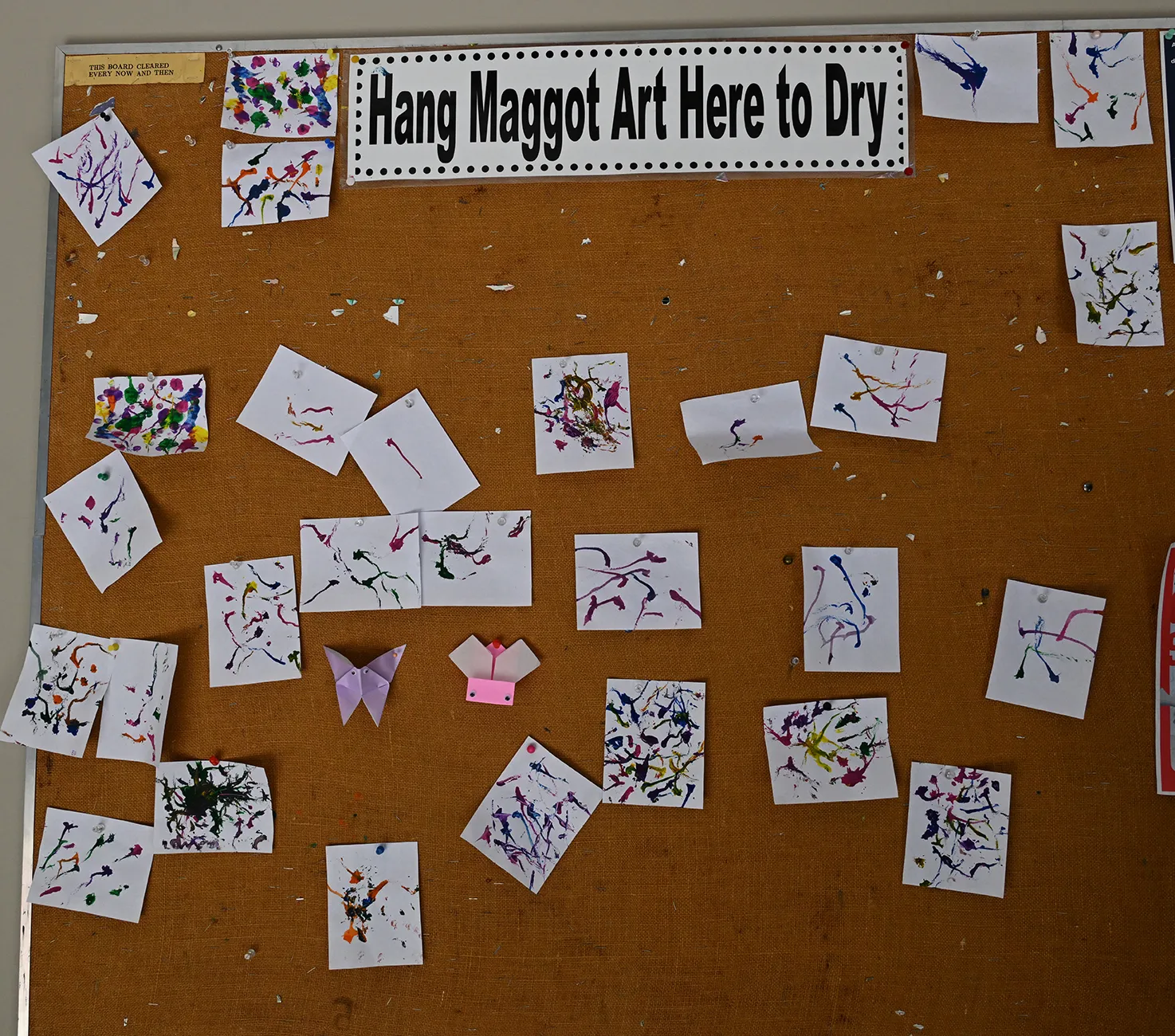
Some of the artists pinned their prized masterpieces on a bulletin board to dry before taking them home. Others gingerly carried them with them as they visited the other events in Briggs Hall, including the roach races, origami insect art, the pollinator and nematode displays, the biocontrol project, the wetlands restoration project, and more. The Bohart Museum of Entomology, the Fly Fishers of Davis, the UC Statewide Integrated Pest Management Program, and the Sacramento-Yolo Mosquito and Vector Control District were among the participants.
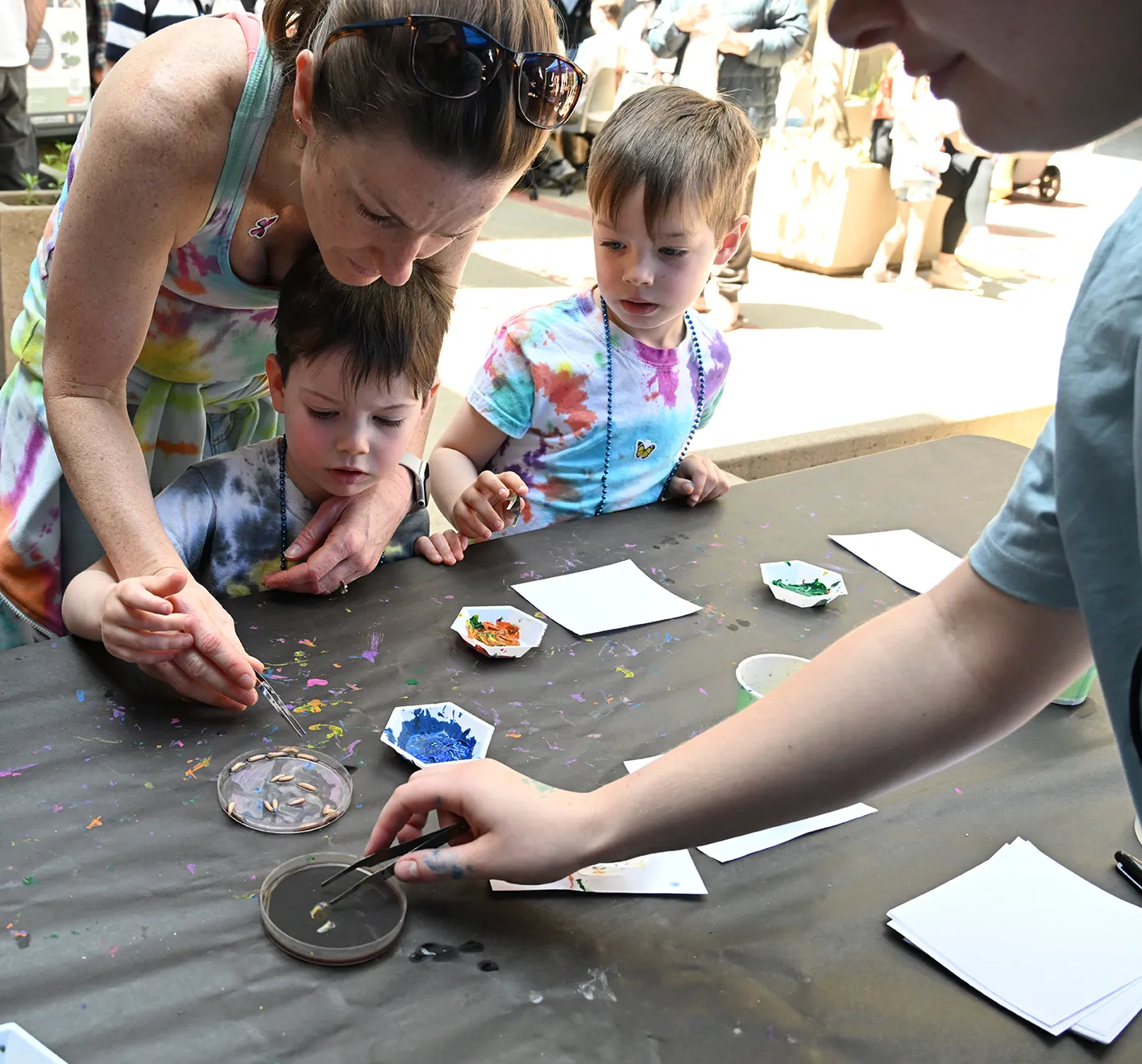
Rebecca O'Flaherty, a former graduate student of UC Davis forensic entomologist Robert "Dr. Bob" Kimsey (now emeritus) of the Department of Entomology and Nematology, coined the educational teaching curriculum, "Maggot Art," back in 2001 when she was studying at the University of Hawaii. She was rearing blowflies for her forensic research and wanted an activity to draw the interest of elementary school students.
Her project led to the CSI (Crime Scene Investigation) television show featuring one of her works, “Ancient Offering,” hung in Gil Grissom's office. She also displayed her work at art shows, including a two-month exhibition at the Capital Athletic Club, Sacramento, in 2007.
In a 2007 interview, O'Flaherty said she likes to work with second and third-graders "because I find that at that age, most children are enthusiastic, uninhibited and extremely open to new ideas. They haven't developed aversions to insects, and we're able to instill in them an appreciation for and interest in all organisms, no matter how disgusting those organisms may be perceived to be."